 By
By 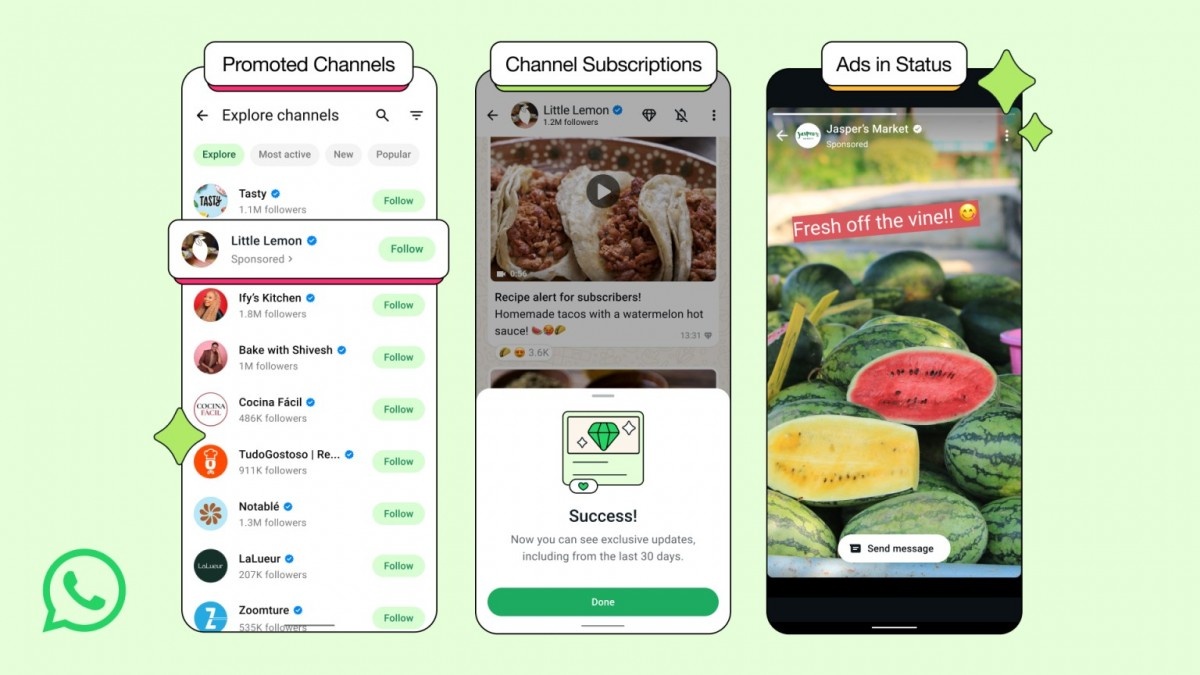
If you have been using WhatsApp lately, you may have noticed something new and unwelcome showing up between your status updates: advertisements. The platform that built its entire reputation on being a clean, private, and ad-free messaging service has officially crossed a line that many users never thought it would. For millions of Kenyans who depend on WhatsApp as their primary communication tool, this feels like a betrayal. But here is the thing: a better alternative has existed for a while now, and most people simply do not know about it.
That alternative is Signal, and it might just be the most important app upgrade you make this year.
WhatsApp Ads Are Here, and People Are Not Happy
On June 16, 2025, Meta officially rolled out advertisements on WhatsApp's Updates tab. The ads appear as full-screen promotions between your contacts' status updates, similar to how Instagram Stories work. Meta also introduced Promoted Channels (paid placements for businesses seeking visibility in WhatsApp's discovery section) and Channel Subscriptions that let creators charge for exclusive content. It is a multi-pronged monetization push on a platform that once loudly declared, "We don't sell ads."
WhatsApp stood as a rare bastion of ad-free communication in the digital realm, and its commitment to a clean, private, and uncluttered interface was a significant differentiator. The introduction of ads, despite Meta's careful positioning, has been met with significant disappointment and outrage across various social media platforms, with users vocalizing a sense of betrayal and using the term "enshittification" to describe what they perceive as a platform degrading its core user experience in pursuit of increased profit.
Meta insists the impact on users is minimal. The ads will only appear on the Status screen, so users who mainly use WhatsApp for private messaging, group chats, and calls will not be directly affected. Meta says it is not using personally identifiable data like phone numbers, messages, or call history to serve the targeted ads. If you have also linked your WhatsApp to your Facebook or Instagram accounts via Meta's Accounts Center, however, your ad preferences from those platforms will now also inform your WhatsApp ad experience, and the cross-platform integration has raised concerns among users who expected WhatsApp to remain more private than Facebook or Instagram.
The situation gets more complicated when you look at the legal cloud hanging over WhatsApp's privacy promises. A class-action lawsuit filed in a US Federal Court in January 2026 accuses Meta of misleading over three billion users by falsely claiming that WhatsApp messages are protected by unbreakable end-to-end encryption, with plaintiffs alleging that Meta stores, analyzes, and provides internal access to encrypted messages or purportedly private communications, contradicting public assurances of privacy. Meta has denied these claims, calling them "false and absurd," and the lawsuit is in early stages with no proven technical evidence yet. But the very fact that such allegations exist, combined with WhatsApp's closed-source architecture, makes a reasonable person pause. When a platform is closed-source and controlled by a single company, users ultimately have no way to verify assurances they cannot independently check.
All of this is a far cry from WhatsApp's founding promise of simplicity and privacy.
Why Your Phone Number Is More Sensitive Than You Think in Kenya
Before we get into Signal's features, it is worth pausing on something that may not be obvious: why sharing your phone number to chat with someone you barely know is actually a significant privacy risk in Kenya specifically.
In this country, your phone number is not just a contact detail. It is the key to your entire financial and personal life. Your M-Pesa account, your bank accounts, your KRA PIN registration, your NHIF and NSSF records, your employer's HR system, your insurance provider, and your family and friends' contact books are all tied to one number. Changing your number is not a simple privacy reset. It means contacting your bank, your employer, government agencies, and every person who matters to you to update their records. It is a logistical nightmare that most people would rather avoid.
This creates a serious vulnerability. Once someone has your number, they essentially have a thread they can pull on. In Kenya, a phone number has historically been enough to reveal your full name in M-Pesa transactions. Safaricom acknowledged this posed a high-security risk, as merchants were said to use numbers to send unsolicited advertising through text messages or sell them to third parties, which is what prompted Safaricom to start hiding full customer details in Lipa na M-Pesa payments. Most recently, Safaricom rolled out a major privacy upgrade to M-Pesa on March 24, 2026, introducing data minimization that masks portions of a sender's phone number across Till, PayBill, and peer-to-peer transactions, meaning recipients now see only two names and a partially masked number.
These are positive developments, but they do not eliminate the underlying risk of having your number in the wrong hands. The financial fraud angle is especially worrying. Since your phone number is also your M-Pesa number, a bad actor who has it can attempt various manipulative transactions against your account. They might send money and reverse it, or send money and then report your account for suspicious activity, potentially triggering a temporary freeze on your funds. And since M-Pesa is effectively Kenya's digital wallet for millions, having it frozen, even briefly, can be a nightmare.
Then there is the harassment problem. A number that leaks to scammers or committed bad actors does not just get blocked. Scammers frequently operate dozens of virtual numbers, meaning blocking one number rarely ends the problem. You end up drowning in calls from unknown numbers, with no clean way out short of changing your number entirely.
The bottom line: your phone number in Kenya is a master key to your financial identity, and treating it like a casual social handle is a risk not worth taking.
Enter Signal: The App Built Around Your Privacy
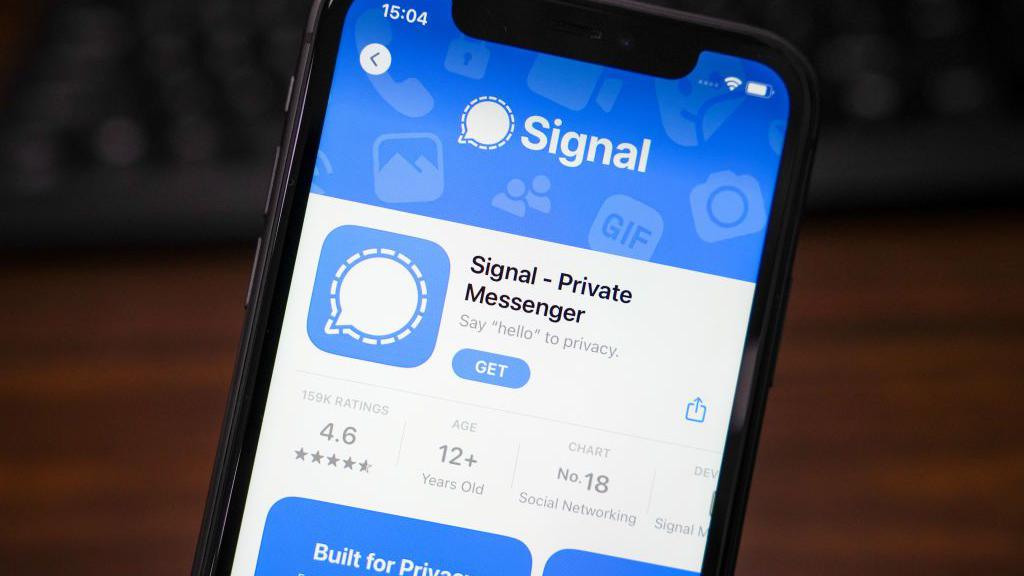
Signal has been around since 2014, but many Kenyans are only now discovering it as a genuine WhatsApp alternative. Signal uses mobile telephone numbers to register and manage user accounts, but configurable usernames were added in March 2024 to allow users to hide their phone numbers from other users. As of January 2025, the platform had approximately 70 million monthly active users and had been downloaded more than 220 million times.
The key insight here is the separation between registration and communication. You still need a phone number to sign up for Signal, but once you are in, you can create a username and share only that username with people you want to chat with. Your phone number will no longer be visible to people you chat with on Signal unless they have it saved in their phone's contacts. You can also configure a new privacy setting to limit who can find you by your phone number, and if you set it to "Nobody," even people who have your number cannot search for you on Signal or know you have an account.
This is a completely different model from WhatsApp. You can meet someone new, share your Signal username, and start chatting without ever exposing your phone number. Groups, calls, voice notes, file sharing, GIFs via Giphy — it all works just like WhatsApp. Signal secures all communications with end-to-end encryption and provides group voice and video calls with up to seventy-five participants, supporting text messages, documents, voice notes, pictures, stickers, GIFs, and video messages.
Signal Is Open Source: This Is a Bigger Deal Than It Sounds
One of the most important differences between Signal and WhatsApp is something that sounds technical but is incredibly important: Signal's code is open source, meaning anyone in the world can read it, review it, and verify that it actually does what it claims to do.
WhatsApp says it uses end-to-end encryption. Signal actually proves it. Signal is built on open-source software, meaning anyone can scrutinize the source code and test it for security purposes, and it is entirely funded by grants and donations with no ads, affiliate links, or any kind of tracking when you use the app.
This transparency matters because it replaces "trust me bro" with verifiable evidence. You do not have to take Signal's word for it that your conversations are private. Security researchers, academics, privacy advocates, and journalists around the world constantly audit Signal's code and would quickly flag anything suspicious. The Signal Protocol now encrypts the messages of over 2.5 billion people, the vast majority of whom have never installed the Signal app, since WhatsApp, Google Messages (RCS), Facebook Messenger's encrypted mode, and Skype all license or implement the Signal Protocol. The fact that even WhatsApp borrows Signal's encryption technology is perhaps the most honest endorsement Signal could receive.
Who Is Behind Signal, and Why Does It Matter?
Signal is not a product of a corporation trying to monetize your data. The Signal Technology Foundation is an American non-profit organization founded in 2018 by Moxie Marlinspike and Brian Acton, whose mission is to "protect free expression and enable secure global communication through open source privacy technology." Brian Acton is notably the co-founder of WhatsApp, who left Facebook in 2017 over disagreements about monetization and data sharing, then put $50 million of his own money into building a privacy-first alternative. He reportedly walked away from $850 million in potential earnings to stand up for user privacy.
The Signal Foundation's annual operating costs are estimated at $35 to $50 million, covering server infrastructure, bandwidth, development staff, and operational expenses. Signal achieves comparable core functionality at a fraction of the cost by maintaining a lean team of approximately 50 full-time staff as of 2025 and avoiding the product complexity that inflates headcount at commercial messaging platforms.
Because Signal is a non-profit with no shareholders and no advertising revenue model, it has zero financial incentive to sell your data or compromise your privacy. Its entire existence depends on doing the opposite: being the app users can actually trust. If you transition to Signal and you can afford to donate, doing so is genuinely meaningful. Every donation directly funds the infrastructure that keeps the app running for millions of users worldwide, including activists, journalists, and ordinary people who simply value their privacy. Signal also gives donors a small badge in-app to acknowledge their support, but unlike Meta, it does not sell verification badges or inflate their meaning.
What Signal Does Not Have (and You Should Know Before You Switch)
Being honest about Signal's limitations is important, especially if you have been a heavy WhatsApp user. The core messaging, calling, and group features are all present and solid, but there are a few areas where Signal is more modest.
Stickers: WhatsApp lets anyone create custom stickers from any image or person, which has produced an enormous, community-driven library of sticker packs. Signal has a smaller selection of downloadable sticker packs but does not support the same level of user-created, shareable sticker culture. GIFs work the same way on both platforms as both use Giphy, so that part of your expressive arsenal remains intact.
Story/Status Features: If you enjoy interacting with WhatsApp statuses, Signal's Stories tab offers a reduced experience. You can reply to a story but cannot react with a like, reshare someone else's story, add music to your own story, or use layouts. The Stories feature on Signal is functional but bare-bones compared to WhatsApp.
Single Account Per App: WhatsApp allows you to run multiple accounts on a single device and switch between them effortlessly. Signal does not support this. You get one account per Signal installation. This can be inconvenient if you currently separate a personal and work WhatsApp account on the same phone.
No Channels: WhatsApp introduced Channels as a broadcast feature, and it has become a significant part of how Kenyans follow news, businesses, and creators. Signal only supports groups, not channels. If you rely heavily on WhatsApp Channels for information, this is a gap worth factoring in.
None of these limitations are dealbreakers for most users, but they are honest trade-offs to understand before making the switch.
How to Get Started on Signal
Getting set up on Signal is straightforward and similar to the WhatsApp onboarding experience. You download the app from the Play Store or App Store, verify your phone number once (this is the only time your number is truly needed), and then you are in. Once registered, go to Settings, then Privacy, then Phone Number, and set "Who can see my number" and "Who can find me by my number" to Nobody. Then create your username under Settings and Profile. From that point forward, you can share your username instead of your number with anyone you are not already close to.
Your existing close contacts who you already trust with your number can still find you if they have it saved on their phone, so you do not lose those connections. And for everyone new, you get to stay in control of what you share.
The Realistic Picture: Signal and WhatsApp Side by Side
Switching entirely to Signal overnight is not realistic for most people. WhatsApp is deeply embedded in Kenyan family groups, workplace chats, and business communities, and you cannot force everyone you know to move at once. A practical approach is to use both apps simultaneously: keep WhatsApp for family and work groups where you have no choice, and gradually move trusted friends and new contacts to Signal.
Over time, as more people in your circle join Signal, your dependence on WhatsApp naturally shrinks. The key shift is changing how you introduce yourself to new contacts: instead of giving out your number by default, you give out your Signal username. It is a small habit change that compounds into meaningful privacy gains over time.
The Bottom Line
WhatsApp's arrival of ads is not the end of the world, but it is the clearest signal yet that the platform is following the same path as every other Meta product: maximizing attention and revenue at the expense of user experience and privacy. The encryption lawsuit controversy, even if ultimately unproven, adds another layer of unease for anyone paying attention.
Signal offers a genuinely better answer to the question of how private communication should work. It is transparent, ad-free, open source, and now lets you connect with people without ever handing over your phone number. In a country where your number is your financial identity, that is not a minor convenience feature. It is a meaningful protection.
If you value your privacy, your M-Pesa security, and your digital peace of mind, Signal deserves a serious look. Download it, set up your username, and start sharing it instead of your number. Your future self will thank you.
Comments