 By
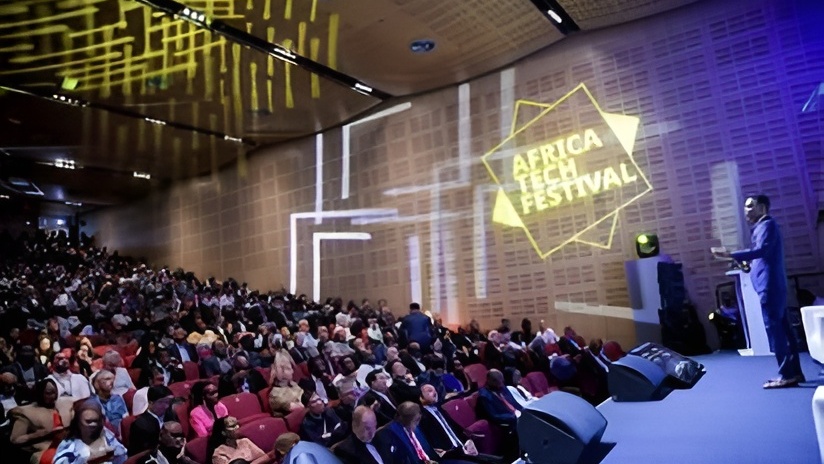
TM Forum, the global telecoms industry body, has launched a project to give mobile operators and financial institutions a shared technical standard for integrating financial services, and Safaricom is among the eight operators that have signed on. The announcement, made on 17 November 2026 at Africa Tech Festival in Cape Town, lands less than two weeks after Safaricom reported half-year results in which M-PESA revenue crossed KES 100 billion for the first time and losses at its Ethiopian unit narrowed sharply.
The initiative, called Open Digital Architecture (ODA) for Fintech, aims to cut the cost and complexity of connecting telcos with banks, lenders and other fintech partners. For Safaricom, whose financial services arm now accounts for close to half of its Kenyan service revenue, the integration burden is a practical business concern rather than an abstract standards debate.
What TM Forum announced
According to TM Forum's statement, the ODA for Fintech project is a collaborative effort that gives operators, financial institutions and technology partners a shared technology foundation to integrate and scale financial services. It is built on TM Forum's AI-native version of ODA and is meant to deliver architecture, executable reference code and collaborative support aimed at the specific integration problems between telecoms and financial services.
Eight operators have joined so far: Botswana Telecommunications Corporation, Indosat Ooredoo Hutchison, MTC, MTN, Safaricom, Telefonica, Telenor and Vodacom. Between them they include the companies behind some of Africa's largest mobile money platforms, M-PESA and MoMo among them, according to reporting by Africa Fintech Network.
Willie Stegmann, TM Forum's Executive Vice President for Composable IT and Ecosystems, framed the problem as one of design history. Mobile has put banking in the hands of millions of Africans, he said, but telecoms systems and financial services systems were never built to work together, which slows growth. "ODA gives them a common language," Stegmann said.
The announcement does not set out a delivery timeline, a list of specific technical deliverables, or any named bank or fintech participants. It also does not detail what commitments individual operators, Safaricom included, have made beyond joining the project.
Why a shared architecture matters for telco-fintech integration
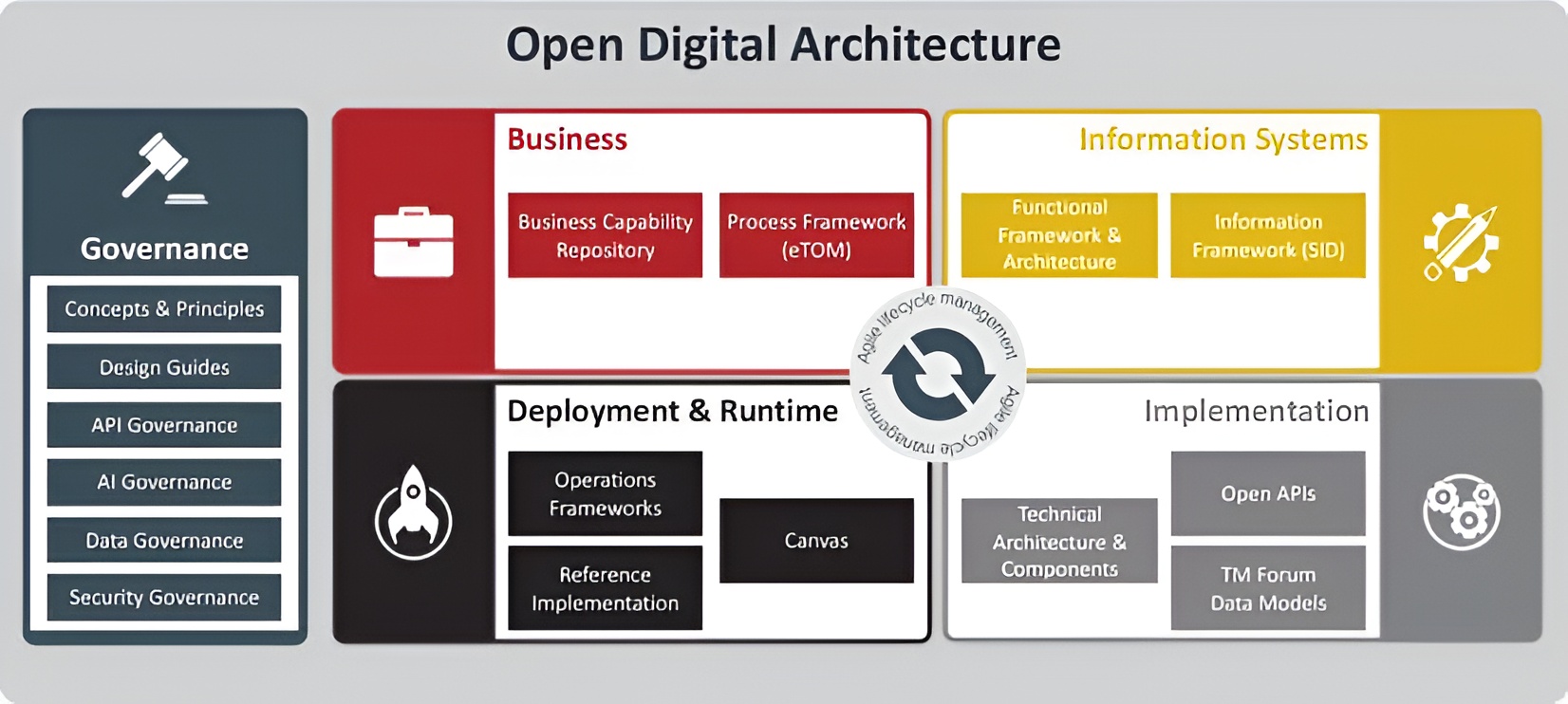
ODA is not new. TM Forum launched it in February 2018 as a response to a familiar operator problem: multiple independent software stacks, each serving a separate line of business and exposing services in different ways, according to technical documentation compiled by MapYourTech. The architecture's stated design target is to shorten service launch times from 18 months to 18 days, a goal that the industry body treats as an ambition rather than a guarantee.
The fintech extension applies the same logic to a different seam. When a mobile operator connects its wallet or core platform to a bank, a lender or an insurer, each integration is typically built to the specifics of that pair of systems. Standardised components, open APIs and shared data models are intended to replace that pairwise work with a common interface, so a new partner can be connected without a bespoke build.
TM Forum has been extending ODA toward AI for the past year. At Mobile World Congress 2026 it launched what it described as the telecoms industry's first AI-native blueprint, structured around workstreams on agentic AI, data architecture, security and governance, and AI operations. At DTW Ignite, Axonect and Commercial Bank of Ceylon showcased what they described as the first deployment of ODA in fintech, alongside the launch of an ODA Fintech Playbook. The African project builds on that groundwork.
Safaricom's existing ODA work
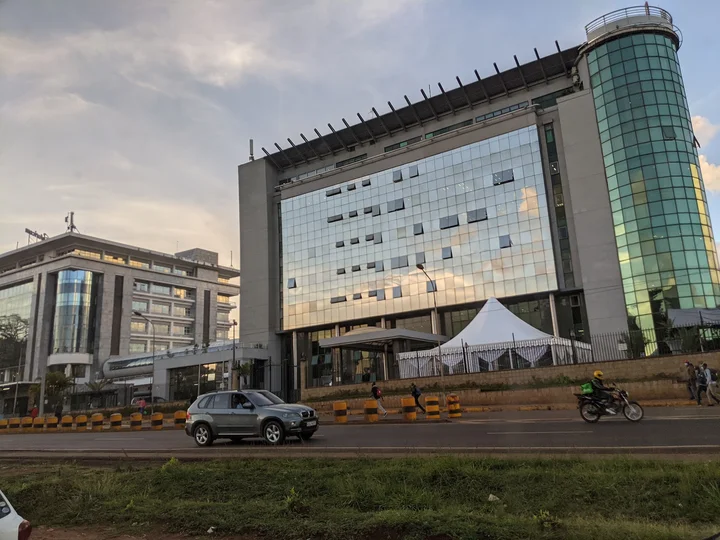
Safaricom is not starting from zero. A TM Forum case study published in October 2025 describes how the operator, working with Huawei, built an AI-assisted product design and recommendation platform called Idea-to-Cash on top of its converged billing system, and wrapped it with ODA components and Open APIs to expose it to customers. TM Forum reported results from the platform that included a 90% reduction in time-to-market for new consumer offers and a doubling of the conversion rate on targeted packages. These figures are TM Forum's account of Safaricom's results and have not been independently audited.
The same case study quotes Safaricom's Head of Billing and Core Applications as saying the company is working to set up an ODA framework across its entire ecosystem.
On the fintech side, Safaricom unveiled a next-generation M-PESA core system it called Fintech 2.0, which raised processing capacity from 4,500 to 6,000 transactions per second, with headroom to scale to 12,000, and adopted an active-active architecture across multiple hosting sites for resilience, according to Tech In Africa.
The half-year numbers behind the story
Safaricom reported results for the six months to 30 September 2026 on 5 November. Group net income attributable to shareholders rose 35.9% to KES 58.2 billion. Group service revenue grew 13.1% to KES 226.1 billion, and group EBITDA rose 27.5% to KES 129.2 billion..
The Kenya business accounts for most of that revenue. Kenya service revenue grew 11.3% to KES 215.96 billion, with Kenya EBITDA up 13.3% to KES 128.9 billion. M-PESA revenue rose 13.6% to KES 100.1 billion, or 46.3% of Kenya service revenue. The value of money moving through the platform climbed 16.6% to KES 23.56 trillion, and the number of merchants on M-PESA rose 90.3% to 4.51 million.
Revenue from wider financial services, which covers lending and savings products, rose 55.3% to KES 7.1 billion, according to QNC News. Safaricom also said 53% of all M-PESA transactions were free of charge during the period, a share that reached 81% for Lipa na M-PESA and Pochi la Biashara payments, according to allAfrica.
Ethiopia: smaller losses, still a loss
Safaricom Ethiopia's service revenue rose 71.6% to KES 10.6 billion, with 15.4 million customers active over a three-month period, up 38.4% year on year. Its EBITDA loss narrowed by 96.5% to KES 434.4 million. Below the EBITDA line the picture is weaker: the operating loss was KES 11.4 billion, an improvement of 53.4%, and the net loss was KES 8.8 billion, 43.2% smaller than a year earlier.
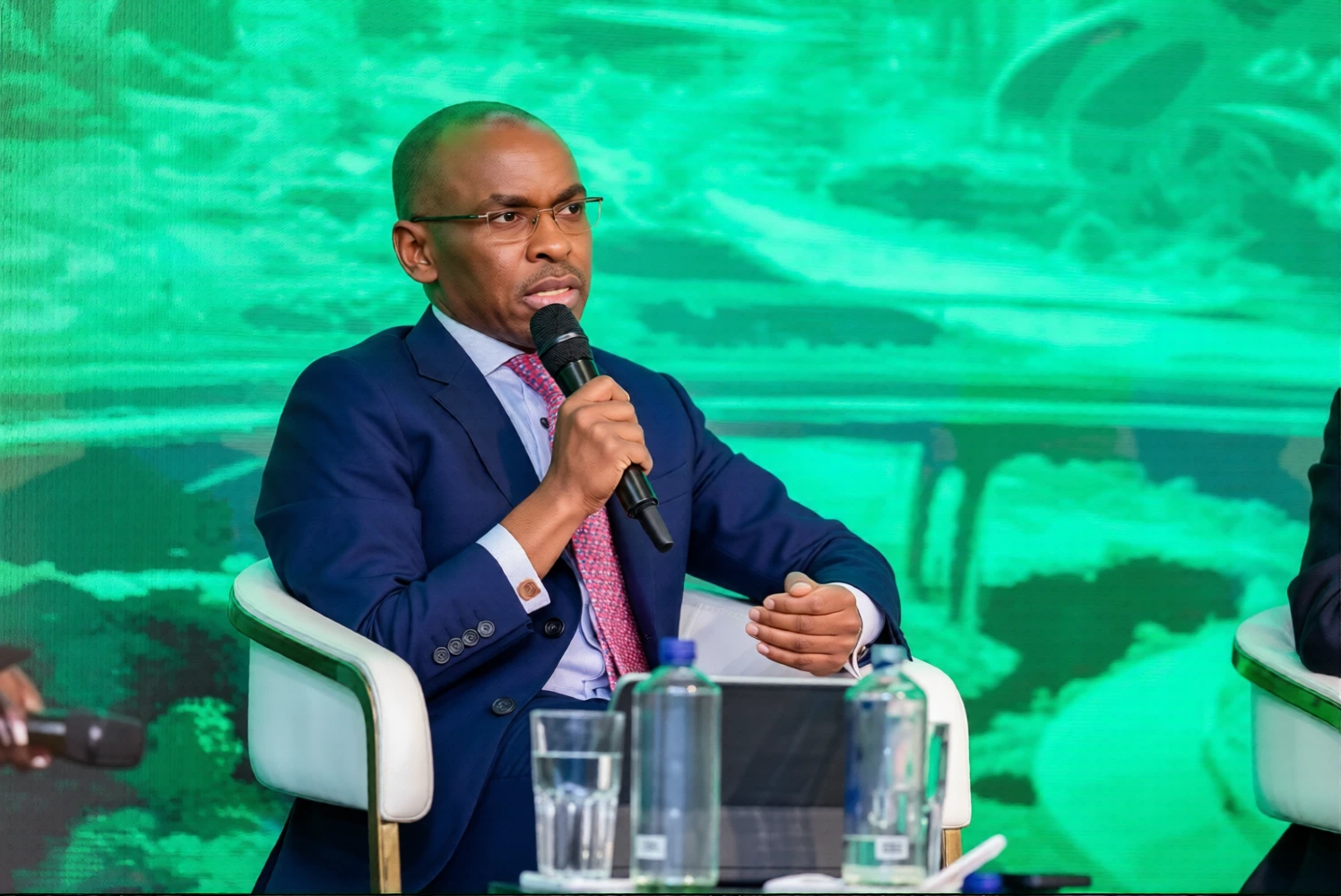
Capital spending in Ethiopia fell 47.2% to KES 5.0 billion, or 44.9% of its revenue, compared with 149.1% in the same period last year. Safaricom has retained its full-year guidance for an Ethiopia EBIT loss of between KES 12 billion and KES 15 billion, and Chief Executive Peter Ndegwa said the company is targeting EBITDA break-even in Ethiopia by the end of the current financial year, which closes in March 2027. The company cited Ethiopian inflation of 14.9% in September and continued currency pressure as ongoing headwinds.
The regulatory backdrop in Kenya
The architecture project arrives as Kenyan regulators weigh rules that would change how payment providers connect to one another. In September, the Central Bank of Kenya and the National Treasury opened a draft National Payment System Bill, 2026 for public comment, with submissions due by 9 October. The draft would replace the 2011 National Payment System Act.
Among its provisions, the draft would require banks, mobile money providers and other payment companies to build systems that securely share customer data with other licensed firms when the customer consents, a framework it calls open finance. It would create two new licence categories, payment initiation service providers and account information service providers, and it would give CBK power to order payment providers to connect their systems with competitors where needed. The draft leaves technical details of data sharing to later regulations.
The bill would also impose minimum capital of KES 250 million on electronic money issuers such as M-PESA and require customer funds to be held in trust accounts at licensed banks, separate from the provider's operating cash. Existing payment companies would have one year from the law taking effect to comply.
The TM Forum announcement does not reference the Kenyan draft bill, and no connection between the two has been stated by either party. Both, however, address the same underlying issue: how many separate systems a mobile operator, a bank and a fintech must wire together before a customer can move money or access credit.
Who else is involved
TM Forum describes itself as an alliance of more than 800 organisations, including the top ten communications service providers and the three largest hyperscalers. The ODA for Fintech project adds financial institutions and technology partners to that mix. TM Forum said Stegmann will host a CXO panel at Africa Tech Festival on 18 November with executives from MTN, Vodacom, Botswana Telecommunications Corporation and MTC Namibia, on AI, new business models and growth. Safaricom was not listed among the panellists.
Comments