 By
By 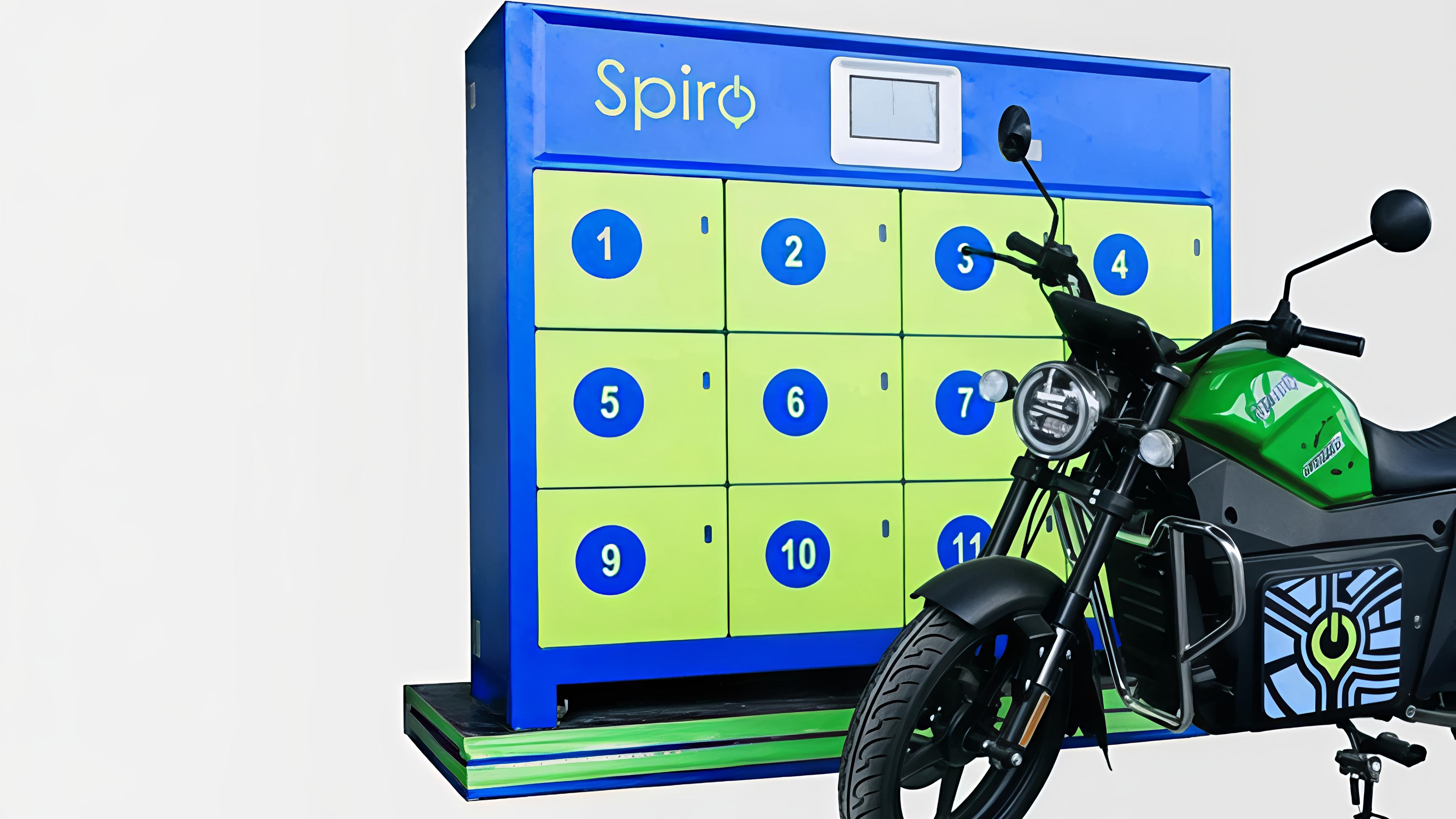
Kenya’s electric vehicle (EV) sector is no longer just "the future"—it’s on our streets. Among the loudest players is Spiro (owned by Africa Smart Mobility Solutions Limited), which has rapidly deployed thousands of bikes under a model they claim makes green energy affordable. But as many Kenyan riders are discovering, Spiro isn't just selling motorcycles; they are selling a long-term energy subscription with terms that challenge our traditional ideas of ownership.
Who is Spiro?
Headquartered in Dubai and backed by over $150 million in funding from giants like Société Générale and Afreximbank, Spiro is Africa's largest EV company. Their mission is "Energy as a Service" (EaaS). In Kenya, they’ve partnered with financiers like Watu Credit to put riders on the road with low upfront deposits (around KES 10,000–20,000) and daily payments.
The Business Model: The Printer & Ink Strategy
Spiro’s model relies on Battery-as-a-Service (BaaS).
Decoupled Ownership: You buy the "metal"—the frame and motor—but Spiro retains ownership of the battery, which accounts for 35-40% of the bike's cost.
The "Catch": Unlike competitors like Roam Air, which provide a home charger, Spiro does not. You are locked into their network, paying a KES 290 swap fee for every 80–100 km.
The Hidden Margin: Charging a battery at home in Kenya costs roughly KES 100–150. By forcing swaps, Spiro effectively doubles the "fuel" cost for the rider to maintain their infrastructure and revenue.
The Carbon Credit Secret
Why is Spiro so aggressive about battery ownership? The answer lies in Carbon Credits.
The Asset: Each EV motorcycle offsets roughly 3 tonnes of CO₂ annually.
The Data: To sell these offsets on international markets, companies must prove the bikes are active.
The Repossession Rule: This explains the 5-day inactivity policy. If a battery is dormant, it isn't generating the "green data" needed to mint carbon credits.
The "5-Day" Policy: Security or Surveillance?
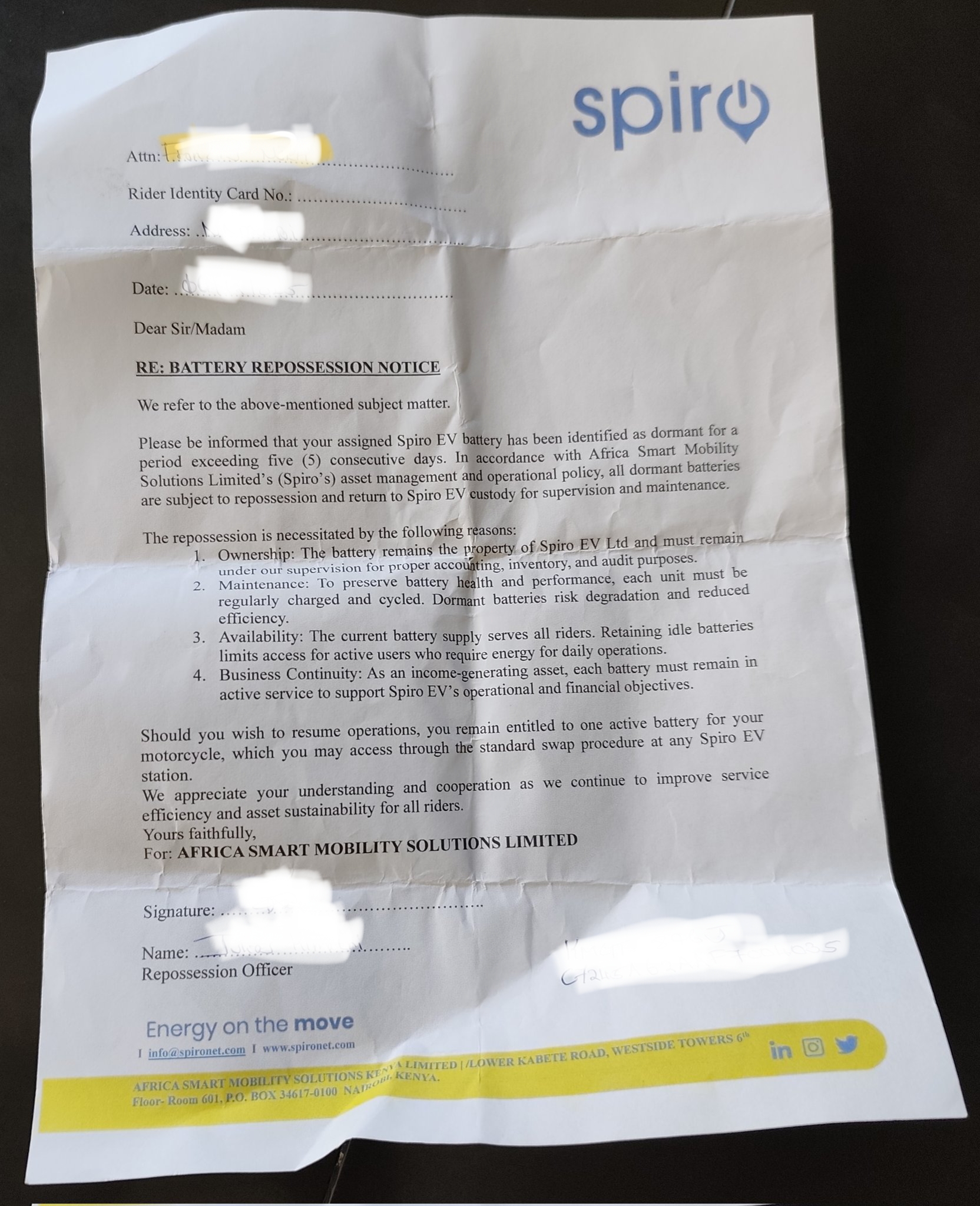
A leaked Battery Repossession Notice reveals that batteries identified as "dormant" for five consecutive days are subject to repossession.
Spiro's Stance: They claim this ensures "battery health" and "availability for active users".
The Rider's Reality: If a rider is sick, takes a holiday, or lives far from a swap station, they risk losing their "fuel" source. This level of remote control over a purchased vehicle is unprecedented in the Kenyan transport sector.
Comparison: Spiro vs. Roam Air vs. Petrol (ICE)
Feature | Spiro(EKON/Commando) | Roam Air | Petrol (ICE) Bike |
|---|---|---|---|
Upfront Cost (Loan) | ~KES 195,000 - 295,000 | ~KES 200,000 - 300,000 | ~KES 150,000 |
Battery Ownership | Company Owned | Rider Owned | N/A |
Charging Method | Swap Only (No charger) | Home + Swap (Charger incl.) | Petrol station |
Fuel/Swap Cost | KES 290 per 80km | Kes 100 per 80km(Home) | Kes 360 (2L petrol) |
Remote shutdown | Yes (after 5 days of Inactivity ) | No | No |
*Costs vary by usage patterns, location, and financing terms.
The Verdict: Is it Vendor Lock-in?
Spiro offers the most "hassle-free" entry into EVs for riders who cannot afford a KES 130,000 replacement battery down the line. However, it comes at the cost of autonomy. For the first time, a Kenyan "owner" can have their bike effectively disabled by a corporation's "Asset Management Policy".
For TechInKenya readers, the question isn't just about "Green vs. Petrol"—it's about whether we are ready for a world where we don't own our transport, we just rent it.
Comments