 By
By 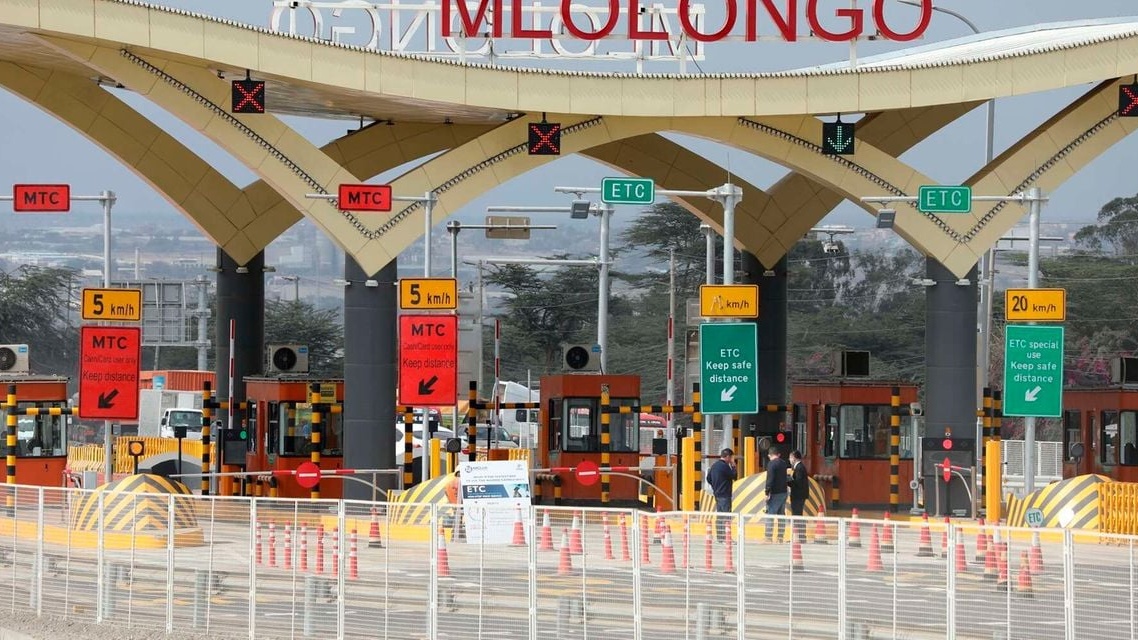
The "Involution" Crisis: Why China is Overflowing
The term "Involution" (neijuan) has emerged as the defining economic struggle of 2025. It describes a state of "meaningless competition"—a cycle where an oversupply of goods meets stagnant domestic demand, forcing Chinese companies into brutal price wars that slash profit margins to the bone.
The Surplus Problem: China’s massive manufacturing engine continues to accelerate, yet domestic consumer confidence remains at historic lows.
The Price War: In sectors ranging from heavy industry to consumer electronics, companies are selling products at or even below cost simply to defend their market share.
The Export Pressure: Facing a record $1 trillion-plus trade surplus, China is desperate to offload this inventory into global markets to prevent a total domestic industrial collapse.
The Global Shield vs. The Kenyan Open Door
As China attempts to export its way out of the Involution trap, the world’s major economies are raising their shields. The US and EU have implemented aggressive "de-risking" strategies and punitive tariffs to prevent their own industries from being crushed by subsidized, ultra-cheap imports.
Kenya, however, tells a different story. While the West builds barriers, our "open-door" policies have made us a primary destination for this surplus.
The Trade Gap: The numbers are staggering. In October 2025 alone, Kenya imported $622 million worth of goods from China while exporting a mere $13.2 million in return. This creates a monthly trade deficit of $609 million, a gap that drains Kenya's foreign exchange reserves.
Automotive Dumping: As China pivots rapidly toward Electric Vehicles (EVs), it is offloading massive quantities of gasoline-powered vehicles and spare parts into African markets. In 2025, automotive spare parts dominated the illicit trade sector in Kenya, with the Anti-Counterfeit Authority reporting that four-wheeler accessories account for 81.8% of seized counterfeit goods.
The Long-Term Cost: "Premature De-industrialization"
The danger isn't just the influx of cheap goods; it’s the systemic erosion of the Kenyan manufacturing dream.
Job Losses: The Kenya Association of Manufacturers (KAM) has warned that the flood of cheap imports, combined with rising operational costs, has placed over 60,000 direct manufacturing jobs at risk as of late 2025.
Unfair Competition: Local firms are being forced to shutter or relocate because they cannot compete with "dumped" goods that are subsidized by the Chinese government.
The Stifled Dream: Kenya’s aspiration to be a regional tech hub is in a stranglehold. Local assembly for smartphones and PCs is caught between high taxes on imported components and an overwhelming surge of finished Chinese imports.
The Shipment Surge: In 2024, Kenya imported over 2.3 million smartphones from China—a 71.5% increase from the previous year. While this benefits consumer connectivity, it prevents local assembly plants from reaching the scale they need to survive.
Trade Policy: Kenya’s "Open Door" vs. The EU’s "Shield"
The divergence in trade strategy between Kenya and the EU highlights a fundamental choice between immediate consumer convenience and long-term economic survival.
Features | Kenya's Approach (2025) | EU "Special Safeguards" (2025) |
|---|---|---|
Primary Goal | Maintaining "Free Trade" and safeguarding bilateral ties. | Protecting domestic industry and reducing "strategic dependence." |
Mechanisms | WTO valuation and cargo verification to catch tax evasion. | "Import Surveillance Task Force" to trigger punitive duties on surges. |
Action Taken | Zero-tariff treatment for 100% of certain tariff lines from China. | Implementing "contingency plans" including steel safeguards and EV tariffs. |
Local Impact | Record trade deficits; Chinese exports outpace Kenyan exports by ~40:1. | Active "ReSourceEU" program to diversify supply chains. |
While the EU uses Article 5 of the WTO Agreement to reintroduce duties the moment an import surge threatens their local market, Kenya has leaned into a "Comprehensive Strategic Partnership." Critics argue this leaves the country without the necessary protectionist shields to nurture its own industry.
Deep Dive: "Blurred Corruption" in Infrastructure
"Blurred corruption" is not always about direct bribes; it is about opaque contractual structures that create a closed economic loop designed to benefit the lending country over the host nation.
1. The Standard Gauge Railway (SGR)
The SGR is a textbook example of an "imagined future" that has led to debt distress.
The Loop: With 90% of the project funded by China's Export-Import Bank, contracts stipulated that the China Road and Bridges Corporation (CRBC) would handle construction and maintenance. This ensured the loan money essentially flowed from one Chinese entity to another, bypassing the Kenyan economy.
Labor Disparity: Despite the massive scale, the project primarily utilized Chinese materials and reserved high-skill engineering roles for Chinese nationals, leaving only low-paid manual labor for the local workforce.
2. The Nairobi Expressway
Though framed as a Public-Private Partnership (PPP), the Expressway follows a similar logic of "access for infrastructure."
Exchange Risk Protection: Toll fees were significantly increased in 2025 to "cushion" the Chinese investors against the depreciation of the Shilling. This shifts the entire economic burden of currency fluctuation onto the Kenyan motorist.
Financial Control: Operated by Moja Expressway (a Chinese contractor), the revenue stream from this critical Kenyan infrastructure stays within a Chinese-managed ecosystem for decades to come.
Conclusion: The Path Forward
If Kenya is to avoid becoming a permanent safety valve for China’s economic "involution," it must move beyond being a passive consumer. Strengthening local manufacturing, enforcing stricter anti-dumping laws, and demanding more transparent infrastructure contracts are not just policy options—they are requirements for national economic sovereignty.
Comments