 By
By 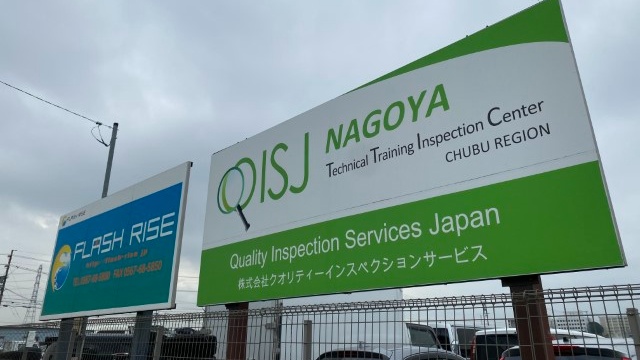
If you have ever bought or considered buying a used Japanese import in Kenya, you probably know the routine. Get the chassis number. Go to the QISJ website. Enter the number. Check the mileage. Either relax or walk away.
That routine changed quietly last week. QISJ ( Quality Inspection Services Japan), the company contracted by the Kenya Bureau of Standards to inspect vehicles before export, has handed its mileage data to a third-party platform called NipponCheck. Viewing the actual mileage now costs Ksh 500. The free QISJ portal still exists, but it now only shows you the chassis number, the date of certification, and the inspection centre. The number that matters, the odometer reading at the time of export, is behind a paywall.
For Kenyan car buyers, this is a significant shift. Here is what changed, what it means for fraud risk, and what your options are.
What QISJ Is and Why Kenyans Relied on It
QISJ is not a Kenyan institution. It is a Japanese vehicle inspection company that KEBS (the Kenya Bureau of Standards ), has contracted to certify cars being exported to Kenya from Japan, the UK, UAE, and South Africa. Before a used Japanese import boards a ship bound for Mombasa, QISJ inspects it for roadworthiness and records its odometer reading. That mileage, captured at the point of inspection in Japan, is published on the QISJ portal.
For Kenyan buyers, this mileage figure became the single most important external reference point in a used car transaction. If a dealer told you a car had 65,000 kilometres and the QISJ record showed 180,000 kilometres, you had caught them. If the numbers matched, you had at least one layer of verification. The free check became a standard part of due diligence for anyone buying an ex-Japan vehicle, shared on WhatsApp groups, referenced in Facebook marketplace listings, cited by mechanics and brokers alike.
Now that check costs Ksh 500 per query.
Why QISJ Made This Change
QISJ has not issued a public explanation for the transition to NipponCheck, so some of the reasoning is inferential. But the commercial logic is not hard to follow.
Maintaining and securing a database of millions of vehicle inspection records is a real operational cost. Hosting, server architecture, and database management are not free. For years QISJ provided this as a public utility at its own expense. The move to a Data-as-a-Service model through NipponCheck converts that operational cost into a revenue stream.
There is also a scraping problem. When data is freely accessible, automated bots can harvest the entire database to build competing commercial platforms or vehicle history services without paying anything. A Ksh 500 paywall eliminates casual scraping and forces anyone using the data commercially to pay a toll per query.
Neither reason is unreasonable from a business perspective. QISJ is a private company, not a public institution, and it has no obligation to provide free consumer protection tools for the Kenyan market indefinitely. But the timing and the method, a quiet, unannounced transition without notice to the Kenyan public creates a friction point that hits buyers hardest.
The Important Caveat That Most People Missed
Here is something that has been underreported in the discussion around this paywall and it materially changes how much weight you should put on any QISJ mileage figure, paid or free.
QISJ does not verify the accuracy of an odometer. It reads whatever the dashboard shows at the time of inspection.
If a vehicle's odometer was digitally rolled back before it arrived at the QISJ inspection centre in Japan, and rolling back digital odometers has been documented practice in the used car trade, QISJ will faithfully record the fraudulent figure. The QISJ certificate with a confirmed mileage is not proof of genuine mileage. It is proof of the mileage displayed on the dashboard on inspection day.
This does not make the QISJ check useless. If a car's dashboard in Kenya shows 65,000km and the QISJ record shows 180,000km, the dashboard has been tampered with after export, that is a clear catch. But if the odometer was rolled back before inspection, QISJ will not flag it. Both the certificate and the dashboard will show the same fraudulent figure, and the Ksh 500 check will give you false confidence.
This caveat matters because the paywall conversation has somewhat elevated the perceived authority of QISJ data. It is a useful cross-reference, not a guarantee.
What the Fraud Landscape Actually Looks Like
Understanding why mileage verification matters at all requires a clear picture of how sophisticated odometer fraud has become in Kenya's used car market.
Digital rollback is the most common method. A car arrives in Mombasa with a genuine 180,000 kilometres. Before it reaches a Nairobi showroom, a laptop is connected to the OBD2 diagnostic port and the odometer is reprogrammed to read 65,000 kilometres. The process takes minutes, leaves no dashboard warning lights, and requires no physical component replacement.
Pre-inspection rollback is the more sophisticated version, rolling back the odometer before the QISJ inspection in Japan, so the fraudulent figure is baked into the official certificate from the start. This defeats the QISJ check entirely.
Chassis cloning is the highest-effort fraud. A legitimately low-mileage vehicle with a clean history is used as the identity source. Its VIN and chassis number are copied onto a high-mileage vehicle with a problematic history. Both the fraudulent chassis and the QISJ record appear clean because they genuinely belong to a clean car, just not this one.
The Ksh 500 NipponCheck mileage figure protects you from the first category of fraud, post-import dashboard tampering, but not reliably from the second or third.
What Your Options Are Now
Pay the Ksh 500 on NipponCheck. At the scale of a car purchase, typically Ksh 500,000 to Ksh 3,000,000 for most Kenyan buyers, Ksh 500 for mileage verification is genuinely a mandatory insurance cost, not an optional extra. Factor it into your buying process and treat it as non-negotiable. The paywall is annoying but the check is still worth doing. It catches the most common category of fraud.
Always ask for the original export certificate. The QISJ inspection certificate is a physical document that should accompany every imported vehicle. It shows the mileage, the inspection date, the inspection centre, and the vehicle's condition at export. A legitimate dealer or importer should be able to produce this without hesitation. If it is "lost" or unavailable, treat that as a serious red flag regardless of what the dashboard shows.
Have an independent mechanic check physical wear indicators. No odometer rollback can fake the physical wear that accumulates on analogue components. A mechanic who knows what they are doing can read a vehicle's genuine history from the steering wheel leather, the driver's seat bolster, the gear knob texture, the brake and clutch pedal rubber, and the engine bay condition. For high-mileage vehicles these tell a more reliable story than any digital number.
Cross-reference with CARJP or other Japan auction records. Several platforms including CARJP maintain records from Japanese vehicle auctions, which independently document mileage at the time of auction. If a car went through Japanese auction with 150,000km recorded, and the QISJ certificate shows 65,000km for an inspection at the same approximate time, something is wrong. Multiple independent data points are stronger than any single source.
Use KEBS. The Kenya Bureau of Standards has its own vehicle verification portal. While it draws on similar underlying data, it is worth cross-referencing as a secondary check, particularly for verifying that the QISJ inspection was genuinely conducted and the certificate has not been fabricated.
The Broader Problem This Exposes
The reliance on a single free external tool for consumer protection in a market as large and high-stakes as Kenya's used car trade was always a fragile foundation. The QISJ free check was not designed to be Kenya's primary defence against odometer fraud, it was a byproduct of an inspection process designed for export certification. Kenyan buyers adopted it because it was free, accessible, and better than nothing.
What Kenya's used car market actually needs is a formal, government-backed vehicle history system (something equivalent to the UK's DVLA check or the US's CARFAX) that aggregates data from KEBS, NTSA, insurance records, and import documentation into a single, reliable, subsidised or free consumer protection tool. The NTSA already holds vehicle registration data. KEBS holds import and inspection records. KRA holds customs data. The data exists across government systems. What is missing is the integration and the public interface.
Until that exists, Kenyan car buyers are piecing together their own due diligence from a patchwork of private platforms, export certificates, and mechanic opinions. The Ksh 500 NipponCheck paywall is a small inconvenience in the grand scheme of a car purchase. But it is a reminder that consumer protection in Kenya's used car market is one quiet policy change away from becoming significantly harder.
Comments