 By
By 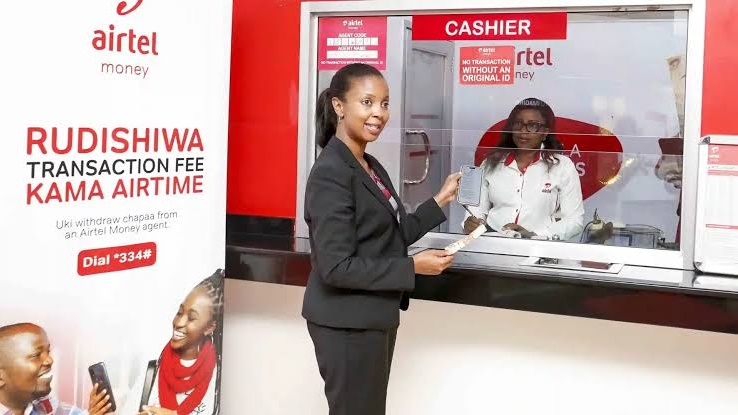
For nearly two decades, the Kenyan telecommunications landscape has been defined by a single entity: Safaricom. Since its early dominance, the Green Giant has not just led the market, it has defined it. From the pioneering days of M-Pesa to the 5G rollout, Safaricom has been the benchmark against which all others were measured.
But the Communications Authority of Kenya's Q2 2025/26 Sector Statistics Report, covering October to December 2025 and released earlier this month, tells a story that Safaricom's shareholders should be reading carefully. Not because Airtel is winning on subscriber numbers, it is not, at least not dramatically. But because Airtel is winning in the one place that actually funds Safaricom's entire operation.
The Number That Actually Matters
Mobile money contributes 41% of Safaricom's total revenue, Ksh 161 billion out of Ksh 388 billion in the last full financial year. M-Pesa is not just a product. It is the engine.
Two years ago, Airtel Money held 5.5% of Kenya's mobile money market. By Q1 2025/26 that had risen to 10.3%. The latest Q2 report confirms it has now crossed 11%. M-Pesa's share, which once sat at 98%, now stands at 89%.
That is a 9 percentage point erosion in two years in the segment that funds almost half of Safaricom's revenue. The pace is not explosive, but it is consistent, and consistency in market share erosion is more dangerous to a dominant player than a single dramatic shock.
The Subscription Picture Is More Complicated
Your WhatsApp groups have probably been circulating claims about Airtel's dramatic subscriber growth. The actual CA data is more nuanced.
As of December 2025, total mobile subscriptions across all operators stood at 78.4 million, growing by just 0.1% in the quarter, a sign of a maturing market that is approaching saturation at 149.5% penetration. Safaricom holds 52.4 million of those subscriptions, roughly 66.8% of the market. Airtel holds 22.9 million, or approximately 29.2%.
Airtel's subscription share is not surging, it actually edged slightly lower between Q1 and Q2 as the overall market growth slowed. The subscriber story is not where the competition is being decided. The mobile money story is.
What the subscription data does reveal, however, is something more behavioural and arguably more interesting than raw market share.
The Active SIM Insight: Airtel Users Actually Use Their Phones
Buried in the CA report is a data point that deserves more attention than it has received. Airtel users average 2.7 minutes per call. Safaricom users average 1.6 minutes.
Think about what that means. Most Kenyans carry two SIMs, a Safaricom SIM for M-Pesa access and network coverage, and an Airtel SIM for cheaper calls and data. The Safaricom SIM is the wallet. The Airtel SIM is the phone.
When someone calls from Airtel, they stay on the line longer because the call is affordable enough to have a full conversation. Safaricom calls are shorter because users are watching the bill tick. This call duration gap is one of the clearest signals of where pricing pressure actually lands on ordinary Kenyans.
Airtel Kenya also recorded 11.83 billion minutes of voice traffic in Q2, up 2.4% from Q1. More tellingly, off-net traffic( calls crossing from Airtel to Safaricom and other networks) grew 8.4% in the same period. People are calling across networks more than before, which means interoperability is working, and Airtel's affordability advantage is compelling users to use it as their primary communication tool even when calling someone on a different network.
The Pricing War: Where Two Shillings Becomes Ksh 3,000
At TechInKenya we often focus on technical specifications, but for the average Kenyan consumer the most important feature of any network is the cost of a minute or a megabyte. Airtel has played the long game on affordability and the mobile money data confirms it is paying off.
Sending Ksh 1,000 to another network on Airtel Money costs Ksh 11. On M-Pesa the same transaction costs Ksh 13. A two-shilling difference sounds negligible. For a micro-entrepreneur in Kajiado making 50 transactions a day, that is Ksh 100 daily, Ksh 3,000 every month in savings, or Ksh 36,000 per year. At that scale, the "cheaper" network stops being a secondary SIM and starts becoming a business decision.
This aggregation of marginal gains is precisely how Airtel is converting M-Pesa's casual users into Airtel Money's committed ones.
The Interoperability Trojan Horse
For years M-Pesa's dominance rested on a network effect that felt unbreakable. Everyone had M-Pesa, so you needed M-Pesa to send money to anyone. Switching to Airtel Money meant your recipients might not be able to receive it. The ecosystem locked you in more effectively than any contract.
The CA's push for full interoperability dismantled that lock-in quietly but completely. Now a user can keep their balance in an Airtel Money wallet, pay lower transaction fees, and still pay at a Safaricom Buy Goods till or any Paybill number. The friction of being on a different network has effectively been removed.
This is why Airtel Money's growth from 5.5% to 11% in two years tracks almost perfectly with the interoperability timeline. The regulatory change was the door. Lower fees were the reason to walk through it.
What Safaricom Is Doing About It
Safaricom is not standing still. The launch of My OneApp this month ( merging the M-Pesa and MySafaricom apps into a single AI-powered platform ) is partly a response to the UX pressure from competitors. The new app's infrastructure reportedly handles up to 6,000 transactions per second, up from roughly 100 previously. The AI personalisation layer, which learns user behaviour and surfaces relevant services proactively, is a genuine attempt to deepen the ecosystem moat rather than just defend the pricing one.
But My OneApp has generated its own friction. Users abroad have reported significant issues with the app's device-binding and OTP requirements that do not work well with international SIM swaps or roaming. For diaspora Kenyans ( a segment that sends significant remittance volumes through M-Pesa )being locked out of your account when you need it most is not a loyalty-building experience. Airtel's lighter, more utility-focused app has quietly absorbed some of that frustration.
Safaricom also holds structural advantages that Airtel cannot easily replicate. Its IoT segment leads the market with 1.8 million active connected devices ( smart meters, fleet management, industrial monitoring ) a B2B revenue stream Airtel has not meaningfully entered. Safaricom Home Fibre remains dominant in suburban fixed broadband, where the physical fibre infrastructure provides stability that 5G routers cannot yet match for high-bandwidth households.
The Ethiopia expansion is the strategic wildcard. The Safaricom Ethiopia rollout has consumed billions of shillings in capital expenditure over the past three years, which some analysts argue has constrained Safaricom Kenya's ability to respond more aggressively to domestic pricing pressure. If Ethiopia reaches profitability on its current trajectory, that capital will have been well spent and Safaricom will have built a second large market. If it does not, the domestic opportunity cost becomes harder to justify.
The Broadband Front: A Third Competitor
One finding in the CA data that neither Safaricom nor Airtel should ignore: Starlink has reached 0.9% of Kenya's fixed broadband market. That sounds small, but Ahadi Wireless is at 9% and Vilcom Network at 5.4% and both grew this quarter. Safaricom's fixed broadband share declined to 34.9% from 35.6%.
The fixed internet market is fragmenting. For the urban professional household that uses Home Fibre primarily for streaming, gaming, and working from home, the question of whether Safaricom's fibre or a Starlink dish is the better option is a real one in 2026. This is a slow-moving threat but it is worth watching.
What Happens Next
Airtel's path to further mobile money growth runs through the same mechanism that got it to 11% that is pricing, interoperability, and consistent execution. Hitting 15% mobile money share within two years is plausible if the current trajectory holds. Whether it can get to 20% or beyond depends on whether Safaricom makes a structural pricing response rather than an ecosystem one.
Safaricom's most likely responses:
Loyalty depth over loyalty breadth. Bonga Points have always been a thin loyalty mechanism. Deeper integrations (cashback within M-Pesa transactions, bundled data with financial products, preferential rates for high-volume users ) would raise the switching cost without requiring across-the-board fee cuts.
Enterprise and IoT as the moat. The B2B segment ( IoT connections, enterprise data, government contracts, API access through Daraja) is where Safaricom's margins are most defensible and where Airtel has the least competitive presence. Expect continued investment here.
Ethiopia as the long-term bet. If the Ethiopia venture starts generating positive returns in the next 18 to 24 months, Safaricom's growth story changes significantly. It stops being a single-market company competing on price and becomes a regional technology platform with a very different investment case.
The TechInKenya Take
The current competitive dynamics are healthy for Kenyan consumers. Safaricom at 98% mobile money market share two years ago was not a situation that produced competitive pricing or incentivised product innovation. Airtel at 11% and rising is not yet a genuine threat to Safaricom's position, but it is enough of a threat to change behaviour.
The two-shilling fee difference is already saving the micro-entrepreneur in Kajiado Ksh 36,000 a year. That is real money doing real work. That is what competition is supposed to deliver.
The Green Giant is not going anywhere. But for the first time in the history of Kenya's mobile money market, M-Pesa's dominance is something that is being competed away — slowly, consistently, and in the one segment that matters most to Safaricom's bottom line.
All figures sourced from the Communications Authority of Kenya Q2 FY2025/26 Sector Statistics Report covering October to December 2025. Full report available at ca.go.ke/statistics.
Comments