 By
By 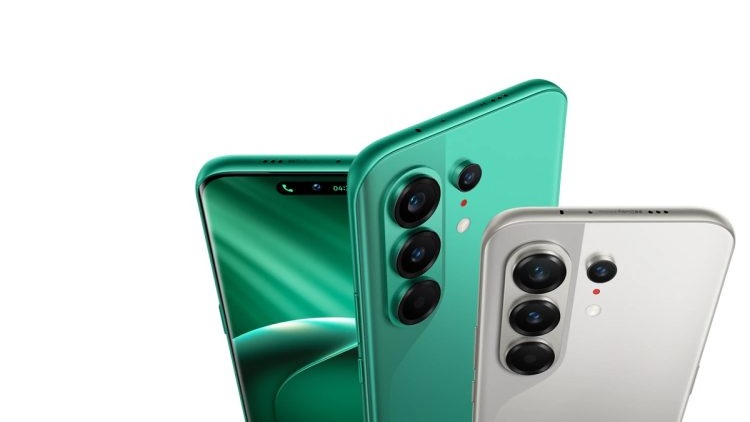
Tecno has always understood its audience better than most people give it credit for. While global tech media debates Snapdragon 8 Elite benchmarks and 1-inch camera sensors, Tecno is quietly building phones for a market that cares about battery life that survives a full day of Nairobi commutes, cameras that handle bright equatorial sunlight, and a price that does not require a payment plan that outlasts the device's software support.
The Camon 50 series, launched quietly in Kenya last week ahead of its official MWC debut, continues that tradition. Two phones. Most of the same hardware. One notable camera upgrade on the Pro. And a Ksh 6,500 gap between them that raises some legitimate questions.
Let us go through what Tecno got right — because there is a genuine amount to credit here — before we get to the uncomfortable parts.
What Tecno Got Right
The display is genuinely impressive for this price.
Both phones carry a 6.78-inch AMOLED panel at 1.5K resolution (1208 x 2644) with a 144Hz refresh rate. This is a strong display specification. The 1.5K resolution is noticeably sharper than the standard Full HD+ that most competitors in this price range offer, and 144Hz makes scrolling and UI animations feel fluid. The Camon 50 has a flat screen while the Pro gets a curved display — more on that tradeoff shortly.
One detail worth flagging: Tecno's own documentation acknowledges that the 1.5K display is natively rendered at 1080p by the GPU and then upscaled to 1.5K by their T1 imaging chip. This is not unusual in the industry but it is worth knowing, because true 1.5K rendering and AI-upscaled 1.5K are not the same thing in practice.
The main camera hardware is a legitimate win.
The Sony LYT-700C sensor on both models is not a marketing gimmick. It is a 1/1.56-inch sensor with OIS — real optical image stabilisation, not software compensation — and it is the same primary sensor across the entire Camon 50 lineup. Tecno is not playing the megapixel inflation game with the main camera. A well-implemented Sony sensor with OIS at this price is exactly what a camera-focused phone should lead with, and Tecno deserves credit for not cheapening out here.
Battery and durability are both properly done.
6,150mAh is a large battery. 45W fast charging is not the fastest on the market but it is adequate for a battery this size. The IP68/IP69K rating and MIL-STD-810 military-grade drop certification are legitimate durability credentials — not marketing language. These phones are built to survive real-world Kenyan conditions, which matters more than most reviewers acknowledge.
Software is current and supported.
Android 16 with HiOS 16 out of the box, with a commitment to up to three major Android updates and five years of smooth performance certification from TÜV SÜD. That is a better software commitment than Tecno has historically offered, and it brings them closer to what Xiaomi and Samsung have been promising.
The Pro's telephoto is genuinely differentiating.
A 50MP periscope telephoto with 3x optical zoom and OIS on a phone priced under Ksh 50,000 is not common. Optical zoom matters — it produces meaningfully better results than digital crop zoom for portraits, distant subjects, and anything where you need to isolate a subject without losing quality. If you shoot the kind of content where zoom matters, the Pro's telephoto is a real, tangible upgrade over the standard model.
The Questions the Maths Raises
Now for the part that requires some honest accounting.
The Helio G200 is not a new chip — and the name obscures that.
The MediaTek Helio G200 sounds current, but the architecture tells a different story. It is built on a 6nm process with two Cortex-A76 performance cores and six Cortex-A55 efficiency cores, clocked at 2.2GHz. If that sounds familiar, it is because this is essentially the same chip architecture as the Helio G99 and G100 that have been shipping in budget phones since 2022. MediaTek's own Dimensity lineup has moved significantly further — the Dimensity 7400 in the Redmi Note 15 Pro 5G scores approximately 62% higher in AnTuTu and 189% higher in GPU benchmarks.
The Helio G200 is a competent chip for everyday tasks — social media, video streaming, light gaming, productivity apps. But calling it the "Helio G200 Ultimate" while shipping it in a phone priced at Ksh 37,500 to Ksh 44,000 in 2026 is branding work, not engineering work. At this price point in Kenya, the Dimensity-powered competition is meaningfully faster.
Both phones are 4G only — and MWC is this weekend.
This is the timing problem that every Kenyan buyer needs to sit with before placing a pre-order. Tecno has confirmed they are unveiling the Camon 50 series at MWC 2026 in Barcelona from March 2 to March 5 — which is next weekend. There is no confirmed 5G variant yet, but Tecno's own Camon 40 Pro 5G showed that 5G versions of the Camon lineup are something the company makes.
Kenya's 5G network is still maturing and coverage remains primarily in urban areas. For many buyers, 4G is perfectly adequate today. But "adequate today" and "adequate for the next three years of your phone's life" are different questions. If Tecno announces a Camon 50 5G at MWC — which is a real possibility — buying the 4G version at full price this week looks premature in retrospect.
The Ksh 6,500 gap: what you are actually paying for.
Let us be specific about what separates the Camon 50 from the Camon 50 Pro at retail price:
Feature | Camon 50 | Camon 50 Pro | Difference |
|---|---|---|---|
Price | Ksh 37,500 | Ksh 44,000 | Ksh 6,500 |
Display | Flat AMOLED | Curved AMOLED | Curved Screen |
Storage | 128GB | 256GB | +128GB |
Telephoto | None | 50MP 3x periscope + OIS | Significant |
Those are the only difference between Camon 50 and Camon 50 Pro, everything else is similar.
The 128GB additional storage on the Pro has a market value of roughly Ksh 1,500 to Ksh 2,000 as a standalone upgrade. The curved screen is a design preference — it looks premium, but it also makes screen protectors harder to fit and edges more vulnerable to drops. The telephoto is the only upgrade that represents a clear functional improvement.
So the honest framing is this: the Ksh 6,500 gap is primarily a telephoto tax. If you will use 3x optical zoom regularly — for portraits, sports, events, nature — the Pro is worth it. If you will not, you are paying for 128GB of storage you may not need and a curved screen that looks better on a shelf than it does in a case.
Who Should Consider These Phones
The Camon 50 makes the most sense for a buyer who prioritises camera quality in a durable, long-lasting device and is not a heavy gamer. The Sony sensor and OIS will produce genuinely good photos. The battery will last. The display is better than most competitors at this price. If 4G sufficiency and the Helio G200's performance ceiling do not concern you, it is a solid everyday phone.
The Camon 50 Pro makes sense for anyone who shoots portraits or events regularly and would use the telephoto. The periscope zoom at this price is a genuine differentiator and it is hard to find elsewhere in this bracket without paying significantly more. The extra storage is a bonus for heavy camera users who accumulate large files.
Wait before buying if you are sitting in a 5G coverage area, intend to keep the phone for three or more years, or care about gaming performance. MWC is next weekend. A better-informed decision is two weeks away.
The Bigger Context
We have written before about how the Kenyan smartphone market gets systematically underserved — phones priced at mid-range or above, but specced for a "good enough" tier that would not fly in more competitive markets. The Camon 50 series is not the worst example of this pattern. The cameras are honest, the durability is real, and the software support is better than Tecno has historically offered.
But the Helio G200's rebrand lineage and the 4G-only decision in a launch that is happening the same week as MWC are worth naming plainly. Tecno's African-first launch strategy — going live in Kenya and Nigeria before Barcelona — is a smart market play that deserves credit. The phones themselves deserve more transparency about what is under the hood.
If you are ready to buy now, the Camon 50 Pro at pre-order pricing of Ksh 38,999 is the more defensible choice — the telephoto alone justifies the gap over the standard model. At full retail of Ksh 44,000, the calculus gets tighter.
Either way, do not close that tab until March 6.
Comments