 By
By 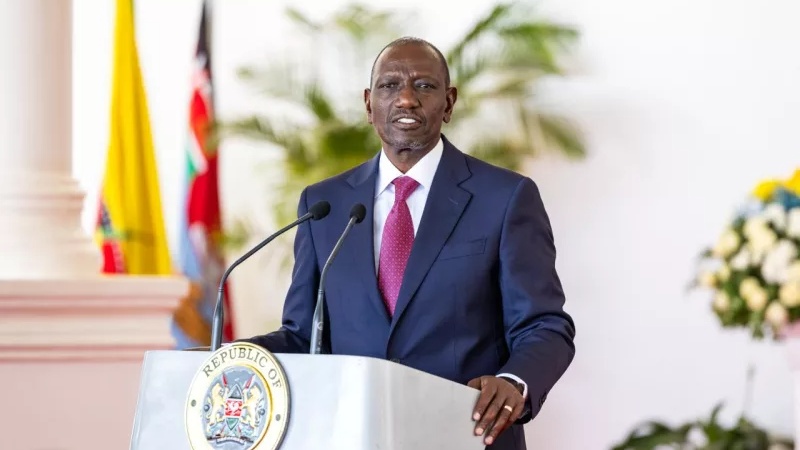
President William Ruto announced on July 21, 2026, that every student admitted to a public university or college will have their education fully funded by the state, scrapping the income-based financing model that has triggered lawsuits and campus unrest since 2023. The announcement lands 13 months before the 2027 general election, on top of a higher education system already short by hundreds of billions of shillings — a combination that invites scrutiny rather than applause.
What Was Actually Announced
Speaking at State House while receiving a report titled Developing a New Vision for Kenya: Towards a First World Nation, Ruto said the government is moving to a "universal" funding model. Under the proposal, admission would depend purely on merit, and funding would follow automatically. "It will not matter the background of any child in Kenya, but how good they are," he said.
Crucially, it isn't compulsory state payment for everyone. Parents who want to cover fees can still do so; those who can't or won't will have the government step in instead. "It will be the choice of parents to pay. If they don't want to pay, we have a model to pay for them," Ruto said, framing it as a deliberate policy shift rather than a stopgap.
Why This Requires an Act of Parliament, Not a Presidential Directive
Ruto called on MPs to amend the Higher Education Loans Board (HELB) Act to enable the new framework, targeting rollout with the September 2026 intake. That distinction matters: nothing changes until the amendment passes. Kenya's last three university funding overhauls have each stumbled at exactly this stage — either through court challenges or funding gaps that outpaced the legislation meant to support them.
A Funding Model That Has Already Failed Twice
The current system, the Variable Scholarship and Loan Funding Model, was rolled out in May 2023 to replace the old Differentiated Unit Cost system, sorting students into five bands based on financial need via a means-testing tool. The Kenya Human Rights Commission and other petitioners challenged it in court, arguing it shifted the financial burden unconstitutionally onto parents and locked out vulnerable students. The High Court agreed, nullifying the model in December 2024 as discriminatory and adopted without adequate public participation. The Court of Appeal stayed that ruling in March 2025, reinstating the model pending a final decision that still hasn't come.
In the interim, HELB reverted to older payment mechanisms for first- and second-year students just to keep tuition flowing, and disbursement delays left hundreds of thousands of students without confirmed funding for stretches of the 2024/25 academic year.
The Money Problem the Announcement Doesn't Address
Kenya's public universities are carrying a cumulative financial shortfall of Sh223 billion, covering scholarships, HELB loans, unpaid staff salaries, and delayed capital projects, according to figures the Principal Secretary for Higher Education presented to Parliament's Education Committee in early 2026. For the 2026/27 financial year alone, HELB says it needs Sh112.1 billion to support a projected 1.38 million students, against a proposed allocation of just Sh45.06 billion — a Sh67.42 billion gap, on top of Sh33.9 billion in current-year arrears and Sh10.7 billion carried over from 2024/25.
Scholarship demand tells the same story: the number of students relying on Universities Fund scholarships is projected to jump from 122,634 in 2023/24 to 656,927 in 2026/27, a more than fivefold increase the fund is not currently resourced to match.
Announcing universal funding into a system this deep in arrears raises an obvious question the government hasn't yet answered publicly: where does the additional money come from, when the existing, smaller commitment isn't being met?
What Happens to Students Already Enrolled
The announcement is framed around the incoming September 2026 cohort, not existing students. Nothing suggests retroactive coverage. Current students would remain on whichever model is legally in force — right now, the reinstated 2023 system, where Universities Fund scholarships cover 30% to 70% of need and any shortfall is bridged by HELB loans and household contributions. The government has not said whether or when current students might be transitioned onto the new universal model, leaving a two-tier system as a live possibility rather than a hypothetical.
Why the Election Calendar Is Impossible to Ignore
Kenya heads to the polls in August 2027, and Ruto's economic record has become the central line of attack against him. Kenya's public debt has surpassed Sh12 trillion, cost-of-living frustration fueled the 2024 Finance Bill protests and subsequent Gen Z-led demonstrations, and analysts point to widespread frustration over higher taxes and unfulfilled promises, particularly around Ruto's original "hustler" pledge to uplift small traders. Ruto has responded to this pressure by repeatedly insisting his commitments weren't campaign tactics — telling a gathering in May 2026 that "the commitments I made to the people of this nation were not for purposes of winning the election" — even as he has separately built a re-election strategy around consolidating political alliances rather than chasing popularity.
Free university education for the next admitted cohort is precisely the kind of policy that plays well in campaign season: broad, aspirational, popular with parents and prospective students, and — because implementation is pushed to September 2026 and beyond — not something voters can hold him accountable for failing to deliver before they cast ballots in 2027. It also lands three years after Ruto's administration first promised its predecessor funding model would fix university financing, and roughly 18 months after that model was found unconstitutional.
What Would Actually Confirm This Is Real
Three things would separate this from Kenya's last two university funding announcements: the HELB Act amendment actually passing Parliament rather than stalling in committee; a Treasury allocation in the 2026/27 or 2027/28 budget large enough to close the existing Sh67 billion HELB gap and fund a universal model on top of it; and a public timeline for whether currently enrolled students are ever brought into the new system. Until those materialize, the announcement sits alongside a long list of Ruto pledges — six-month infrastructure timelines, universal healthcare coverage, full teacher employment targets — that have drawn the same charge from critics: ambitious in the telling, unresourced in the delivery, and timed for maximum political effect ahead of a re-election bid that increasingly depends on persuading Kenyans his record deserves a second look.
Comments