 By
By 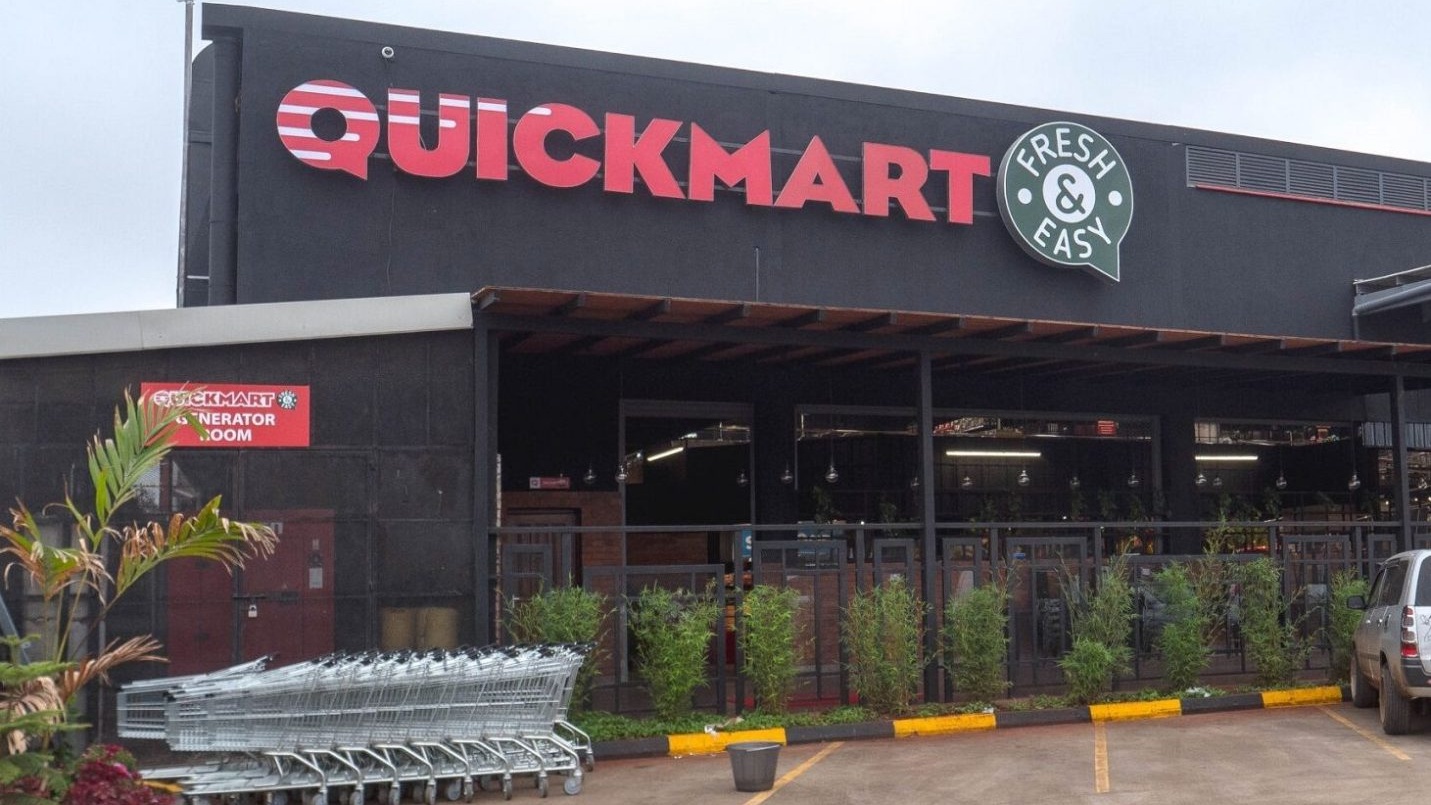
Quickmart PLC, Kenya's second-largest supermarket chain, has announced plans to list on the Nairobi Securities Exchange (NSE) through the sale of 2 billion existing shares, equal to 50% of its issued share capital. The offer is expected to open on or around September 30, 2026, subject to approvals from the Capital Markets Authority (CMA) and the NSE.
The company confirmed the plan on September 23, 2026, in an intention to float announcement. The listing is structured as an offer for sale, which means Quickmart will not issue new shares and will not receive any money from investors. All proceeds will go to its sole shareholder, Sokoni Retail Kenya Limited (SRKL).
How the offer is structured
SRKL is the holding vehicle through which funds managed by private equity firm Adenia Partners, the founders of Quickmart and Tumaini supermarkets, and Group Chief Executive Peter Kang'iri hold their interests. According to the company, the shares will be sold in a way that results in a pro rata partial exit by each of those shareholders.
The offer includes an over-allotment option of up to 15% of the offer shares, on terms to be set out in the Information Memorandum. If the option is not exercised, SRKL is expected to keep about 50% of Quickmart after the sale. If it is exercised in full, the total stake sold rises to 57.5% and SRKL's remaining holding falls to about 42.5%. Adenia is expected to remain the anchor shareholder.
Quickmart intends to list all of its issued shares, about 4 billion in total, on the Main Investment Market Segment of the NSE. Only the 2 billion shares on offer will change hands in the initial sale. Each share has a nominal value of KES 0.20.
SBG Securities and Stanbic Bank Kenya are the lead transaction advisers, with Dyer and Blair acting as co-placing agent, according to reports on the transaction. The offer is open to Kenyan retail and institutional investors, investors in other East African Community states and eligible foreign investors. Reports on the announcement note that no public offer will be made in the United States, United Kingdom, Canada, Australia or Japan. Investors apply through licensed stockbrokers, and that shares can be bought through Ziidi Trader in the M-PESA app once trading begins.
Quickmart has already filed its draft Information Memorandum and applied to the CMA and the NSE. The offer price, the valuation and the exact application window have not been published. They will be set out in the Information Memorandum once regulators sign off.
Business background
Quickmart was founded in Nakuru in 2006 by the late John Kinuthia and his son Duncan Kinuthia. Tumaini Stores started the same year in Nairobi's Eastlands. Adenia invested in Tumaini in 2018, when it had nine stores, and in Quickmart in 2019, when it had 10. The Competition Authority of Kenya approved a Sokoni investment of more than KES 2 billion, and the two chains merged under the Quickmart brand in 2020.
The retailer now runs 72 stores across 16 counties and employs more than 8,000 people, according to the company and reports on the announcement. It handles about five million customer transactions a month and has about 2.5 million members in its Q-Points loyalty programme. Loyalty members account for 74% of sales, that 35 stores operate around the clock, and that every store is leased. Quickmart estimates it holds about 15% of Kenya's modern grocery retail market.
In FY2025, Quickmart recorded revenue of KES 50.4 billion and adjusted profit after tax of KES 1.7 billion, according to its announcement. Reported profit after tax was KES 1.51 billion, per figures. Revenue has grown from KES 25.7 billion in 2021, though the annual growth rate has slowed each year since 2022 and stood at 8% in 2025. Half-year revenue to June 2026 was KES 27.3 billion, according to The Rio Times. The company projects revenue of KES 58.2 billion and profit after tax of KES 2.1 billion for 2026, rising to KES 67.44 billion and KES 2.85 billion in 2027.
Naivas remains the largest chain. It has more than 100 branches and reported sales of KES 113.5 billion in the year to June 2025. Carrefour, operated in Kenya by Majid Al Futtaim, recorded KES 48.8 billion in Kenyan revenue last year, per The Rio Times. Quickmart says it plans to pass 100 stores by adding 10 to 15 outlets a year.
The dividend proposition
The central pitch to investors is income. After listing, the board intends to target a payout of at least 80% of annual profit after tax, declared and paid twice a year. The company describes the ratio as a target, subject to distributable reserves, capital needs and board discretion, rather than a guarantee.
Applied to the projected 2026 profit of KES 2.1 billion, an 80% payout would total KES 1.68 billion, or roughly 42 cents per share across 4 billion shares. The first dividend is expected to cover the second half of 2026 and be paid in the first half of 2027.
Quickmart already distributes most of what it earns. It paid KES 1.65 billion in dividends for FY2025, KES 1.2 billion for FY2024 and KES 782 million for FY2023, according to the intention to float. The FY2025 payout was higher than reported profit after tax for the year. Sources citing the offer documents, put cumulative dividends since 2022 at about KES 3.7 billion against net assets of about KES 1.9 billion. Because Quickmart will not receive proceeds from the offer, the company says it will fund future expansion from internally generated cash flows.
That arrangement links two things that investors will weigh together. A high payout returns cash to shareholders, while store openings must be paid for from the cash that remains. The dividend policy itself allows for growth and investment plans as a factor in what gets paid.
Risks flagged in the documents
The intention to float lists exposure to Kenya's economy and consumer spending, competition, reliance on leased stores, execution of new store openings, and supplier and operational disruption among its risk factors. The full discussion will appear in the Information Memorandum.
Grocery margins are thin. Quickmart earned about KES 3 in after-tax profit for every KES 100 of sales in 2025. The sector has also seen large failures. Uchumi, Nakumatt and Tuskys all lost scale and collapsed or shrank sharply, and their exit opened space for chains such as Quickmart, Naivas and Carrefour. Analysis points out that customers face no switching costs between supermarkets and that no regulation stops rivals from opening nearby, which puts the emphasis on day-to-day operations such as stock availability and cost control.
Effect on the NSE
The listing follows the end of a long drought in new NSE listings. The government sold 65% of Kenya Pipeline Company at KES 9 a share in an offer that closed in February, its first major IPO in more than a decade. Family Bank has also joined the exchange through a listing by introduction.
Trading on the NSE is concentrated in a handful of counters, namely Safaricom, Equity Bank, KCB, EABL and Co-operative Bank. It adds that banks and Safaricom together accounted for about 80% of the KES 245.9 billion paid in dividends by 33 listed companies in their latest financial years. A consumer retailer with a stated 80% payout policy would add a different kind of dividend stock to the mix. The listing would bring dividends back to the exchange's commercial services segment.
For retail investors, the offer is a chance to hold shares in a chain many already shop at weekly. Pricing, allocation rules and the final timetable will determine how accessible that is in practice. Readers can follow the Quickmart offer and other companies coming to the NSE on the TechInKenya markets dashboard.
The transaction remains subject to CMA and NSE approval and to market conditions. Until the Information Memorandum is published, the offer price, the implied valuation and the dividend yield cannot be calculated.
Comments