 By
By 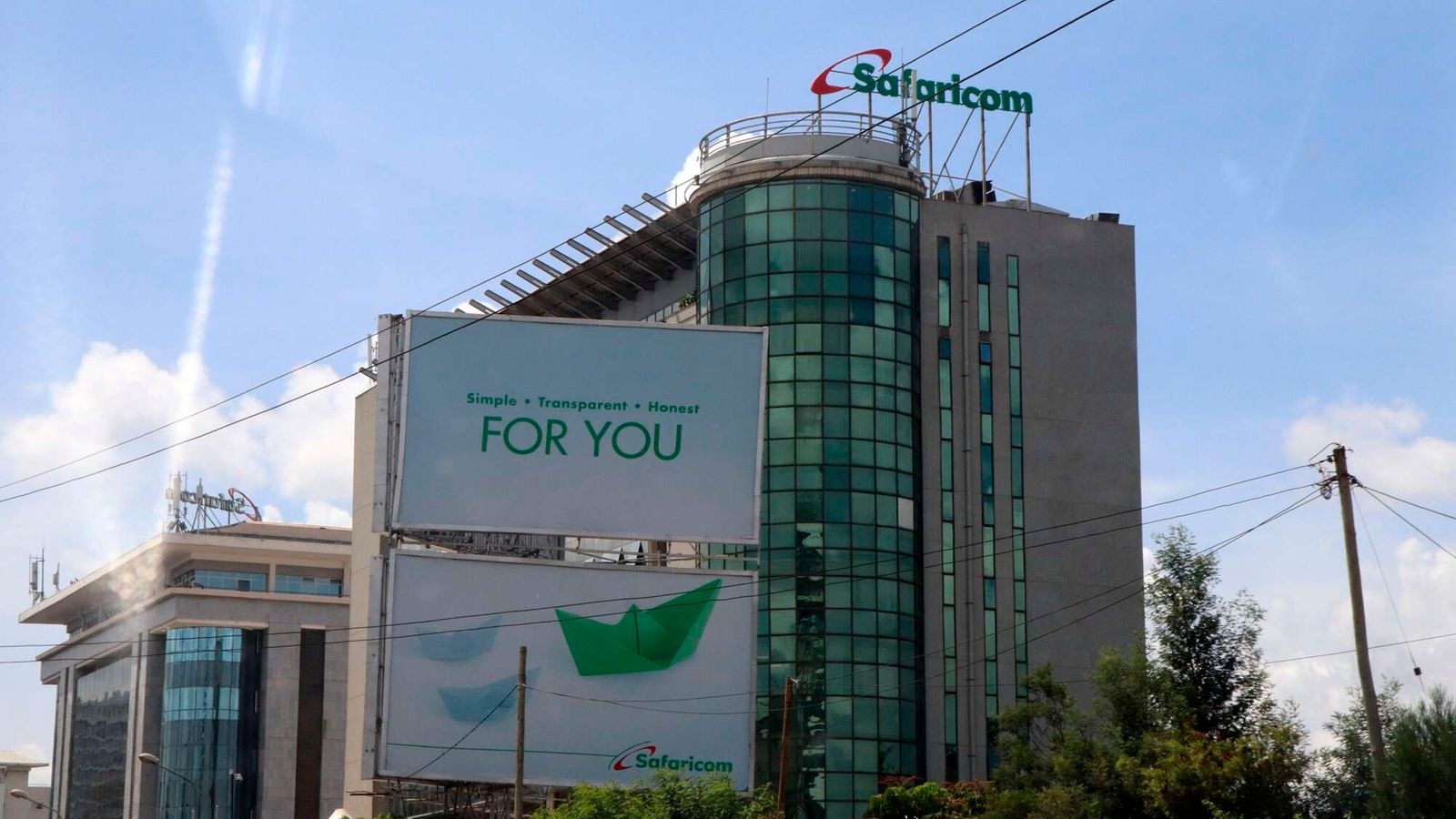
Kenya's Parliament has cleared the way for the government to sell 15% of its stake in Safaricom to South Africa's Vodacom Group, raising approximately Ksh 204.3 billion in a deal that will fundamentally reshape the ownership structure of the country's most important digital infrastructure company.
The joint parliamentary committees on Finance and Public Debt tabled their report on March 10, 2026, recommending approval of Sessional Paper No. 3 of 2025 with amendments, including stronger worker protections and a 10-year guarantee that the company's business model will not be materially changed for its dealers and agents. Parliament had 28 days from December 2025 to approve, reject, or amend the proposal, failing which it would automatically take effect on March 26.
The deal is now effectively done. The real question is what it means for Safaricom's 60 million customers, for M-Pesa, for the government's role in digital infrastructure, and for ordinary Kenyans who use Safaricom not just as a telecoms provider but as a gateway to banking, government services, and the digital economy.
The Numbers: What Is Actually Being Sold
Before assessing the implications, it helps to understand the ownership structure clearly because the framing of this as a simple "government selling Safaricom" is misleading.
Current ownership:
Vodacom Group: 40%
Government of Kenya: 35%
Public shareholders (NSE): 25%
After the transaction:
Vodacom Group: 55%
Government of Kenya: 20%
Public shareholders (NSE): 25%
Vodacom is already Safaricom's single largest shareholder. The government selling 15% of its 35% stake does not hand Safaricom to a foreign company, it hands more of it to a company that already effectively controlled it. What changes is the degree of that control, and critically, the government's leverage in boardroom decisions.
The sale price is Ksh 34 per share, a 23.6% premium above the six-month volume-weighted average price as of December 2, 2025. As of January 30, 2026, Safaricom shares were trading at approximately Ksh 29.50 on the NSE, meaning the government is selling at a premium to market — which sounds good, but some MPs questioned whether even that premium fairly reflects Safaricom's strategic value given it controls M-Pesa, the dominant mobile money platform with 40 million customers in Kenya alone.
Beyond the Ksh 204 billion from the share sale, the government will also receive an advance payment of Ksh 40 billion against future dividends from its remaining 20% stake, to be recouped through future dividend payments valued at Ksh 55.7 billion over six years. After that six-year period, the government returns to receiving full dividends on its retained shares.
Why the Government Is Selling
The fiscal reality behind this deal is not subtle. Kenya's public debt stands at Ksh 12 trillion. Of the government's projected ordinary revenue of Ksh 3.321 trillion, Ksh 1.097 trillion goes straight to debt interest payments, and another Ksh 960 billion goes to the public wage bill. That leaves Ksh 29.8 billion for development expenditure in the entire 2025/26 financial year, less than what the Safaricom deal raises in a single transaction.
The government is not selling Safaricom because it wants to. It is selling because it has very few options left for raising capital outside of more borrowing, and more borrowing is precisely what pushed debt to Ksh 12 trillion in the first place.
The proceeds are earmarked for the National Infrastructure Fund, a newly created vehicle approved alongside this deal, which will channel money into highways, railways, airports, electricity infrastructure, and water projects. Whether that fund operates transparently enough to deliver on those promises is a separate and legitimate question. The opposition has already labelled the fund "a solution in search of a problem," arguing Kenya's infrastructure failures are execution and corruption problems, not financing problems. That critique deserves to be taken seriously even if the sale itself proceeds.
The Case For: Why This Could Be Good
Fresh capital without more debt. The government raising Ksh 204 billion without issuing a bond or taking a loan is genuinely significant. If the infrastructure fund is well-governed, this could fund projects that would otherwise never happen given the current fiscal constraint.
Vodacom's strategic resources. Vodacom is not a passive shareholder, it is one of Africa's most experienced telecoms operators, with operations across 14 African markets. An increased stake means increased commitment. Vodacom has strong incentive to invest in Safaricom's network quality, technology stack, and regional expansion precisely because more of its value now rides on Safaricom's performance. The Ethiopia expansion ( where Safaricom now serves a growing customer base) is exactly the kind of long-term infrastructure bet that benefits from a larger, more committed strategic partner.
Potential M-Pesa expansion. M-Pesa's growth outside Kenya has been slower than its domestic dominance suggests it should be. Vodacom, with its broader African footprint and relationships, could accelerate M-Pesa's expansion into markets where Vodacom already operates, creating a genuine pan-African mobile money network at a scale that benefits Kenyan businesses operating across borders.
Share price discipline. With Vodacom holding 55% and fiduciary duties to its own shareholders, there is stronger pressure on Safaricom management to perform. Bloated cost structures and underperforming divisions face more scrutiny from a majority shareholder than from a government that historically valued Safaricom as a political asset as much as a commercial one.
The Case Against: What Could Go Wrong
Vodacom now has a majority. This is the most important structural change and it cannot be glossed over. A government with 20% and two board seats can be outvoted. A government with 35% had more leverage over strategic decisions, including decisions about pricing, service availability in rural areas, national security data access, and the direction of M-Pesa. That leverage is now reduced.
Higher costs are a real risk. Safaricom's dominance in Kenya has always existed in tension with the government's interest in keeping services affordable. That tension, uncomfortable as it was, served consumers. A Vodacom majority with a commercial mandate and less government counterbalance changes the incentive structure. Tariff increases, reduced rural coverage investment, and the gradual withdrawal of loss-making but socially important services become more commercially rational decisions. The 10-year business model protection for dealers and agents that Parliament negotiated is welcome but it does not protect consumers from price increases.
M-Pesa is national infrastructure dressed as a telco product. Thirteen million Kenyans access government services through eCitizen, the majority of them via M-Pesa. NHIF contributions, tax payments, utility bills, university fees, and government disbursements all flow through M-Pesa. This is not a payments product, it is public infrastructure that happens to be operated by a private company. Handing majority control of that infrastructure to a foreign-owned company raises questions that "Safaricom will remain a Kenyan company" does not fully answer.
The valuation question. Some MPs and the opposition raised concerns that Ksh 34 per share undervalues Safaricom. MP Ndindi Nyoro specifically claimed the shares are undervalued by Ksh 150 billion. Whether that claim is technically accurate or politically motivated, the question of whether Kenya is selling a strategic national asset at the right price deserves an independent answer that was not clearly provided during the parliamentary process.
No public share offer. The Kenya Association of Stockbrokers and Investment Banks proposed that 5% of the 15% stake be offered to ordinary Kenyans on the NSE, with only 10% going to Vodacom. This would have raised roughly Ksh 68 billion for retail investors and deepened local capital market participation. Parliament did not adopt this recommendation. The entire 15% goes to Vodacom, meaning Kenyans who are not already NSE shareholders get no direct benefit from the sale of an asset their government owned on their behalf.
What Parliament's Amendments Actually Changed
The parliamentary committees did not simply rubber-stamp the executive's proposal. Several meaningful amendments were introduced:a
Jobs protection extended. The original deal protected existing employees from acquisition-related layoffs for three years. Parliament expanded this to include retraining programmes and a broader job retention framework, though the specific duration beyond three years was not made explicit in available reporting.
Business partner stability. The National Treasury CS is now required to guarantee that Safaricom's current business model ( the dealer and agent network, the M-Pesa agent ecosystem) will not be materially disrupted for at least 10 years. This matters enormously for the hundreds of thousands of Kenyans whose livelihoods depend on that network.
Block trade on the NSE. The committees directed that the actual transaction be executed through the NSE Block Trading Board, rather than entirely off-market, to maintain some transparency and price discovery.
Government board presence. The government retains two board seats on Safaricom even after dropping to 20%, providing some continued oversight capacity on decisions affecting national interest.
Kenyan chairperson. The board will maintain a Kenyan chairperson, a symbolic but not insignificant requirement given how much of Safaricom's social contract with Kenya runs through that governance structure.
What This Means for You as a Safaricom Customer
In the short term: nothing changes. Safaricom CEO Peter Ndegwa was explicit before Parliament, the regulatory framework, the licensing structure, the Communications Authority oversight, the Central Bank oversight of M-Pesa, and the NSE listing all remain intact. The company operates under Kenyan law regardless of who owns the shares.
In the medium term: watch tariffs. The most concrete consumer risk from this deal is pricing. Safaricom has kept data and voice costs relatively stable, partly because of regulatory pressure, partly because of government influence as a major shareholder. With government influence reduced, the next tariff review cycle will be a telling indicator of how much the ownership change actually matters.
In the long term: M-Pesa's trajectory. If Vodacom uses its increased stake to aggressively expand M-Pesa across Africa using Safaricom's technology and brand, Kenyan customers benefit from a more financially robust company with stronger regional revenues. If Vodacom prioritises margin extraction over expansion, the innovation pace slows and costs rise. That choice will play out over the next three to five years and is the real test of whether this deal was good for Kenya.
The Bottom Line
This is a fiscally motivated sale of a strategic national asset at a moment of acute government financial pressure. That context matters because it means the terms were negotiated from a position of need rather than strength. Whether Ksh 204 billion for 15% of Safaricom was a good deal depends entirely on what Kenya does with the money and whether the infrastructure fund into which it flows is governed well enough to actually build the roads, railways, and energy infrastructure it promises.
The amended deal is meaningfully better than what was originally proposed, the worker protections, the dealer network guarantee, and the retained board seats all matter. But the unanswered question is whether Kenya should have sold at all, or whether a 5% public offer alongside a 10% Vodacom sale might have been better for both the capital markets and ordinary Kenyans.
That debate is now moot. The committees have reported, Parliament will vote, and the deadline is March 26. Vodacom's majority in Safaricom is coming. What matters now is holding the government accountable for where the Ksh 204 billion actually goes and watching closely whether the next Safaricom tariff review treats customers the same way a half-foreign-owned telco treats customers everywhere else in Africa.
What do you think — is selling part of Safaricom the right call given Kenya's debt situation, or is this selling the family silver at the wrong price? Share your view in the comments.
Comments