 By
By 
Mobile World Congress 2026 wrapped up in Barcelona yesterday after four days of announcements, concepts, and enough AI buzzwords to fill a data centre. Most of what was shown will never reach Kenya, or will arrive at prices that make it irrelevant. But buried in the noise are things that will land in Kenyan hands in the next 6 to 18 months, phones, chipsets, and connectivity developments that will shape what you can buy and at what price.
The Phones Worth Watching
Xiaomi 17 Series — global launch confirmed
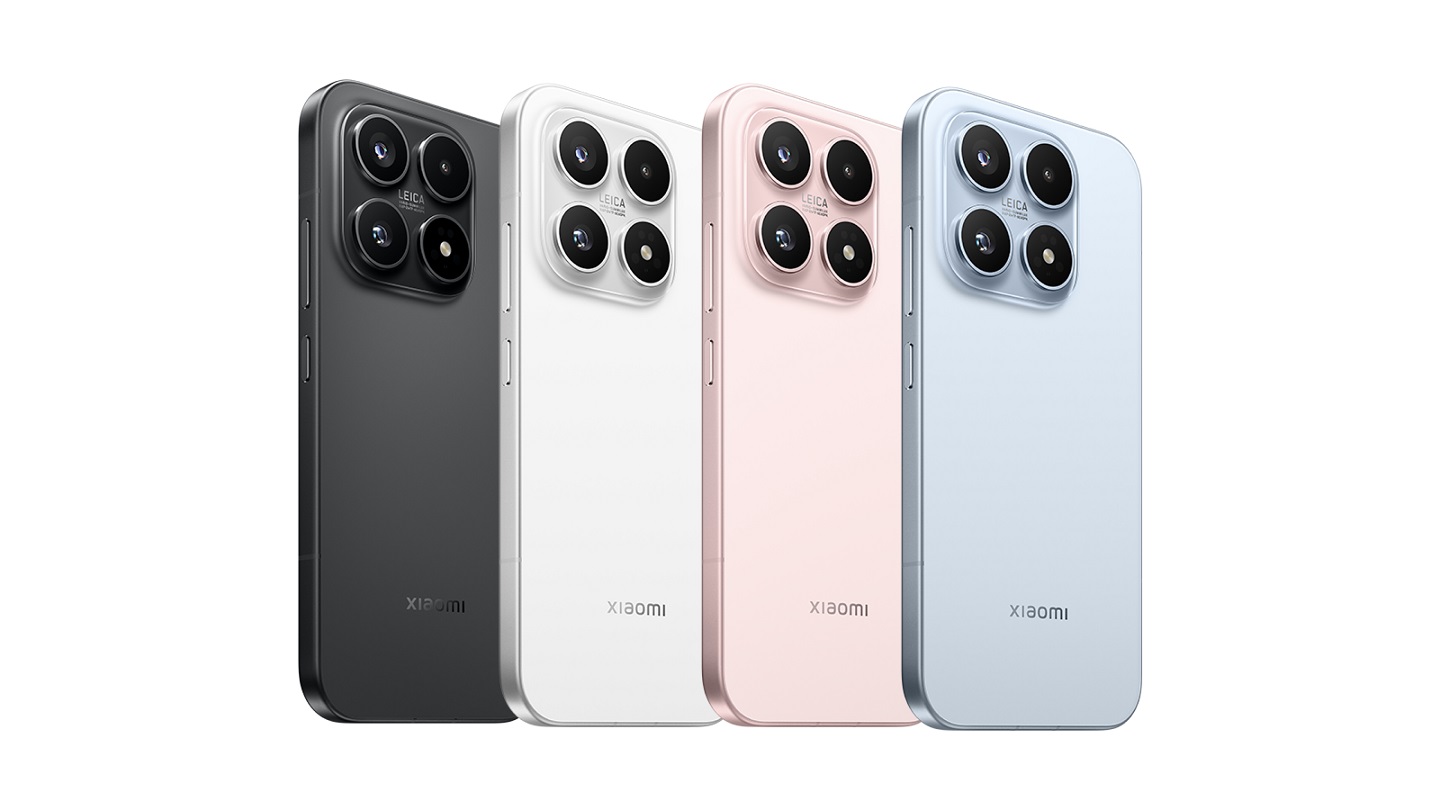
Xiaomi used MWC to officially launch the Xiaomi 17 and 17 Ultra globally. The standard Xiaomi 17 is the one to watch for Kenya. Snapdragon 8 Elite Gen 5, a large silicon-carbon battery, IP68 rating, and 50W wireless charging. No Kenya pricing yet but Xiaomi's recent trajectory suggests it will land competitively against Samsung's mid-to-upper range. The 17 Ultra at £1,299 is priced out of most Kenyan buyers, but the standard 17 is a different conversation. Watch for it in Jumia and Xiaomi's Nairobi stockists later this quarter.
Tecno Camon 50 Ultra — the one Geekspin called best value at MWC
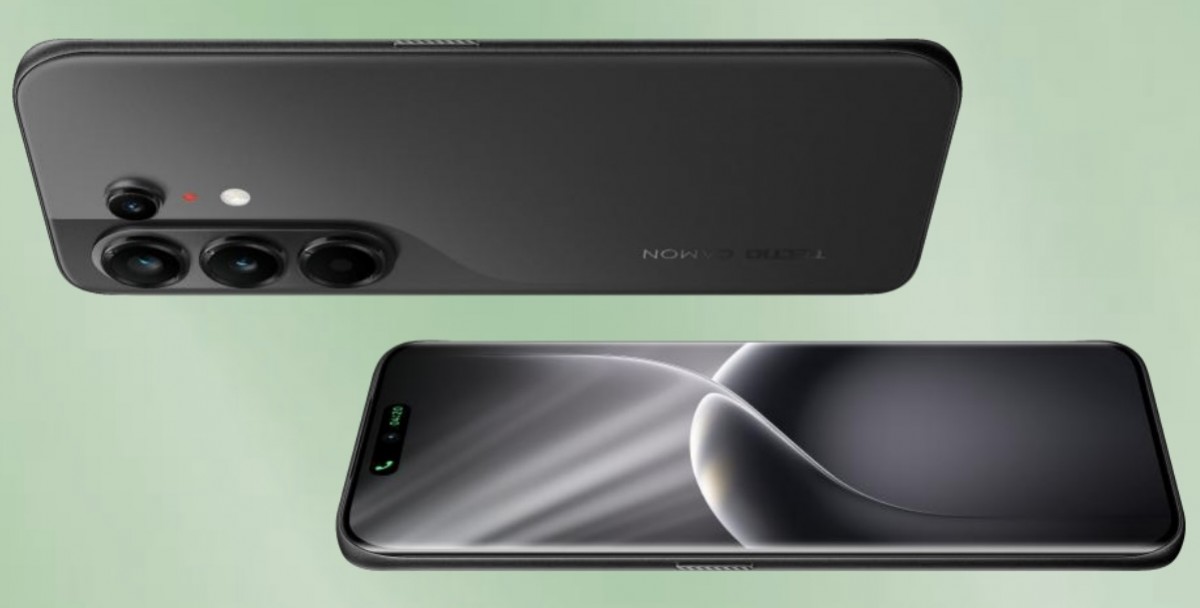
You already know the Camon 50 series from our earlier review. But the Ultra variant shown at MWC, featuring one of Sony's latest mobile imaging sensors and an action shot mode that tracks and zooms moving subjects, was called out specifically as the best value camera phone at the show, with a price under $600. For a Tecno phone to be singled out at MWC is not nothing. If it lands in Kenya at a competitive price it will be worth a proper review.
Nothing Phone 4a — strong mid-range contender incoming
Nothing showed the Phone 4a at MWC without full specs, but confirmed it is a mid-range device in their signature transparent design. Nothing has been growing in Nairobi's import market and the 4a series is exactly the price point, expected around $350, where that audience sits. Full announcement coming soon.
Honor Magic V6 — world's thinnest foldable, not for Kenya yet
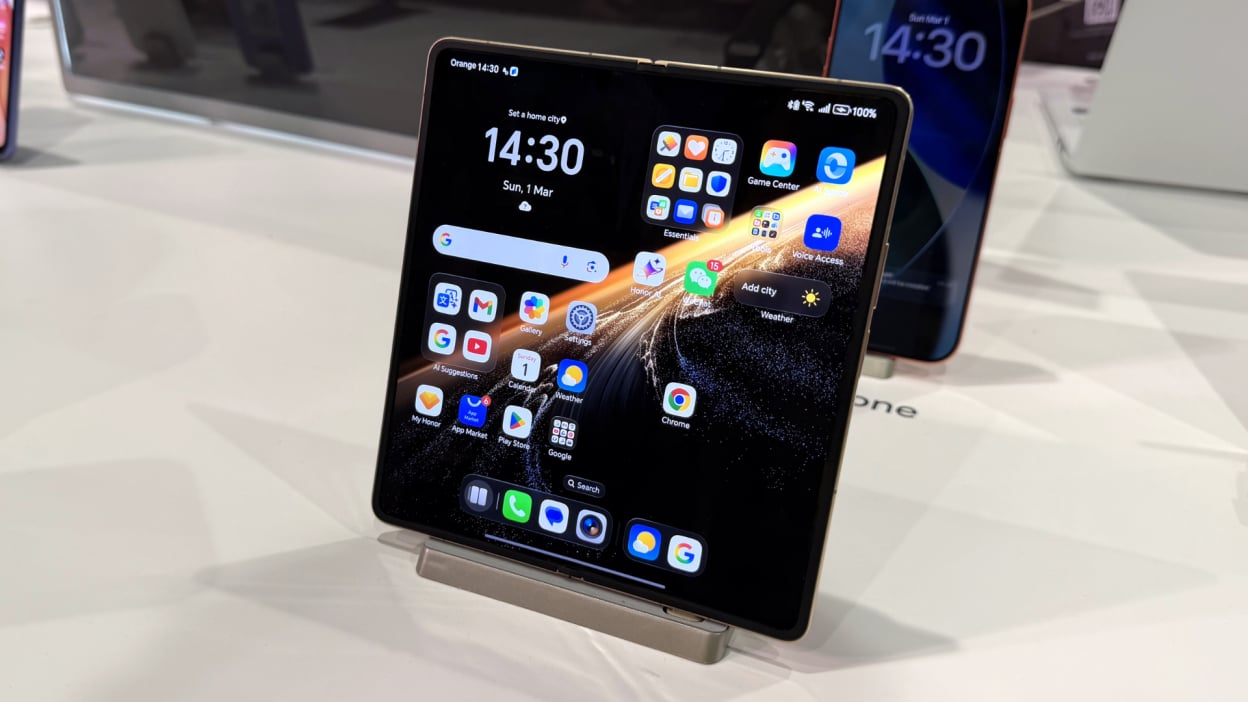
The Honor Magic V6 is 8.75mm when closed (thinner than most non-folding phones) with a 6,600mAh battery and what Honor calls a "Super Steel" hinge. Impressive hardware. Honor's foldables have not made meaningful inroads in Kenya's market yet, and at flagship foldable pricing they are unlikely to soon. Worth noting as a sign of where the category is heading.
The Chipset News That Will Affect Your Next Phone
This is the section most Kenyan buyers skip and the one that most directly determines what is in the phone you buy six months from now.
Snapdragon 8 Elite Gen 5 — the chip inside 2026's flagships
The Xiaomi 17, the Motorola Razr Fold, and the Samsung Galaxy S26 Ultra Enterprise Edition shown at MWC all run Qualcomm's Snapdragon 8 Elite Gen 5. This is the top tier chip for Android in 2026, expect it in any flagship Android phone above Ksh 80,000 for the rest of the year.
Qualcomm X105 modem — the quiet 6G groundwork
Qualcomm announced the X105 5G Modem-RF at MWC, the first chip built to 3GPP Release 19 standards, which is the specification that bridges current advanced 5G and future 6G. Peak speeds of 14.8 Gbps downlink. Commercial 6G is still several years out, but phones launching in late 2026 and 2027 will start using this modem. For Kenya, where Safaricom's 5G rollout is still expanding, the near-term relevance is that the X105 also brings meaningfully better 4G and sub-6GHz 5G performance, the frequencies actually deployed here.
Qualcomm Wi-Fi 8 — FastConnect 8800
Also announced at MWC: Qualcomm's first Wi-Fi 8 chips, offering potential peak speeds of up to 11.6 Gbps. More practically, Wi-Fi 8 brings significantly better performance in congested environments (apartment buildings, offices, shopping malls) which is where most Nairobi users experience degraded Wi-Fi today. These chips will start appearing in flagship phones and routers through 2026 and 2027.
Snapdragon Wear Elite — AI on your wrist
The first wearable chip built on a 3nm process. What this means in practice: smartwatches running this chip will have genuinely useful on-device AI, longer battery life than current flagship wearables while doing more processing locally. This lands in high-end smartwatches later this year, and mid-range wearables 12 to 18 months after that.
The Africa Connectivity Story Nobody Covered Properly
Buried in the MWC infrastructure announcements is something more directly relevant to Kenya than any phone on this list.
Vodafone-Amazon LEO satellite partnership
Vodafone is teaming up with Amazon to boost 4G and 5G mobile coverage using Amazon's low earth orbit satellites, with the service set to roll out across Africa via Vodafone's Vodacom subsidiary after an initial European launch in 2026. Vodacom is Safaricom's parent company. If this partnership extends to Kenya's network infrastructure ( filling coverage gaps in areas where laying fibre is not economically viable) the implications for connectivity in northern Kenya, coastal rural areas, and the arid counties are significant. This is worth watching very closely.
GSMA Open Telco AI
The GSMA launched an initiative called Open Telco AI at MWC, a collaborative framework for telcos to share AI models and tooling for network operations. Safaricom is a GSMA member. The practical near-term application is AI-driven network optimisation: fewer outages, faster fault detection, lower energy consumption. Not consumer-visible immediately, but it feeds directly into network reliability improvements over the next two years.
What Was Mostly Hype
The robot phones and robot humanoids — Honor's Robot Phone with the motorised camera gimbal is genuinely interesting as a concept. It is also a prototype with no release date and no pricing. The humanoid robots shown by Honor and various industrial companies at MWC are five to ten years from having any relevance to ordinary consumers anywhere.
Most of the foldables — Beautiful engineering, prices that start at $1,500 and go up from there, and durability track records that are still being established. The Motorola Razr Fold at 6,200 nits brightness is extraordinary. It is also not for this market at this moment.
Lenovo's modular AI PC concept— Genuinely interesting idea, a laptop with hot-swappable ports and a modular design. Also a concept with no release timeline. Lenovo's actually released laptops at MWC ( the ThinkPad T14 and T16, both scoring 10/10 for repairability from iFixit) are more immediately relevant for the business and developer market.
The One Thing From MWC You Should Actually Care About
If you read nothing else from this roundup, read this.
The Vodafone-Amazon satellite-to-cellular partnership coming to Africa via Vodacom is potentially the most consequential announcement for Kenya from the entire show, not a phone, not a chip, but a connectivity infrastructure deal that could meaningfully change what mobile coverage looks like in the parts of Kenya that current networks do not reach well.
Everything else from MWC 2026 is evolutionary. Thinner phones, faster chips, better cameras, more AI in more places. Incremental improvements on last year delivered with superlatives. The satellite connectivity story is structural. Watch for Safaricom's response to it because if Vodacom's infrastructure advantage expands into rural Kenya via LEO satellites, Safaricom will have a decision to make about its own network strategy in areas where it currently has no real competition.
That is the MWC story for Kenya. Everything else is nice to know.
Comments