 By

The Kenya Revenue Authority (KRA) began enforcing mandatory digital marine cargo insurance on November 1, 2026, meaning imported consignments without a valid certificate from an insurer licensed by the Insurance Regulatory Authority (IRA) can no longer clear customs. The certificate must be processed through the Digital Marine Cargo Insurance (MCI) system and received in KRA's Integrated Customs Management System (iCMS) before an importer or clearing agent lodges a declaration.
For electronics importers, device resellers, hardware startups and online merchants who bring in stock, the change moves a step that was often handled abroad into a Kenyan, system-verified workflow that sits at the start of clearance rather than the end.
What KRA's notice requires
KRA published its notice, titled "Enforcement of Marine Cargo Insurance," on Thursday, October 22, together with the IRA. It states that all cargo entering Kenya must be covered by a valid digital MCI policy issued by an IRA-licensed insurer, and that non-compliant consignments will be blocked from customs clearance.
The sequence matters. Under the notice, the certificate has to reach iCMS before the declaration is lodged. Previously, insurance could be treated as a document to be sorted out later in the process.
Importers or their agents can start a certificate request through insurer websites and mobile apps, the web portal of the Kenya International Freight and Warehousing Association (KIFWA), or the eCitizen platform. The system pulls shipment details from iCMS, the chosen insurer assesses the risk, and once payment is confirmed, the certificate data is sent to KRA, the Association of Kenya Insurers (AKI) and the insurer. KRA has said it will not issue a certificate without confirmation that the premium has been paid.
A rule a decade in the making
The legal basis is not new. The Finance Act, 2017 amended the Marine Insurance Act to add Section 16A, which requires anyone with an insurable interest in marine cargo to place cover with a locally registered insurer, unless the Commissioner grants a prior exemption. Section 20(4) of the Insurance Act makes it an offence to take out insurance from an unlicensed insurer.
Enforcement has been uneven. The Treasury enforced the provision in 2017, which led to a sharp rise in local uptake, but the effort did not hold. KRA and IRA announced a new push effective February 14, 2025, which weakened because of technical system hurdles.
On May 22, 2026, the IRA issued a fresh directive setting July 1 as the start of digital enforcement, with certificates requested through insurer portals or other platforms linked to the IRA system and the eCitizen payment channel. KIFWA launched its Digital Marine Cargo Insurance platform on June 30 with insurers including APA General, Britam General, CIC General, Old Mutual General and Pacis, plus broker Dynamique. The platform connects to eCitizen, iCMS, M-Pesa and participating banks. Safaricom, under an earlier arrangement with the IRA and KRA, had also integrated a marine cargo insurance mini app into M-Pesa, The Standard reported.
The October notice describes November 1 as enforcement of earlier notices, which suggests importers have had several months of warning, though Nairobi Wire noted that the actual start of enforcement had not been independently confirmed when the notice was issued.
Where CIF contracts collide with the rule
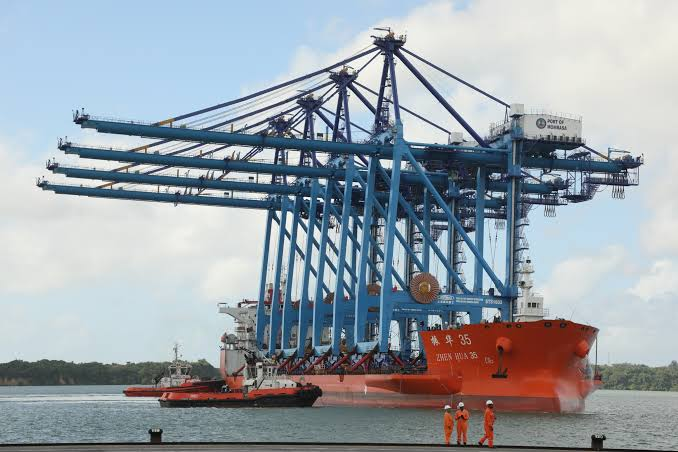
The sharpest friction is contractual. Many overseas electronics suppliers sell on CIF (cost, insurance and freight) terms, where the seller buys the cover and the buyer receives a policy issued abroad. Clyde & Co has said that Kenya's requirement undercuts the seller's ability to choose an insurer and adds due diligence for sellers who must consider whether a Kenyan insurer meets their requirements on coverage, claims and reliability.
KIFWA chairman Fredrick Aloo said in remarks reported by The Standard that insurance embedded in CIF contracts has been a quiet but significant outflow of foreign currency, which is the policy argument for the change. Importers have raised the cost side. A 2025 memorandum from private sector groups asked for suspension until exemptions were clarified for goods insured under CIF terms, contract manufacturing and high-value shipments. A stakeholder quoted by The Standard also warned that global policies already covering shipments could mean paying for cover twice. Car importers, represented by the Car Importers Association of Kenya, objected in 2025 that the directive restricts freedom of choice and adds charges for cover they may not want.
For a hardware startup importing components or finished devices, the practical effect is that a supplier's policy, even where valid abroad, does not satisfy iCMS. The importer needs a Kenyan certificate tied to the shipment, and the cost of that cover is separate from whatever the supplier priced in.
The plumbing: agents, portals and iCMS
The system depends on several connected platforms working at once: insurer systems, the eCitizen payment channel and the Pesaflow gateway, KIFWA's portal, AKI, and iCMS. Each handoff is a point where a certificate can fail to appear against the right shipment.
Online retailers using a freight forwarder to establish who is arranging the insurance and who will confirm its receipt in iCMS, and to ask the insurer or portal operator to trace a certificate that does not show up. Kenya Today reported that clearing agents are instructed to confirm the record appears in iCMS before filing the Import Declaration Form, and that the record should match the goods being declared. For problems, importers are directed to the IRA, specifying whether the issue lies with payment, certificate issuance or customs receipt.
Clyde & Co flagged the dependency risk in June. It noted that the July 2023 cyber-attack on eCitizen affected several services hosted on the platform, and said a crash, delay or attack could leave urgent cargo stranded even after payment has been made. KRA has not published figures on certificate processing times or clearance delays since the rule took effect, and the sources reviewed for this report did not document widespread failures on the first day.
Questions that remain open

Three points are not settled in the public notices.
First, the rule is described as marine cargo insurance, while KRA's notice refers to all consignments entering Kenya. The sources reviewed do not explain how air freight or courier shipments, which carry a large share of small-batch electronics and e-commerce stock, are handled. Importers using those channels should confirm treatment with their agent or KRA directly.
Second, exemptions exist in law but not as a general concession. Section 16A allows a prior exemption from the Commissioner, and the Insurance Act's definition of Kenyan business excludes marine policies on personal effects and goods imported by returning residents or passengers relocating to Kenya. This should not be read as a blanket exemption for a shop's commercial stock.
Third, the treatment of existing foreign policies is unresolved in the notices. The Standard reported earlier that importers holding valid foreign cover could be in breach of local law, which leaves the question of duplicate policies to be managed shipment by shipment.
What importers are being told to do
Industry and press guidance converges on a short checklist. Confirm the insurer is licensed by the IRA. Request the certificate before lodging the declaration, using the shipment's IDF reference. Pay the premium and wait for confirmation. Check that the record has reached iCMS and matches the consignment. Agree in writing with the supplier and the clearing agent who is responsible for each step, particularly where goods ship on CIF terms.
Shipments that arrive without a certificate in iCMS will be held, KRA has warned.
Comments