 By
By 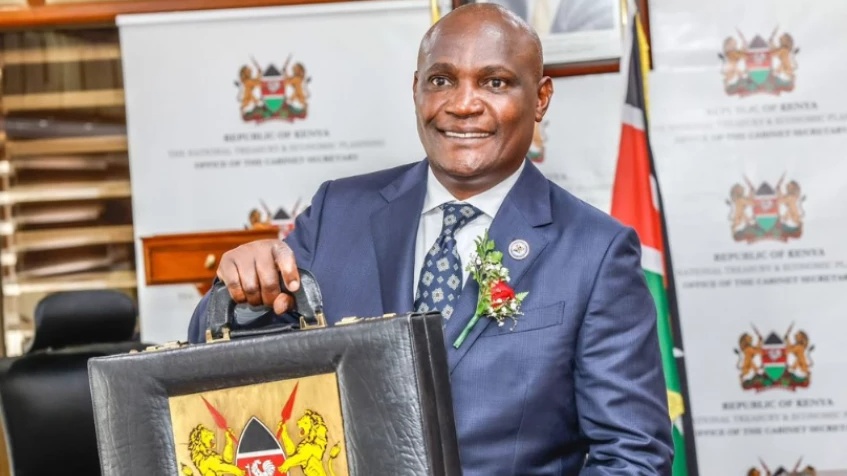
On June 11, 2026, Treasury Cabinet Secretary John Mbadi stood before Parliament and unveiled what is now Kenya's largest ever national budget: Sh4.84 trillion for the 2026/27 financial year. This marks one of the largest spending plans in Kenya's history, and it comes at a time when households are already feeling the pinch of a rising cost of living.
The headline numbers tell a story on their own. Against that Sh4.84 trillion spending plan, the Treasury is projecting a fiscal deficit estimated at more than Sh1 trillion, which government plans indicate will largely be financed through domestic borrowing, alongside additional support from external financing sources. Before we get into what that deficit means for ordinary Kenyans, let's break down where the money is actually going.
Where the Money Is Going: The Big Allocations
Education Still Tops the List
Education has emerged as one of the biggest winners in the 2026/27 budget, with the government proposing a record Sh784.5 billion allocation to the sector. This isn't just about keeping schools running. A chunk of this money is earmarked for a long overdue fix in the Junior Secondary School (JSS) system.
In a major boost for the teaching profession, the government plans to convert the current 20,000 intern teachers to permanent and pensionable terms from January 2027. For thousands of young teachers who have spent years on internship contracts with little job security and modest pay, this is a significant shift. It also signals that the government is finally addressing one of the most persistent complaints from the teaching fraternity since the JSS rollout began.
Beyond teacher absorption, the education allocation also covers KNEC funding of Sh9.9 billion to facilitate national assessments, payment of arrears owed to teachers who marked national exams, and Sh3 billion for the school feeding programme, which continues to play a role in keeping vulnerable children in school.
Security Crosses the Half-Trillion Mark for the First Time
For the first time in Kenya's history, the security sector allocation has crossed the half-trillion mark, with Sh567.3 billion set aside in the 2026/27 budget. This figure covers defence, policing, intelligence, prisons, and internal administration.
Breaking it down further, the Ministry of Defence received Sh252.1 billion, the National Police Service Sh144.7 billion, the National Intelligence Service Sh64 billion, the State Department for Internal Security and National Administration Sh63.9 billion, and the Kenya Prisons Service Sh42.6 billion. On top of these baseline figures, an additional Sh21 billion has been ring-fenced for targeted interventions, including Sh13 billion for leasing police motor vehicles, Sh7 billion for police modernisation programmes, and Sh1 billion for forensic facility upgrades.
Defending this allocation, Mbadi told Parliament that a safe and stable environment is indispensable for investment, trade and economic growth. It's worth noting that this comes against a backdrop of planned police recruitment ahead of the 2027 General Election, with the government targeting thousands of new officers over the medium term.
Health Gets a Boost, But the Numbers Tell Different Stories
Health has also seen increased funding, although the exact figure has shifted slightly depending on which Treasury document you're reading. Earlier budget estimates pegged the health allocation at around Sh136.8 billion, while the final budget reading figures put it closer to Sh170 billion to Sh177 billion, with the increase including the construction of a cancer center in Kisii.
What matters most for everyday Kenyans is what this money is meant to do. The bulk of it is targeted at the continued rollout of Universal Health Coverage (UHC) and the Primary Healthcare Fund, both of which are central to the government's promise of making healthcare more accessible and affordable. Whether that promise translates into shorter queues and lower out-of-pocket costs at your local hospital is the real test, and it's one that previous UHC pushes haven't always passed.
A Historic First: Stipends for Village Elders
One of the more talked-about announcements from this year's budget is the introduction of formal pay for village elders. The government has allocated Sh3.9 billion for stipends to village elders, marking a major policy shift that formally integrates grassroots community leadership into the country's fiscal framework.
Kenya has approximately 110,000 village elders supporting national government functions at the grassroots level, and under the proposed programme, each elder is expected to receive a monthly stipend of Sh3,000. According to Internal Security Principal Secretary Raymond Omollo, the conversation about
formalising this role began back in 2016, and it has taken almost a decade to reach this point.
From where I sit, this is one of the more interesting line items in the entire budget. Village elders have always done real work, resolving disputes, gathering local intelligence, and acting as the first point of contact for many government services, often without any formal recognition or pay. Whether Sh3,000 a month is enough to meaningfully change their circumstances is debatable, but the symbolic shift of bringing them into the formal fiscal architecture is notable on its own.
The Bigger Picture: A Budget That's Almost Doubled in Under a Decade
Here's something worth sitting with for a moment. In the 2018/2019 financial year, Kenya's national budget stood at around Sh2.53 trillion. Fast forward to 2026/27, and we're now at Sh4.84 trillion. That's an increase of roughly 91% in less than eight years.
On paper, a growing budget can be a sign of a growing economy and an expanding government able to do more for its citizens. But the composition of that spending matters just as much as its size, and this is where things get a little uncomfortable.
Recurrent Spending vs. Development Spending
Between 2018 and 2022, a significant share of the national budget was directed toward major infrastructure projects: the Standard Gauge Railway (SGR), port expansions at Mombasa and Lamu, and dual carriageway highway projects across the country. Whatever criticisms one might have about how those projects were financed (and there were many, particularly around the debt taken on to fund the SGR), they represented capital investment. Roads, railways, and ports create jobs during construction, improve logistics for businesses afterward, and can generate revenue for decades.
The 2026/27 budget tells a different story. Recurrent expenditure, which finances daily operations and salaries, is being prioritised to deliver an immediate and visible impact, with the government targeting a record domestic borrowing figure to plug the projected deficit. Recurrent spending is projected to make up the overwhelming majority of total expenditure, while development spending takes up a comparatively small share.
In simple terms, a large portion of this budget is going toward keeping the lights on: salaries for civil servants, teachers, and security personnel, debt servicing, and the day-to-day cost of running government. There's nothing inherently wrong with paying salaries (teachers and police officers need to be paid, full stop), but when recurrent spending dominates a budget this heavily, it leaves less room for the kind of capital investment that grows the economy's productive base over the long run.
This matters because infrastructure spending tends to have a multiplier effect. A new road doesn't just employ construction workers temporarily; it reduces transport costs for farmers and traders for years afterward, which can lower prices and boost incomes across entire regions. Recurrent spending, by contrast, mostly just maintains the status quo. The risk with a budget that leans this heavily into recurrent costs is that it could act as a drag on economic growth rather than a catalyst for it, even as the total numbers keep climbing.
Adding to the pressure, the Consolidated Fund Services, which covers interest payments and pensions, stands at roughly Sh1.5 trillion, representing about 31% of the entire budget, with domestic interest payments alone exceeding the entire education budget. That's a staggering figure. It means nearly a third of everything the government spends in a year is going purely toward servicing past borrowing and paying pensions, before a single shilling goes toward anything new.
"No Surprises": The Finance Bill 2026
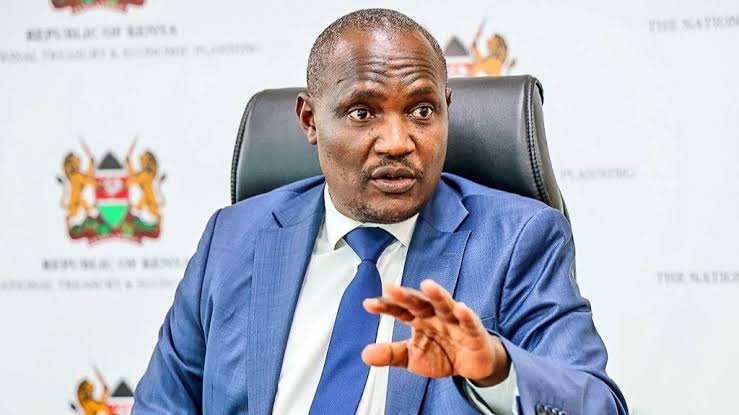
Given the intensity of public pushback and protests against aggressive tax proposals in previous Finance Bills, particularly the 2024 edition that triggered widespread demonstrations, this year's approach has been noticeably different. CS Mbadi has repeatedly emphasised that there are no surprises for Kenyans in the Finance Bill 2026, noting that most of the revenue-raising proposals have already been in the public domain since earlier in the year, following the constitutional requirement for public participation.
Rather than introducing a wave of brand new taxes, the government's stated approach for raising additional revenue, reported to be around Sh120 billion, leans on tightening tax administration, closing existing loopholes, and digitising government procurement systems.
I'd be cautious about taking that framing entirely at face value, not because Mbadi is necessarily being dishonest, but because "no new taxes" and "no impact on your pocket" aren't the same thing. Tightened tax administration can still mean more aggressive enforcement on small businesses and informal traders who previously operated under the radar. If you want to dig into the actual details of the Finance Bill 2026 rather than relying on government framing alone, we've published a full breakdown here: Understanding the Finance Bill 2026: A Deep Dive Into All the Details That Matter. We've also made the actual Finance Bill 2026 PDF available for download on that page, so you can read the source document for yourself and form your own view. Feel free to leave a comment there if you have questions or thoughts you'd like to add to the discussion.
Plugging the Sh1 Trillion-Plus Gap: How the Government Plans to Borrow
This is where the budget gets genuinely consequential for everyday Kenyans, even those who never read a Treasury document in their lives.
With total revenue projected at Sh3.6 trillion against total expenditure of Sh4.8 trillion, the resulting fiscal deficit comes to roughly Sh1.1 trillion, equivalent to about 5.3% of GDP. The Treasury's plan for closing this gap rests overwhelmingly on domestic borrowing, supplemented by external loans and, for the first time, exploration of Shariah-compliant Sukuk bonds as an alternative financing instrument.
It's worth noting that the exact split between domestic and external borrowing has moved around across different Treasury documents released over the past several months, with domestic borrowing figures ranging from roughly Sh890 billion to over Sh1 trillion depending on which estimate you're looking at, and external borrowing figures similarly shifting. What has remained consistent throughout is the direction of travel: the lion's share of new borrowing is coming from the local market, not from foreign lenders.
Why Domestic Borrowing Is a Double-Edged Sword
On the surface, borrowing locally sounds like the safer option. It protects Kenya from foreign exchange shocks, the kind that hit hard when the shilling weakens against the US dollar and suddenly makes dollar-denominated debt far more expensive to service. After years of headlines about Eurobond repayments and currency volatility, shifting toward shillings-denominated debt looks like a prudent move.
But here's the catch, and it's one that has very real, very painful consequences for ordinary Kenyans and small businesses.
When the government needs over a trillion shillings from the domestic market, it does so by issuing Treasury Bills and Bonds, and to attract investors, it has to offer high, competitive interest rates. Commercial banks look at this and run a simple calculation: why take on the risk of lending to a small business, a tech startup, or a mama mboga who might default, when you can lend to the government at a guaranteed, high return with effectively zero default risk?
The result is what economists call "crowding out." Private businesses and individuals find it harder and more expensive to access credit, because banks would rather park their money in government securities. The high amount of new additional government borrowing may push everyone out of getting loans from banks, as the competition for the scarce money causes interest rates to rise.
This sets off a chain reaction:
Credit becomes scarce and expensive. Without access to affordable credit, businesses can't expand, hire new staff, or invest in better equipment.
Existing loan repayments climb. If you have a flexible-rate mortgage or a business loan, your monthly repayments are likely to increase as commercial banks adjust their rates to stay competitive with government securities.
The cost of living rises. When businesses can't borrow affordably to scale production or improve efficiency, their costs go up, and those costs inevitably get passed on to consumers through higher prices for everyday goods and services.
In short, while domestic borrowing shields Kenya from currency risk, it does so by quietly squeezing the private sector, the very part of the economy that creates most jobs and drives organic growth. The government ends up competing with, and often outcompeting, the entrepreneurs and small businesses it claims to be supporting through programmes like the Hustler Fund and various SME initiatives. There's a real tension here between the government's stated goal of stimulating local manufacturing and small business growth, and a financing strategy that makes it harder for those same businesses to access capital.
What Happens Next: The Road to July 1
Now that Mbadi has delivered the official Budget Highlights, the Finance Bill 2026 moves into its most critical legislative phase. Over the coming weeks, expect the Second Reading, full floor debate, and clause-by-clause voting in the National Assembly.
By law, the Finance Bill must be fully debated, voted on by Parliament, and signed into law by the President before the new financial year begins on July 1, 2026. Given how compressed this timeline is, and given the history of heated, sometimes chaotic debates around recent Finance Bills, expect intense activity in Parliament over the next two weeks.
If you've been meaning to read through the Finance Bill 2026 and submit your views during the public participation window, time is running extremely short. The window for meaningful public input narrows considerably once the Bill reaches the voting stage, so if this matters to you, now is the time to act.
Final Thoughts
This budget tells two stories at once. On one hand, there are genuinely positive moves: absorbing 20,000 JSS interns into permanent jobs addresses a real grievance, formally recognising village elders is a small but meaningful acknowledgment of grassroots governance, and the "no surprises" approach to taxation reflects some degree of responsiveness to last year's protests.
On the other hand, the structural picture is concerning. A budget that has nearly doubled in eight years but is increasingly dominated by recurrent spending and debt servicing, rather than the kind of infrastructure investment that expands the economy's capacity, raises real questions about long-term sustainability. And the financing plan for the deficit, however well-intentioned in trying to avoid foreign exchange risk, comes with a cost that will likely be felt by anyone trying to get a loan, run a business, or simply buy groceries over the coming year.
The next few weeks of parliamentary debate will determine how much of this plan survives intact. It's worth paying attention.
Comments