 By
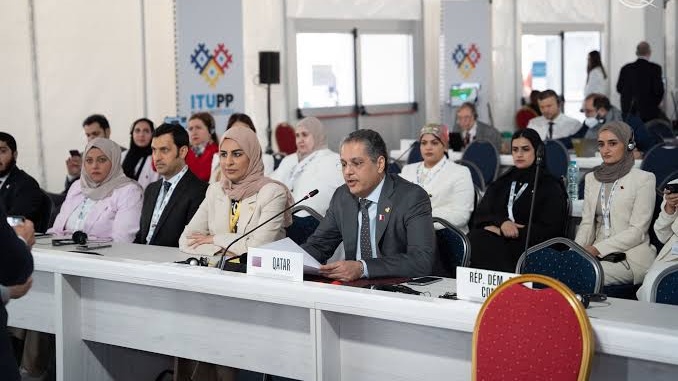
Kenya has been re-elected to the Council of the International Telecommunication Union (ITU), winning 136 of 173 votes at the union's Plenipotentiary Conference (PP-26) in Doha, Qatar. The tally was the highest recorded by any African country, according to the Communications Authority of Kenya (CA) and Kenyan media reports published on 16 November 2026. The result secures Kenya a seat on the 48-member governing council of the United Nations agency for digital technologies for the 2027 to 2030 term, and extends a presence on the Council that has been uninterrupted since 1982.
The campaign was led by Information, Communications and the Digital Economy Cabinet Secretary William Kabogo, who delivered Kenya's policy statement at the opening of the conference and handled engagement with member states on the sidelines, with the CA supporting the bid. The outcome arrives about four weeks before Nairobi hosts the 21st Internet Governance Forum (IGF) from 14 to 18 December 2026.
How the vote played out
The election was held under Region D, the ITU's African grouping. According to the CA press release carried by the Kenya News Agency, 19 African countries competed for 13 Council seats. Council seats are decided by a one-country, one-vote ballot, so Kenya's 136 votes represent the support of roughly four in five of the 173 ballots cast, a share of about 79 percent by simple division.
Kenya's margin over its closest African rivals was narrow, according to one outlet. The Rio Times, citing the ITU's election results page as read on 16 November, reported that Côte d'Ivoire received 135 votes and Senegal 134, which would put Kenya one vote ahead of the next candidate.
The same outlet noted that Kenya's 2026 total is ten votes lower than its result at the previous Plenipotentiary Conference. At the 2022 conference in Bucharest, Romania, Kenya secured 146 votes, also the highest among African countries.
Kenya has been an ITU member since 1964 and has served on the Council since 1982, according to TechTrendsKE.
What the ITU Council does
The Plenipotentiary Conference is the ITU's highest policy-making body and meets every four years. PP-26 opened on 9 November and runs to 27 November. Between those conferences, the 48-member Council oversees implementation of the union's strategic plan, supervises its budget and sets priorities ahead of the next conference.
Kenyan government communications describe the Council's remit as decisions on spectrum, satellite orbits, technical standards and development assistance. Those decisions feed into the cost of mobile data, the reliability of internet services and the pace of 5G rollout, according to the reports carried by KBC and TV47 Digital. Kenya is one of 13 African members of the Council, which is just over a quarter of its seats, based on the ITU results data cited by the Rio Times.

In a post on his official X account, Kabogo said the renewed mandate allows Kenya to keep contributing to the governance of the union, including its strategic and financial plans for 2028 to 2031. Those plans are among the items PP-26 is expected to settle before it closes, which is why the timing of the conference matters for the priorities Kenya has tabled.
Kenya's stated priorities
According to TV47 Digital's account of the policy statement, Kenya set out five priorities it intends to carry into the Council:
Meaningful and affordable access: a greater focus on last-mile connectivity and affordable devices.
Resilient infrastructure: stronger regional planning for undersea cables and cross-border fibre to reduce disruptions, building on Kenya's leadership of the Connected Africa Secretariat.
African AI capacity: investment in regional data centres, AI models that understand African languages, and data governance that protects African interests.
Fair access to spectrum and satellite resources: equitable access to orbits and frequencies, and greater spectrum harmonisation across the continent.
Implementation over declarations: turning commitments made under the World Summit on the Information Society review (WSIS+20) and the Global Digital Compact into practical outcomes.
KBC reported that Kenya is also seeking more investment in last-mile connectivity and artificial intelligence for African countries following the re-election.
Claimed benefits for users and the industry
The government and the media outlets relaying its statement have linked the Council seat to several practical outcomes. Kenya's voice in regional spectrum allocation, they say, can help lower device costs and speed up 4G and 5G deployment. Closer cooperation on undersea cables is presented as a way to reduce the internet disruptions that affect mobile money, the eCitizen platform and everyday browsing. The push for inclusive AI is meant to ensure that new digital tools work in Kiswahili and other African languages.
For businesses, TV47 Digital and KBC reported that continued representation gives operators, internet service providers and startups earlier insight into emerging global standards and regulations, which helps them plan investments. The same reports say the result reinforces Kenya's standing as a regional digital hub and creates openings for Kenyan engineers and experts to contribute to international standards work.
These are the benefits cited by the government and by outlets repeating its statement. None of the reports reviewed offered independent measurement of how Council membership has affected consumer prices or network performance in the past.
Kenya's ability to advance its priorities will depend on continued coordination with other African members, support from the wider ITU membership and the practical work of turning proposals into decisions and programmes. A single Council seat carries one vote among 48, so outcomes on spectrum and orbit allocation turn on building coalitions rather than on Kenya's position alone.
Nairobi's turn at the IGF

Kenya's next international test comes on home ground. Nairobi will host the 21st annual meeting of the UN Internet Governance Forum at the Kenyatta International Convention Centre (KICC) from 14 to 18 December 2026, under the theme "Governing the Internet in the Age of Intelligence: Our Shared Responsibility."
The IGF organisers describe the Nairobi edition as the first gathering of the global multistakeholder community since the UN General Assembly decided to establish the forum as a permanent UN body. Principal Secretary for Foreign Affairs Korir Sing'oei announced on 18 May that organisers expect more than 250 sessions over five days, with participants from over 165 countries and an estimated 9,000 delegates, according to People Daily. Kenya will become the first African nation to host the forum twice, after hosting in 2011.
TV47 Digital reported that Kenya intends to use the forum to champion regional action on undersea cable resilience, AI capacity and inclusive digital governance, the same themes it set out in its ITU policy statement.
What remains at PP-26
The Plenipotentiary Conference continues in Doha until 27 November. Kenya is expected to pursue implementation of its proposals through the ITU's strategic and financial planning processes. Whether those proposals are reflected in the plans for 2028 to 2031 will be visible once the conference adopts its final documents.
Comments