 By
By 
On June 18, 2026, Molo MP and National Assembly Finance Committee Chairperson Kuria Kimani stood before Parliament and declared that Kenya produces more than one million smartphones per year. He said local firms are creating jobs for youth, positioning Kenya as an emerging technology production hub, and that the country has progressed from being a pure technology consumer to a participant in production and export of digital devices.
It sounded like a proud moment. And in some ways, it genuinely is.
But there is a word that keeps getting quietly glossed over in these announcements: assembling. Kenya is not manufacturing smartphones. It is assembling them. And while that distinction is not a reason to dismiss the progress, it matters enormously when you start asking the harder questions, like whether these phones are actually built for Kenyan needs, whether they can compete with what is already on the market, and whether the entire initiative can survive as smartphone users grow more demanding.
The Real Story Behind "Made in Kenya"
To understand what is actually happening, you need to look at the two main operations driving these numbers.
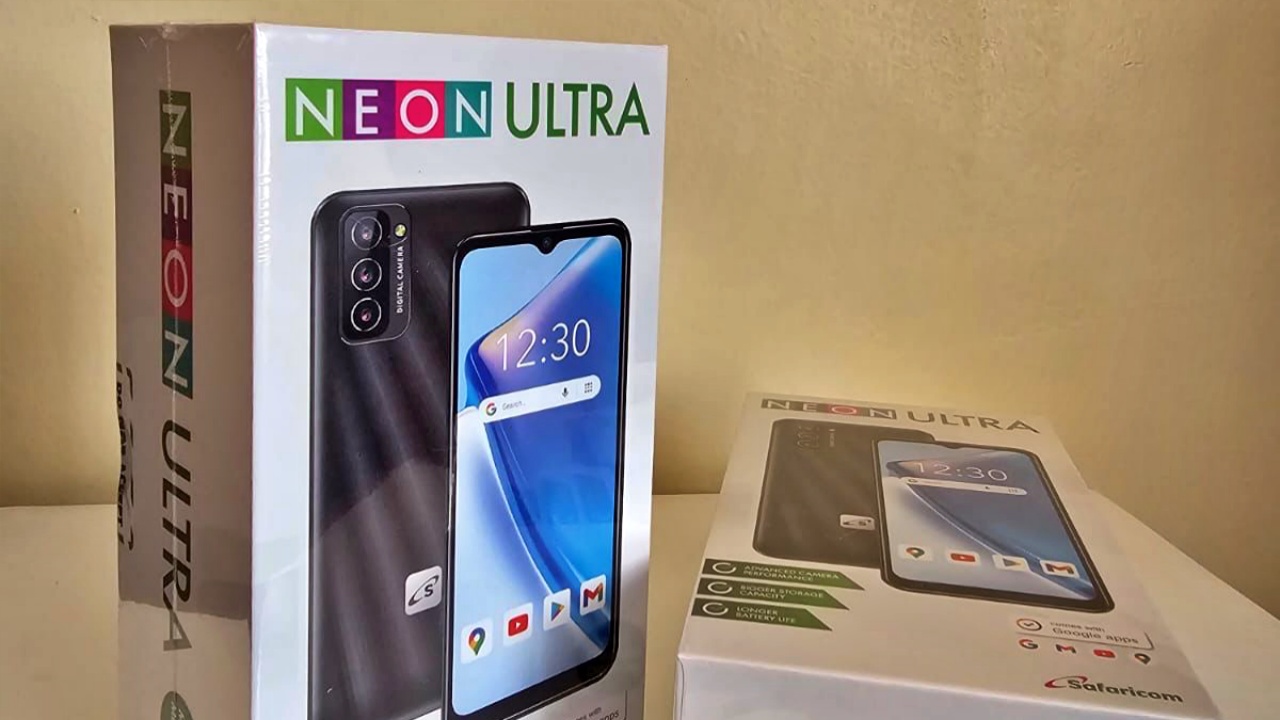
The first is East Africa Device Assembly Kenya (EADAK), a joint venture between Safaricom, Jamii Telecom, and Chinese firm Shenzhen TeleOne Technology. The plant is located in Athi River, Machakos County, and was officially launched by President William Ruto in October 2023. At launch, the facility was targeting a production capacity of up to 3 million smartphones annually and was already producing the Neon Smarta and Neon Ultra brands. In its first year of operation, EADAK announced it had produced 360,000 phones.
The second is M-KOPA's assembly facility, operated through a partnership with HMD (the Finnish company behind Nokia phones), also known as the East Africa Device Assembly Kenya plant in Nairobi's Industrial Area. This facility opened in January 2023, and by November 2024, M-KOPA reported it had assembled over 1.5 million smartphones, making it sub-Saharan Africa's largest smartphone assembly plant. The facility was producing roughly 100,000 phones per month, and M-KOPA has set a target of 10 million locally assembled smartphones by 2027.
Together, these two operations are the backbone of Kenya's "smartphone production" story. And the jobs being created are real. M-KOPA has created 325 new jobs since 2023 in its factory, primarily for young Kenyans and first-time job seekers. These are meaningful contributions.
But here is the part the press releases tend to skip: every single component in those phones is imported, primarily from China. The EADAK plant assembles up to 1.4 million smartphones annually from parts imported from China. M-KOPA's X20, their flagship locally assembled device, was developed in partnership with HMD, a Finnish company, using components largely sourced from abroad. The "assembly" process in Kenya involves putting together parts that were designed and manufactured elsewhere, typically in China, and packaging them for the Kenyan market.
To understand just how deep this dependency runs globally, consider that even India, which has aggressively built its own domestic manufacturing industry, still has roughly 90 percent of components feeding its assembly plants coming from China. Vietnam, the world's second-largest smartphone export hub, also sources over 90 percent of its component value from China. So Kenya is not alone in this challenge. But it does mean that the "we are exporting smartphones" narrative needs to be held alongside the reality that Kenya is importing all the ingredients that make a smartphone a smartphone: chipsets, screens, batteries, camera sensors, and circuit boards.
The government has also not made this any easier. While finished locally assembled devices are zero-rated for tax purposes, imported components attract 16 percent VAT, which manufacturers must then reclaim through a refund process that can tie up working capital for months. It is the kind of structural friction that quietly erodes the competitiveness of these assembly lines even when the political will is there.
Kenya imported over 2.3 million smartphones directly from China in 2024 alone, a 71.5 percent increase from 1.3 million units in 2023. The country's total imports from China for electrical and electronic equipment reached over $685 million in 2024. These numbers tell you that regardless of what is being assembled locally, Kenyans are still overwhelmingly choosing to buy phones that arrive as finished products.
So What Do These Locally Assembled Phones Actually Offer?
This is where the conversation gets more specific and, frankly, more revealing.
When EADAK launched, the two phones unveiled were the Neon Smarta, retailing at KES 7,499, and the Neon Ultra at KES 8,999. The government had originally promised phones at around KES 5,484 (US$40), so the final retail price was already higher than what was advertised. The Neon Smarta, which is the model most people interact with given its lower price point, comes with a 5-inch display, 2GB of RAM, 32GB of internal storage, a 5MP rear camera, a 2MP selfie camera, and a 3,000mAh battery. It runs Android 10 Go Edition, which is a stripped-down version of Android designed specifically for low-memory, entry-level devices.
The Neon Smarta 2, an updated version, brought minor improvements, notably bumping the rear camera to 8MP and updating the software to Android 13 Go Edition. The price dropped to around KES 2,999, and the processor was upgraded to a Unisoc SC9863A octa-core chip. Still 2GB of RAM. Still 32GB of storage.
M-KOPA's X20, the company's flagship locally assembled device, is a notable step up from the Neon lineup. It features 6GB of RAM, 256GB of internal storage, a 50MP dual rear camera, a 50MP front camera, a 6.56-inch HD+ display, a 5,000mAh battery with 20W fast charging, and runs Android 14. On paper, those are respectable specifications even by 2026 standards. But the M-KOPA model is also tied to the company's "Lipa Mdogo Mdogo" financing structure, meaning the phone is accessed through daily or weekly payments rather than an outright purchase. The branding itself is a barrier for some users. One reviewer on a local phone listing site put it plainly: "But the name M-KOPA, it's like kila mtu anajua nimekopa!"
The Smartphone Has Evolved. Have These Phones Kept Up?
There is a bigger issue sitting underneath the specs debate, and it is one that most discussions about Kenya's assembled phones conveniently avoid.
We are in 2026. The smartphone is no longer just a device you use to make calls, send WhatsApp messages, and occasionally scroll Facebook. For most Kenyans, the smartphone is the primary computer, the content creation studio, the business tool, the entertainment system, and the financial services terminal, all in one pocket-sized device.
Consider what a typical Kenyan smartphone user actually does in a day. A boda boda rider uses their phone to navigate Google Maps and accept orders on apps like Bolt or Uber. A small business owner photographs products, manages inventory via M-Pesa business accounts, runs WhatsApp catalogs, and posts Reels to Instagram for marketing. A student attends virtual classes, downloads lecture materials, and collaborates on shared documents. A content creator edits short-form videos directly on their phone, uploads to TikTok or YouTube, and monitors analytics. A gamer plays titles like PUBG Mobile or Free Fire for recreation. None of these use cases are unusual. They are everyday life for millions of Kenyans.
And here is the challenge: these use cases demand a specific caliber of hardware. Consistent video recording requires optical image stabilization and a capable ISP (Image Signal Processor) in the chipset. Heavy app multitasking requires at least 4GB of RAM, ideally 6GB or more, paired with LPDDR4X memory (not older, slower standards). Social media apps, especially those running short video feeds like TikTok and Instagram Reels, demand faster storage speeds, specifically UFS 2.1 or higher, rather than the slower eMMC 5.1 standard used in most entry-level phones. Mobile gaming requires a capable GPU and enough thermal management to sustain performance. Running multiple financial apps, business tools, and communication platforms simultaneously requires processing headroom that entry-level chips simply do not have.
The Neon Smarta, with 2GB of RAM and a Unisoc chipset running Android Go, is a phone that can handle calls, basic messaging, and light internet browsing. It is a "first smartphone" device. But in 2026, it struggles to meaningfully run TikTok, handle Instagram Stories, or stay stable with more than three or four apps open. Android Go was designed with exactly these constraints in mind, which is why apps like Google Maps and YouTube have "Go" versions optimized to run on limited hardware. These are not the full-featured apps. They are the stripped-down versions.
A phone retailing at KES 6,000 to 8,000 is not automatically bad. But when you consider what that same money buys in the broader market, the gap becomes very clear.
The Redmi Question: What Are You Actually Competing Against?
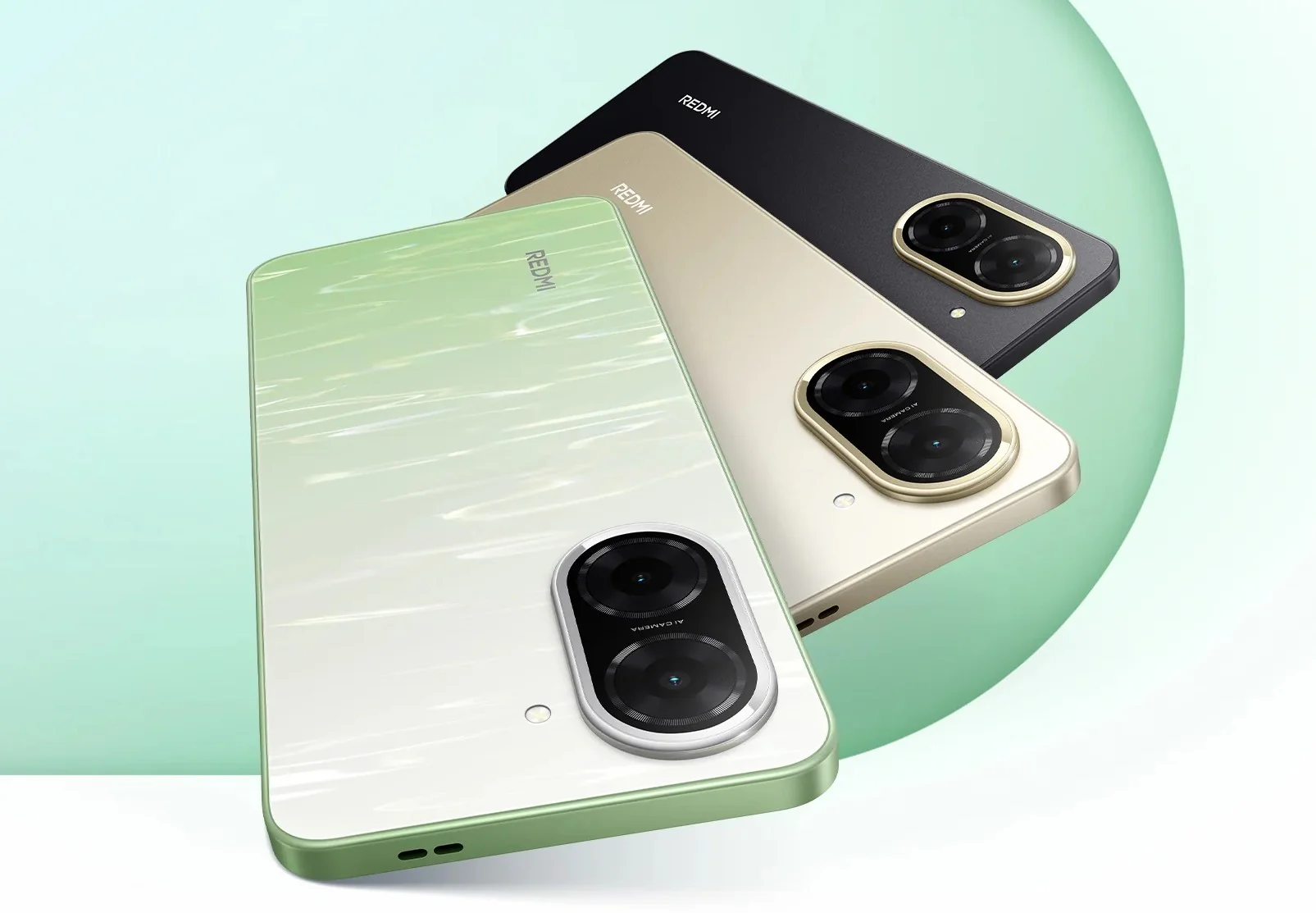
The Xiaomi Redmi A5 launched in Kenya in early 2025. Starting at KES 9,499 for the 3GB/64GB variant, it sits just slightly above the KES 6,000 to 8,000 range of the locally assembled phones. But what it offers is in a different conversation entirely.
The Redmi A5 comes with a 6.88-inch IPS display with a 120Hz adaptive refresh rate, a 32MP rear camera with HDR support, an 8MP selfie camera capable of 1080p video recording, a Unisoc T7250 octa-core processor, up to 6GB of RAM with memory extension, up to 128GB of storage expandable to 1TB via microSD, a 5,200mAh battery with 15W fast charging, a side-mounted fingerprint sensor, USB-C connectivity, and Android 15 with Xiaomi's HyperOS software. It also carries TUV Rheinland certifications for low blue light and flicker-free display, which matters for people who spend hours looking at their screens.
For less than KES 10,000, you are getting a 120Hz screen, which makes scrolling feel noticeably smoother than the standard 60Hz displays on locally assembled devices. You are getting a 32MP camera capable of decent photography in multiple lighting conditions. You are getting a battery that realistically lasts more than a day. You are getting a brand with global service infrastructure, an established software update track record, and the kind of marketing that has made Xiaomi one of the top-selling smartphone brands in Africa.
Now compare that to the Neon Smarta at KES 7,499. A 5-inch display. 2GB of RAM. 32GB of storage. A 5MP camera. A 3,000mAh battery. Android 10 Go. The specifications are not just weaker. They belong to a completely different category of device.
The honest reality is that a Kenyan consumer with KES 7,500 to spend on a phone has better options from imported brands than from the locally assembled lineup. And consumers know it. A GSMA report, titled "Accelerating Smartphone Adoption in Africa," found that Kenyan consumers perceive locally assembled phones to be of lower quality. Brand familiarity, performance expectations, and the aggressive marketing of imported brands all contribute to a continued preference for imported devices, even when locally assembled options are available at lower prices.
The Bigger Question: Who Is Buying These Phones?
It is important to be fair here. The locally assembled phones are not targeting the same consumer who walks into a shop looking for a Redmi or a Tecno Camon. They are primarily targeting first-time smartphone users, people transitioning from feature phones, and low-income Kenyans who need connectivity and are not necessarily evaluating camera megapixels or display refresh rates.
M-KOPA's business model is specifically built around this. Their financing structure, which allows customers to pay a small deposit and then daily installments of around KES 60 to KES 120, opens smartphone ownership to people who could not afford to pay KES 7,000 or KES 10,000 upfront. The Ministry of Health purchasing 100,000 EADAK devices for Community Health Workers is another example of an institutional use case where affordability and local production incentives matter more than raw performance.
These are legitimate markets. And meeting them is a worthwhile goal. Kenya's smartphone adoption stands at 62 percent, which means there are millions of Kenyans who still do not own a smartphone. Getting those people connected, even on entry-level devices, is a meaningful step forward.
But the danger of framing this entire initiative as "Kenya is manufacturing smartphones" is that it conflates two very different goals. Broadening first-time access is one goal. Building a sustainable, competitive technology manufacturing industry is another. The assembly lines can serve the first goal quite adequately. The second goal, however, requires something fundamentally different: local chipset design capability, local screen manufacturing, local battery production, investment in semiconductor research, and the kind of supply chain depth that takes decades and billions of dollars to develop. Kenya is nowhere near that point, and the current assembly operations do not move the country meaningfully closer to it.
Will These Assembly Lines Survive the Shift?
This is the question that matters most for the long-term health of the initiative.
As Kenyans become more connected, their expectations from a smartphone will inevitably rise. A first-time smartphone user who buys a Neon Smarta today will, in two or three years, want something with a better camera, faster performance, and more storage. When that upgrade moment comes, the competition is not just within the locally assembled lineup. It is against Tecno, Infinix, Itel, Xiaomi, Realme, and Samsung, all of which are aggressively pricing competitive devices in the KES 8,000 to 20,000 range with significantly better hardware and established brand trust.
M-KOPA's X20 is a step in the right direction. At 6GB RAM, 256GB storage, and a 50MP camera, it can hold its own against mid-range competition on paper. But to remain relevant beyond the financing-dependent customer base, locally assembled phones need to consistently match or exceed what is available from imported brands at the same price point. That requires continuous investment in better components, closer relationships with chipset suppliers, and genuine technical innovation rather than just label assembly.
The government can help by addressing the VAT friction on imported components, investing in technical education pipelines that feed skilled labor into these facilities, and being honest about the distinction between assembly and manufacturing so that policy goals are accurately calibrated. Calling assembly manufacturing is not just semantically wrong. It sets the wrong targets, creates misplaced pride, and can delay the harder work of building real industrial capacity.
Kenya's assembly story is a beginning, not a destination. And beginnings are good. M-KOPA creating 325 jobs primarily for young people, targeting 500 by end of 2025, and aiming for 10 million assembled phones by 2027 is a trajectory worth watching. EADAK's capacity to produce up to 3 million units annually, if fully utilized and supported by policy, could meaningfully serve the lower end of the market.
But it would be a mistake to confuse a milestone for a finish line. The smartphone market waits for no one, and Kenyan consumers, increasingly connected and informed, will vote with their wallets. The assembly lines that survive will be the ones that evolve to give people phones that actually respect what they need from their devices: powerful enough to run the apps that run their lives, cameras good enough to capture moments worth sharing, storage fast enough to keep up with modern software, and a price point that does not ask them to compromise on all of the above.
The real test of Kenya's smartphone ambition is not how many units come out of the factory. It is whether the people those phones are meant to serve actually choose them.
Comments