 By
By 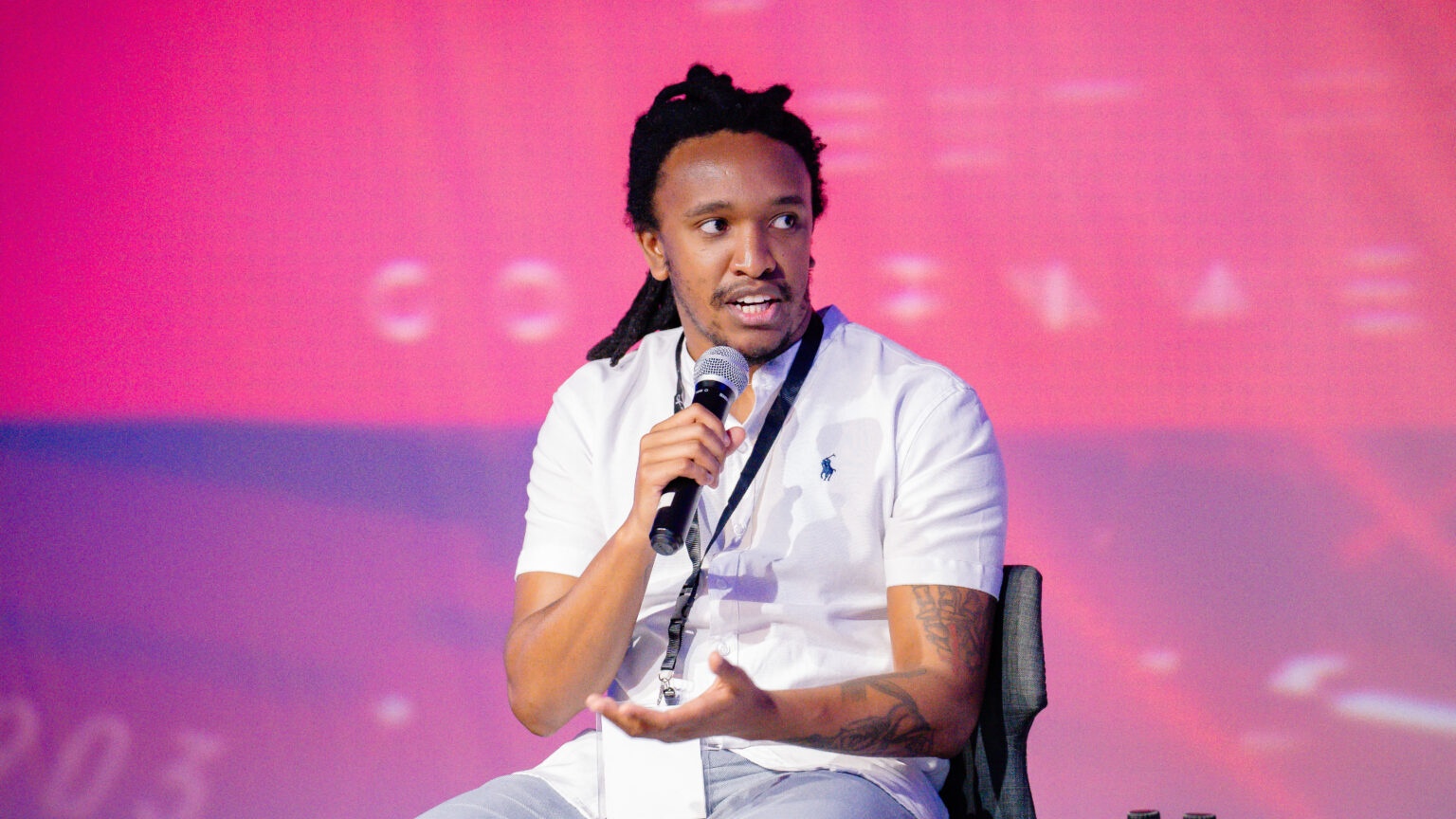
Kenyan technology executive Michael Michie Kamau has been named the country's Responsible AI Governor by the Global Council for Responsible AI (GCRAI), an international network that describes itself as an independent authority on AI governance operating across more than 70 countries. The appointment, announced this week, places Kamau among a growing list of national "governors" the organisation has installed around the world, following recent appointments for Portugal and the Netherlands.
The timing puts the announcement squarely inside an active domestic policy window. Kenya's Ministry of Information, Communications and the Digital Economy closed public participation on the Draft Kenya Artificial Intelligence and Other Emerging Technologies Policy 2026 on August 4, after roughly a week of public consultation launched by Cabinet Secretary William Kabogo. The draft policy, and a separate AI Bill currently before the Senate, are the two live instruments that will determine how Kenya actually regulates AI, licenses infrastructure, and enforces compliance. GCRAI's appointment carries no formal role in either process; it is a title conferred by a private international body, not a government or statutory appointment.
What The Draft Policy And Bill Actually Cover
The Draft Kenya Artificial Intelligence and Other Emerging Technologies Policy 2026 proposes a National AI and other Emerging Technologies Council as the country's central regulatory authority, to be led by an AI and Emerging Technologies Director supported by a Governing Board, a Technical Advisory Forum, and five specialised directorates covering different aspects of governance. It builds on Kenya's National AI Strategy 2025-2030, launched by Kabogo in March 2025 around three pillars: AI digital infrastructure, data and AI governance, and research and commercialisation. That strategy was developed with support from the European Union, Germany's Federal Ministry for Economic Cooperation and Development, Canada's International Development Research Centre, and the United Kingdom's Foreign, Commonwealth and Development Office.
ICT Principal Secretary John Tanui has described the consultation as part of implementing that strategy, and the ministry has framed the draft policy as covering ethical AI use, sovereign computing infrastructure, and local GPU hosting, three areas where Kenya currently depends heavily on infrastructure and models built elsewhere. Artificial intelligence is projected to add up to $2.4 billion to Kenya's economy by 2030, with the country's broader ICT market expected to keep expanding from its 2025 base of roughly $11.19 billion.
Running in parallel is the Artificial Intelligence Bill 2026, sponsored by Nominated Senator Karen Nyamu and currently before the Senate. That bill proposes its own separate institutional architecture, including an Office of the Artificial Intelligence Commissioner, an Artificial Intelligence Authority, and an Artificial Intelligence Advisory Council. Business Daily's editorial board has criticised the overlap between this proposed structure and Kenya's existing regulators, namely the Office of the Data Protection Commissioner, the Communications Authority, and the Kenya Information and Communications Technology Authority, warning that stacking a fourth body on top of them risks duplication and unsustainable cost. Kenya now effectively has two AI governance tracks moving through different institutions at the same time: a ministry-led policy and a Senate-led bill, with no public indication yet of how the two will be reconciled.
Who Michael Michie Kamau Is
Kamau brings more than 14 years of experience across AI, cybersecurity, cloud infrastructure, data privacy, and technology policy. He has contributed to the development of Kenya's AI Policy and the National AI Strategy 2025-2030, particularly on infrastructure, investment, and intellectual property, and trains public-sector leaders through Kenya's Council of Governors and as adjunct faculty at the Kenya School of Government, where he has helped build curriculum for the Regional Centre of Competence for Digital and AI Skilling in the Public Service.
He is also the founder and chief executive of EverseTech, a company working on locally hosted GPU infrastructure, AI-as-a-Service, and sovereign AI infrastructure, the exact category the draft policy's infrastructure pillar is meant to address. Internationally, Kamau represents Kenya within the International Network for Advanced AI Measurement, Evaluation and Science, working on cybersecurity, prompt injection, multilingual model evaluation, and AI ethics. In a statement on the appointment, Kamau said he wants African countries to help shape global AI governance standards rather than simply adopt frameworks built elsewhere.
What GCRAI Actually Is
The Global Council for Responsible AI describes itself as an independent international authority operating in more than 70 countries, uniting governments, industry, academia and civil society around what it calls a global AI Trust Architecture. In 2026 it unveiled GRAICE, a compliance and ethics framework it markets as a governance layer that sits above national rules rather than replacing them, certified through its own network of auditors and delivering its own seal of approval to compliant organisations. The organisation, founded by Carmen Marsh, runs on a structure of Global Ambassadors and Country Governors, roles distinct from any government office or UN mandate.
That distinction matters for how the appointment should be read. GCRAI is a membership-based advocacy and certification body, not a treaty organisation, regulator, or arm of the Kenyan state. Kamau's appointment gives him a platform to represent Kenyan and African positions in GCRAI's own forums and to potentially certify organisations against its GRAICE framework, but it does not give him statutory authority over Kenya's actual AI policy process, which remains with the ministry, the National AI and other Emerging Technologies Council once formed, and whichever institutions the Senate bill eventually creates.
The Training Data Problem Both Tracks Share
One issue sits underneath both the draft policy's sovereignty ambitions and the Senate bill's compliance requirements: most Kenyan AI developers do not train foundation models from scratch. They take open-weight models such as Llama, Mistral, or Gemma, built by companies in the United States and Europe, and fine-tune them for local use cases such as Swahili-language chatbots, agricultural diagnosis tools, or mobile money fraud detection. The Senate bill, as drafted, requires developers to produce audit trails showing how the underlying model was trained and what data was used, information that a Kenyan team fine-tuning a downloaded model simply does not possess, because those decisions were made by researchers at the original model developer, not by the local team deploying it.
This creates a structural tension that the draft ministry policy will also have to navigate if it wants to build sovereign computing infrastructure and local GPU hosting capacity without foundation-model training happening domestically at scale. Local hosting and local fine-tuning do not, on their own, generate the training data provenance that compliance frameworks modelled on the EU AI Act typically assume developers can supply. Analysts covering the Senate bill have already flagged the audit trail requirement as needing to be scoped to models actually built in Kenya rather than models merely adapted, since applying it uniformly risks imposing criminal liability for a compliance step that is technically impossible to satisfy for the most common form of AI development happening in the country today.
Kamau's GCRAI role and EverseTech's sovereign infrastructure work put him in a position to speak directly to this gap, since building local GPU capacity and AI-as-a-Service offerings addresses the infrastructure half of the sovereignty question without resolving the training-data half. How the National AI and other Emerging Technologies Council, once established under the draft policy, chooses to define compliance for fine-tuned open-weight deployments will determine whether Kenya's AI sector can scale under the new framework or whether the provision becomes, as one analyst described a similar clause in the Senate bill, a drafting error that needs fixing before enforcement begins.
Comments