 By
By 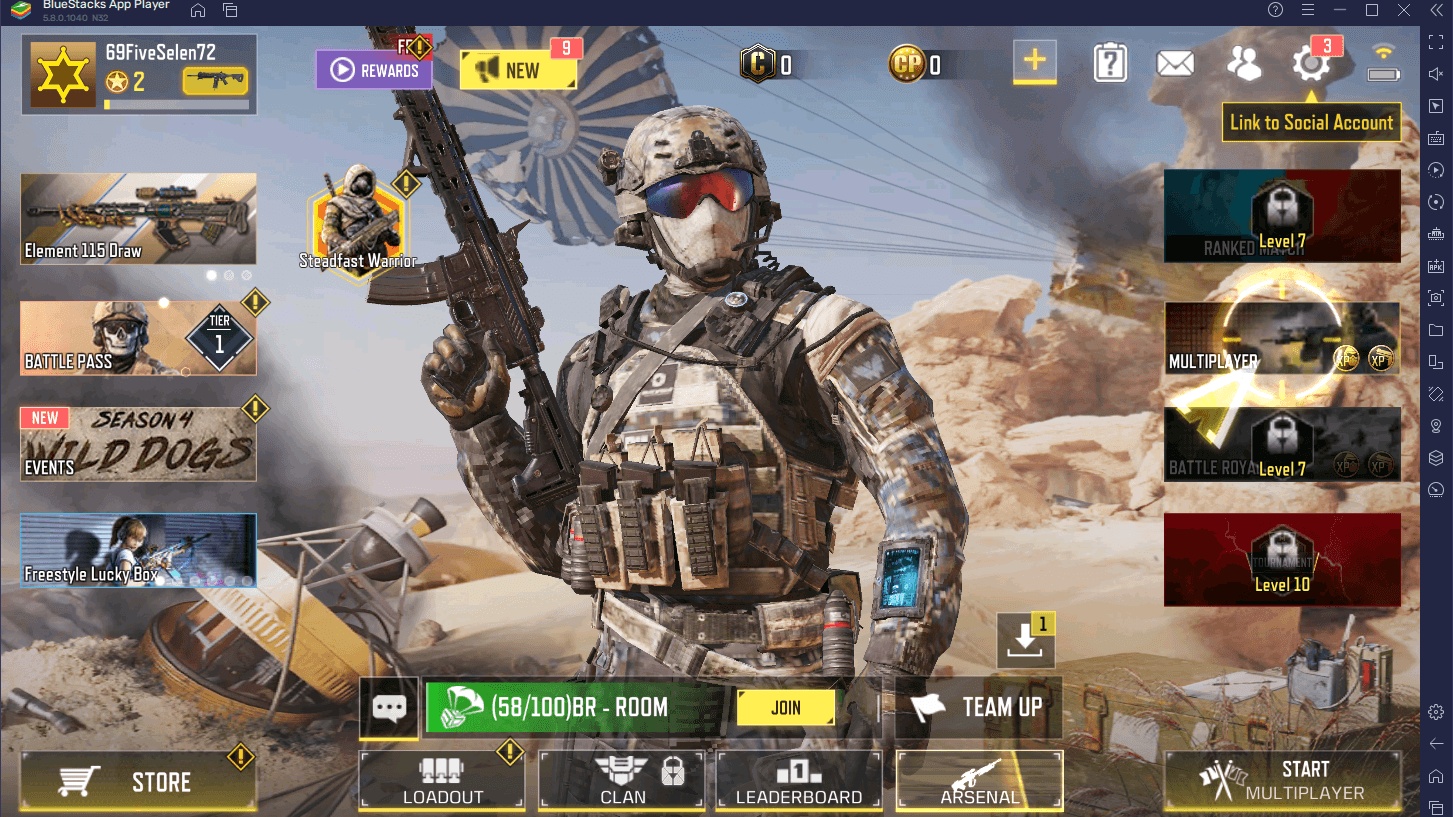
Not too long ago, gaming in Kenya was considered a rich person's hobby. You needed a PlayStation, an Xbox, or an expensive gaming PC to get in on the action. The culture existed, but it was largely locked behind hardware price tags that made it inaccessible to the average Kenyan. Fast forward to 2026, and the story has completely flipped. Today, all you need is a smartphone, a decent data bundle, and a WhatsApp group link, and you are in the middle of a thriving, self-organised gaming ecosystem that rivals anything the formal esports world has tried to build from the top down.
Kenya's mobile gaming scene is no longer emerging. It has already emerged. And what makes it truly remarkable is not just that people are playing games on their phones. It is the way ordinary Kenyans have built their own infrastructure around it, creating ranking systems, organising tournaments, streaming live matches, and building communities, all without waiting for a corporation or a government body to hand them permission.
This is the story of how mobile gaming became one of Kenya's most exciting digital movements in 2026.
The Numbers Tell Only Part of the Story
Let us start with the data, because it is genuinely impressive. Kenya's gaming market reached KES 12.5 billion (approximately USD 95 million) in 2025, with projections pointing to a 25% annual growth rate heading into 2026. According to a report by Mordor Intelligence, Kenya leads the entire African continent in gaming growth, recording a 12.96% CAGR forecast through 2031, supported by its advanced mobile money ecosystem and expanding cloud infrastructure.
Across Africa, the gaming market hit USD 2.29 billion in 2026 and is projected to reach USD 4.10 billion by 2031. Kenya sits at USD 46 million in gaming revenue, modest in absolute terms compared to Egypt and Nigeria, but the growth trajectory tells a more important story. This is a market accelerating fast, and mobile is driving nearly all of it.
Over 80% of Kenya's gaming revenue now comes from smartphones. This is not surprising. Kenya has over 65 million mobile subscriptions, and a young, tech-forward population with a median age of just 19. The smartphone is not just a communication device for this generation. It is their TV, their social club, and increasingly, their gaming console.
But the real story is not in the revenue figures. It is in what is happening on the ground, in the WhatsApp groups, Discord servers, and TikTok live streams where Kenya's gaming culture is actually being built.
The Device Revolution: From KES 200,000 to KES 19,000
One of the biggest barriers to gaming has always been hardware. A capable gaming PC in Kenya can still run you upwards of KES 150,000, and imported consoles like the PlayStation 5, which attract a 25% import duty plus 16% VAT, become financially out of reach for most Kenyans. Those structural barriers have not gone away, but they have been rendered largely irrelevant by what has happened in the smartphone market.
Walk into any phone shop in Nairobi today and you will find devices capable of running some of the most demanding mobile games on the market, starting at prices that would have been unthinkable five years ago. The Infinix Hot 60 Pro, for example, packs a 144Hz AMOLED display, a MediaTek Helio G200 processor, and a 5,160mAh battery, all for around KES 19,000. The Tecno Spark 40 Pro and Redmi Note 15 series offer similarly capable hardware in the KES 15,000 to KES 25,000 range. The Infinix Note 50 Pro is specifically recommended as the best gaming phone under KES 30,000 in the Kenyan market as of 2026.
These phones can handle PUBG Mobile, Free Fire, eFootball, Call of Duty Mobile, and Mobile Legends: Bang Bang without breaking a sweat. Games that were once the exclusive territory of powerful PCs and consoles are now running smoothly on a phone you can buy for the cost of two months of groceries. Brands like Tecno, Infinix, Xiaomi, and Samsung have essentially democratised gaming hardware in Kenya, and the community has responded by showing up in their millions.
Data Got Cheaper, and That Changed Everything
Hardware was only half the equation. The other half was internet access, and this is where Kenya's telco landscape has quietly made a revolution of its own.
Airtel Kenya offers some of the most competitive data pricing in the market. You can get 45GB for KES 1,000 on a monthly plan, making serious mobile data usage accessible even on a modest budget. Safaricom, which controls about 63% of Kenya's mobile broadband market, offers night bundles starting at KES 50 for 5GB, valid between midnight and 6am. This has become a lifeline for gamers who schedule their heaviest sessions during off-peak hours to save money and take advantage of faster speeds.
For more serious home setups, fibre internet has become increasingly competitive. Packages from providers like JTL Faiba start at around KES 2,500 for 10Mbps, and a new entrant, Savanna Fibre, has announced plans to bring 100Mbps home packages at just KES 2,000. This level of pricing, if delivered reliably, would represent a genuine step change in what home gaming connectivity looks like in Kenya.
On mobile network performance, independent data from the French measurement platform nPerf covering April 2025 to March 2026 found that Safaricom's average mobile download speed came in at 30.55 Mb/s, more than double Airtel's 13.20 Mb/s. For gamers, Safaricom's latency of 49.62ms compared to Airtel's 83.06ms is a meaningful difference, especially in real-time multiplayer games where every millisecond matters.
The combination of cheaper data and faster networks has removed one of the last remaining barriers to mobile gaming at scale. When you can get a few gigabytes for a couple hundred shillings, hopping into a two-hour PUBG Mobile session or grinding eFootball ranked matches becomes a realistic daily activity, not a luxury.
The Games Kenyans Are Playing
Kenya's mobile gaming community has coalesced around a handful of titles that have earned deep, almost cult-like followings.
eFootball is arguably the most popular competitive mobile game in Kenya right now. Konami's free-to-play football simulation has found a natural home in a country obsessed with football, and its competitive ranking system has become the basis for dozens of local leagues and tournaments. The game's appeal makes perfect sense: Kenyans love football, the game is free, and it runs well on mid-range hardware.
PUBG Mobile has established itself as Kenya's premier battle royale title. In 2025, Nairobi hosted the PUBG Mobile Africa Cup finals at The Charter Hall, where the continent's best teams competed for a slot at the PUBG Mobile Global Championship. This was not an event organised by the government or a major local company. It was driven by the momentum of an active community that had built itself up from grassroots WhatsApp groups and local scrimmages.
Free Fire by Garena continues to thrive, particularly among younger players and those on tighter budgets. With over 1 billion downloads on the Play Store globally, Free Fire was designed for exactly the kind of market Kenya represents: affordable phones, limited but growing data, and players who want a quick, intense gaming session without a massive download.
Call of Duty Mobile, Mobile Legends: Bang Bang, Tekken Mobile, and Clash Royale round out the list of titles with serious competitive communities in Kenya. Each of these games has its own WhatsApp groups, Discord servers, and informal ranking systems run entirely by the community.
How Kenyans Built Their Own Gaming Infrastructure
This is the part of the story that deserves the most attention, because it speaks to something genuinely remarkable about Kenya's gaming culture.
Kenyan gamers have not waited for formal esports organisations or tech companies to build infrastructure for them. They have built it themselves, using the digital tools already in their pockets.
WhatsApp has become the backbone of Kenya's grassroots gaming scene. Groups dedicated to specific games bring together dozens to hundreds of players, serving as registration desks, match coordination rooms, results announcements, trash talk arenas, and community notice boards, all in one place. If you want to join an eFootball tournament in Nairobi, there is a WhatsApp group for it. If you are looking for a PUBG Mobile squad in Mombasa, there is a group for that too.
Telegram channels have added another layer, enabling one-to-many broadcasting that keeps communities informed about upcoming events, results, and standings without the noise of a group chat. Tournament organisers use Telegram to push bracket updates and prize announcements with the kind of efficiency that formal organisations take months to set up.
Discord has become the home of Kenya's more serious competitive gaming communities. Gaming has become culture for Kenya's Gen Z, with Discord serving as their new social clubhouse. Globally, 20% of Discord's 231 million monthly users are aged 16 to 24, and Kenyan servers reflect that demographic perfectly. Within these servers, players self-organise into tiers, track their own rankings, and run structured leagues with rules, referees, and dispute resolution, all volunteer-driven.
Perhaps most impressively, Kenyan gamers have built their own ranking and reward systems. Without any formal governing body handing out ratings, community administrators have created spreadsheet-based league tables, points systems, and seasonal award structures that give weight and meaning to competitive play. Players take their community rankings seriously because the community takes them seriously.
Live streaming has added yet another dimension. TikTok live sessions featuring PUBG Mobile and eFootball matches draw real-time audiences and have made local gaming personalities into genuine influencers. Instagram gaming reels have turned highlight moments into shareable content that grows the community organically. The viewer does not need to know the players personally to feel the excitement of a well-timed squad wipe or a last-minute penalty in eFootball.
In 2022, Kenya made its debut at the Global Esports Games in Istanbul, competing in Dota 2, eFootball and PUBG Mobile against world-class competition. That debut was not built overnight. It was the product of years of grassroots development, of young people grinding on their phones in matatu queues, bedrooms, and gaming cafes, building skills that eventually translated to the international stage.
The Platforms and People Feeding the Ecosystem
Beyond the games and the community infrastructure, a broader support ecosystem has developed around Kenya's mobile gaming scene.
Content creation has become a legitimate side hustle and, for some, a full-time career. Kenyan gaming YouTubers and TikTokers produce tutorials, game reviews, tournament commentary, and team-building guides. Some have built audiences in the tens of thousands, earning through AdSense, brand partnerships, and affiliate deals with gaming accessory brands.
Gaming cafes have adapted their model for the mobile era. While traditional PC gaming cafes have had to evolve, venues like Nextgen Gaming Hub expanded to three locations in 2026, with each location generating around KES 1.5 million monthly, partly by catering to mobile gamers who want a better screen, stronger WiFi, and a competitive social environment.
Local developers have also entered the conversation. Carry1st, which raised USD 20 million in 2025 for African gaming and operates a Nairobi office, has built a distribution platform that helps African game developers reach players across the continent. Their title "Mancala Adventures" has crossed 500,000 downloads. Usiku Games, another Kenyan studio, focuses on educational gaming and has partnered with the Ministry of Education to deploy games across 500 schools.
Corporate Kenya has started paying attention too. Safaricom's BLAZE esports tournaments have created structured pathways for young gaming talent, particularly those from underserved communities. Organisations like Pro Series Gaming, Tekken 254, and IndexG Esports have built local competitive circuits that feed into continental competitions.
The Challenges That Remain
It would not be honest to paint this picture without acknowledging the friction points that still exist.
Data costs, while improving, are not yet at a level that makes heavy gaming completely accessible for everyone. A two-hour competitive PUBG Mobile session can burn through several hundred megabytes, and for a student on a tight budget, that adds up. The World Bank has noted that mobile data prices in Kenya remain among the most expensive in the region relative to income.
Monetisation continues to be a challenge for players trying to turn their skills into income. Accessing global payment platforms for streaming revenue or tournament prize payouts remains complicated for many Kenyan gamers. M-Pesa has helped significantly, but the path from gaming talent to financial reward is not always smooth.
Foreign AAA titles still carry painful price tags. Some console and PC game titles sell for around USD 100 in Kenya, making them inaccessible to the majority. This is partly why free-to-play mobile titles dominate so thoroughly: they removed the price barrier entirely.
High-quality gaming accessories remain expensive. Earphones optimised for mobile gaming, controllers, and phone cooling fans are available in Nairobi but not always at prices the average gamer can afford. Many serious players are competing on default hardware configurations, which has become part of the culture's identity, winning on budget gear, but it does create a ceiling on what elite-level performance looks like.
What the Future Looks Like
The trajectory for Kenya's mobile gaming industry is clearly upward. Safaricom's ongoing 5G rollout is expanding into more towns, and when 5G becomes widely accessible, the latency improvements will meaningfully upgrade the competitive gaming experience. Cloud gaming, which is growing at an estimated 14% annually across Africa, stands to be the next major disruption. Services like Xbox Cloud Gaming and GeForce Now could allow Kenyan players to access console-quality titles on their phones without needing the hardware at all.
The Nairobi Game Expo, scheduled for November 2026, signals a growing recognition that gaming is a serious industry worth gathering around. Kenya's Ministry of ICT has initiated discussions about leveraging gaming for digital job creation and youth empowerment, which, if it translates into concrete support, could pour meaningful fuel onto an already burning fire.
GITEX Kenya, debuting in Nairobi from May 19 to 21, 2026, will also put the country's broader tech ecosystem under international spotlight, creating an opportunity to showcase the gaming community to investors and global gaming companies who are actively looking for Africa's next growth market.
The most exciting part of Kenya's gaming future, however, is not tied to any event, platform, or government initiative. It is the young person in Eldoret who runs a 64-player eFootball tournament through a WhatsApp group every weekend. It is the student in Mombasa streaming her Free Fire matches on TikTok and slowly building an audience. It is the teenager in Nakuru who figured out that PUBG Mobile squads practice better when they use Discord voice channels instead of regular calls.
These are the people who built Kenya's mobile gaming culture from scratch, and they will be the ones who take it to places the formal industry has not yet imagined.
Conclusion
Kenya's mobile gaming revolution is one of the most fascinating grassroots digital movements happening on the African continent right now. What began as a consequence of cheaper smartphones and more accessible data has evolved into a full cultural phenomenon, complete with self-organised leagues, community influencers, live streaming audiences, and genuine competitive talent being developed at scale.
The old barriers, expensive hardware, unaffordable data, and inaccessible payment systems, have not disappeared entirely. But they have been pushed back far enough that millions of Kenyans are gaming seriously on phones they bought for KES 15,000 to KES 30,000, competing in tournaments organised on WhatsApp, and streaming their victories to growing audiences on TikTok and Instagram.
Kenya did not wait for the West to build a gaming culture for it. It built one on its own terms, with the tools it had available. And in 2026, that culture is loud, proud, and just getting started.
Comments