 By
By 
On July 3, 2026, Google announced its first Google Play Indie Games Fund for Africa, a $1 million commitment aimed at helping ten local game studios scale up and reach players beyond the continent. It is a small number by global gaming standards, but for an industry that has spent the last decade building on grit, side hustles, and the occasional grant, it is a meaningful vote of confidence.
I want to unpack three things here: what this fund actually offers, how Google plans to pick the winners, and the question I suspect most Kenyan developers and gamers are quietly asking. If nobody downloads a game just because it was made in Africa, how does any of this help African studios compete in a market that already has Call of Duty, Candy Crush, and a thousand well-funded alternatives fighting for the same attention span?
What Google Is Actually Offering
The headline number is $1 million, but the more useful detail is how it will be split. Google plans to select roughly ten studios, each receiving between $50,000 and $200,000. That is not small change for an indie team. It is enough to cover a year or more of salaries for a lean team, pay for proper marketing, or fund the kind of polish that separates a game people try once from a game people keep coming back to.
Beyond the cash, selected studios get dedicated mentorship and hands on technical support from Google Play's team, focused on things like improving performance, refining the game itself, and making it more discoverable on the Play Store. Importantly, the funding is equity free. Google is not taking a stake in these studios. It is a grant, not an investment in the traditional venture capital sense.
How Studios Will Be Selected
This is the part that matters most if you are a developer deciding whether to apply, and it is where a lot of the coverage has been vague. Based on the official eligibility terms, here is what Google is actually screening for:
Location. The studio must be officially registered and based in one of 32 eligible African countries. Kenya is on the list, along with Nigeria, South Africa, Ghana, Uganda, Tanzania, Zambia, Zimbabwe, and others. Notably, Egypt and several North African countries are absent, since the fund is scoped to Sub-Saharan Africa.
Studio size and status. Applicants must be private, independent studios with 50 or fewer employees. Publicly listed companies and larger studios do not qualify. If a separate publisher handles distribution on the studio's behalf, additional conditions apply, though Google has not published exactly what those are.
A shipped product. This is not a fund for people with an idea and a pitch deck. The studio must have already launched a mobile, PC, or console game. Concept stage projects are not eligible.
A commitment going forward. Selected studios must commit to making their game available on Google Play and to participating, on a non-exclusive basis, in the Google Play Pass subscription programme for two years. The application also asks studios to lay out their growth plans, since the money is meant to be used specifically for building or scaling the game on Google Play, not for general operating costs.
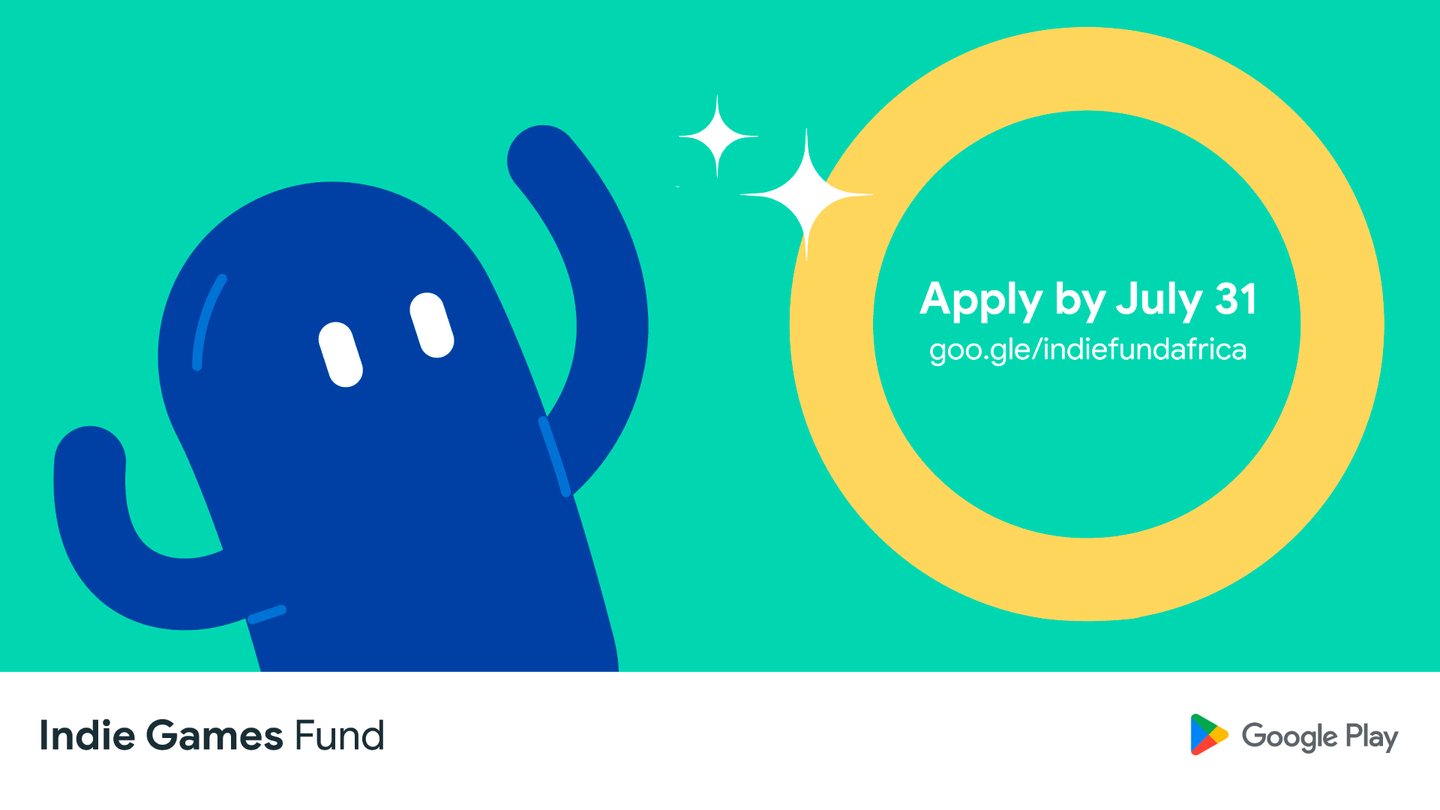
Beyond these published criteria, Google has not disclosed a scoring rubric, a named selection committee, or what "high growth potential" specifically looks like on paper. That is fairly typical for a first year corporate grant program, but it does mean the process is less transparent than, say, a structured venture fund with public investment criteria. Applications close at 3pm East Africa Time on July 31, 2026, and Google says it will announce the ten chosen studios in September.
Why Is Google Doing This?
Google's stated reason is straightforward: Sub-Saharan Africa has a fast growing gaming market and a deep well of creative talent, but a real investment gap. Ben McOwen Wilson, who leads Google Play for Europe, the Middle East, and Africa, framed it as unlocking talent that is already there rather than creating something from scratch.
There is also a clear business logic underneath the goodwill framing, and it is worth naming plainly. Google Play is a marketplace, and marketplaces grow when supply grows. Getting more African studios to build and keep their games on Google Play, and to join Play Pass specifically, strengthens Google's own ecosystem in a region where Android already dominates the smartphone market. It is not cynical to say both things are true at once. Google benefits from a healthier pipeline of local content, and African developers benefit from the capital and mentorship they have historically struggled to access. Corporate social investment and platform strategy are rarely mutually exclusive, and this fund is a good example of that.
The State of Gaming in Kenya and Africa Right Now
The African gaming market is valued at roughly $2.29 billion in 2026 and is projected to grow to about $4.10 billion by 2031. Kenya specifically is the fastest growing market on the continent, with a projected annual growth rate of nearly 13 percent through 2031, outpacing even Nigeria, which currently holds the largest share of continental revenue. More than 95 percent of Africa's gamers play on mobile, which makes sense given that smartphones, not consoles or gaming PCs, are the primary entry point into gaming for most people on the continent.
So the market and the player base are real and growing fast. What is smaller is the pool of local studios actually building games rather than just distributing or playing them. A recent industry survey found that only about 46 percent of African game developers currently earn any income from their work, which tells you the sector is still closer to its early stage than to maturity. Infrastructure adds friction too. Unreliable electricity, high mobile data costs, and thin broadband outside major cities all make both development and play harder than they need to be.
But there are real studios doing real work, and some of them are Kenyan. Usiku Games, based in Nairobi, released Okoa Simba, the first Kenyan developed game to get a global release, and later built Cyber Soljas, a mobile game about online safety, along with a wildlife education title built with a UK conservation group that reached players in twenty countries. Elsewhere on the continent, Ghana's Leti Arts has built a cross media catalogue of games and comics rooted in African mythology, Cameroon's Kiro'o Games shipped Aurion: Legacy of the Kori-Odan to genuine critical praise, and Nigeria's Maliyo Games partnered directly with Disney to build the mobile companion game for the Afrofuturist series Iwaju.
Mekan Games, based in Kenya, built a hypercasual game called The President that became the number one mobile game in the United States in 2022, racking up more than ten million downloads. Nobody downloaded that game because it was made in Africa. They downloaded it because it was fun, simple, and well timed. That is the whole ballgame.
So Can African Games Actually Compete Globally?
The global games market is worth somewhere around $200 billion a year, dominated by studios with decades of experience, massive marketing budgets, and platforms built specifically to surface their titles. A Kenyan studio with $150,000 in grant funding is not going up against Activision on Activision's terms, and it shouldn't try to.
But "competing globally" does not have to mean out-producing triple-A studios. The African studios that have actually broken through globally share a pattern, and it has nothing to do with budget size:
They leaned into hypercasual and mobile-first genres, where production values matter less than a hook that works in the first ten seconds. Mekan Games' success with The President is the clearest proof this works.
They used cultural specificity as a feature, not a limitation. Maliyo's partnership with Disney happened because Iwaju needed authentic Nigerian texture, not despite Maliyo being Nigerian. Kiro'o's African mythology-driven RPG got praised precisely because it did not feel like a copy of a Japanese or Western game.
They built for the infrastructure their players actually have, not the infrastructure Silicon Valley assumes. Games designed around cheap Android devices, patchy data, and mobile money payment rather than credit cards travel better across similar markets in Asia and Latin America than games built assuming Western conditions.
What the Google fund actually changes is narrower and more practical than "leveling the playing field." It removes one specific bottleneck, which is the cash needed to properly finish, polish, and market a game once it is built, plus access to Google's own technical playbook on what makes a game discoverable on Play. That is genuinely useful, because plenty of good African games have died quietly not from bad gameplay but from zero marketing budget and no idea how the Play Store algorithm actually surfaces new titles.
What it does not fix is the deeper structural stuff: unreliable power, expensive data, thin local investor networks, and a shortage of formal game design education. Ten grants a year, even generous ones, will not build a Kenyan equivalent of a game design degree program or fix load shedding. Programs like the CreaTech Animation and Game Lab that Kenya's Africa Digital Media Institute runs with the French school Rubika are doing more of that heavy lifting on the talent side, and they need to scale alongside funds like this one, not instead of it.
If you are a Kenyan developer with a shipped game sitting on the Play Store right now, this fund is worth ten minutes of your time to check eligibility. If you are still building, the more useful takeaway might be watching what the ten winners do with their money come September, because that will tell you more about what actually works in this market than any press release can.
Comments