 By
By 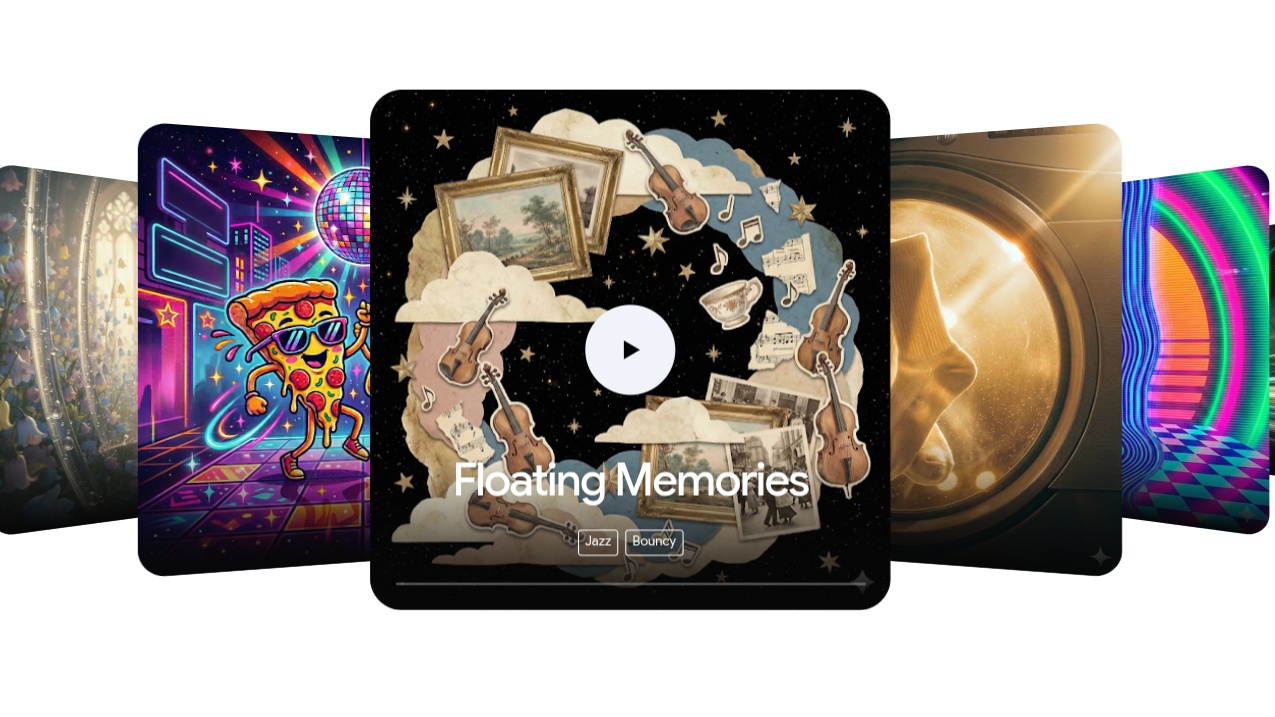
"Artists might just be cooked." That was my immediate reaction after testing Google's Lyria 3, the AI music generator that quietly dropped yesterday with zero fanfare. And I'm not even a music enthusiast.
The Surprise Launch
While the tech world was busy watching other AI developments, Google silently released Lyria 3 into the Gemini app on February 18, 2026. No press conference. No countdown. No marketing blitz. Just a sudden appearance that caught everyone off guard, including competing platforms like Suno and Udio.
The feature is currently available to Google AI Pro subscribers (and likely Ultra subscribers) in all countries where Gemini operates, with availability on the free tier still uncertain. Users must be 18+ to access the music generation capabilities.
What Is Lyria 3?
Lyria 3 is Google DeepMind's latest generative music model, now integrated directly into the Gemini app. It transforms text prompts or images into complete 30-second tracks featuring instrumentals, vocals, and original lyrics. Think of it as DALL-E or Midjourney, but for music.
The system offers two primary modes:
Text-to-Music: Describe a genre, mood, or concept, and Lyria 3 creates a matching track
Image-to-Music: Upload a photo or video, and the AI generates a soundtrack that fits the visual mood
Each generated track comes with custom cover art created by Nano Banana (Google's AI image generator) and can be downloaded as an MP4 file (a static cover image with audio).
Hands-On: We Tested It (And We're Impressed)
As a Google AI Pro subscriber, I had immediate access to test the feature. Here's what happened:
Test 1: The Sheng Challenge
Prompt: "Create an upbeat Afrobeat track with Swahili-influenced lyrics about Nairobi's vibrant tech scene and innovation. Include energetic drums and a catchy hook."
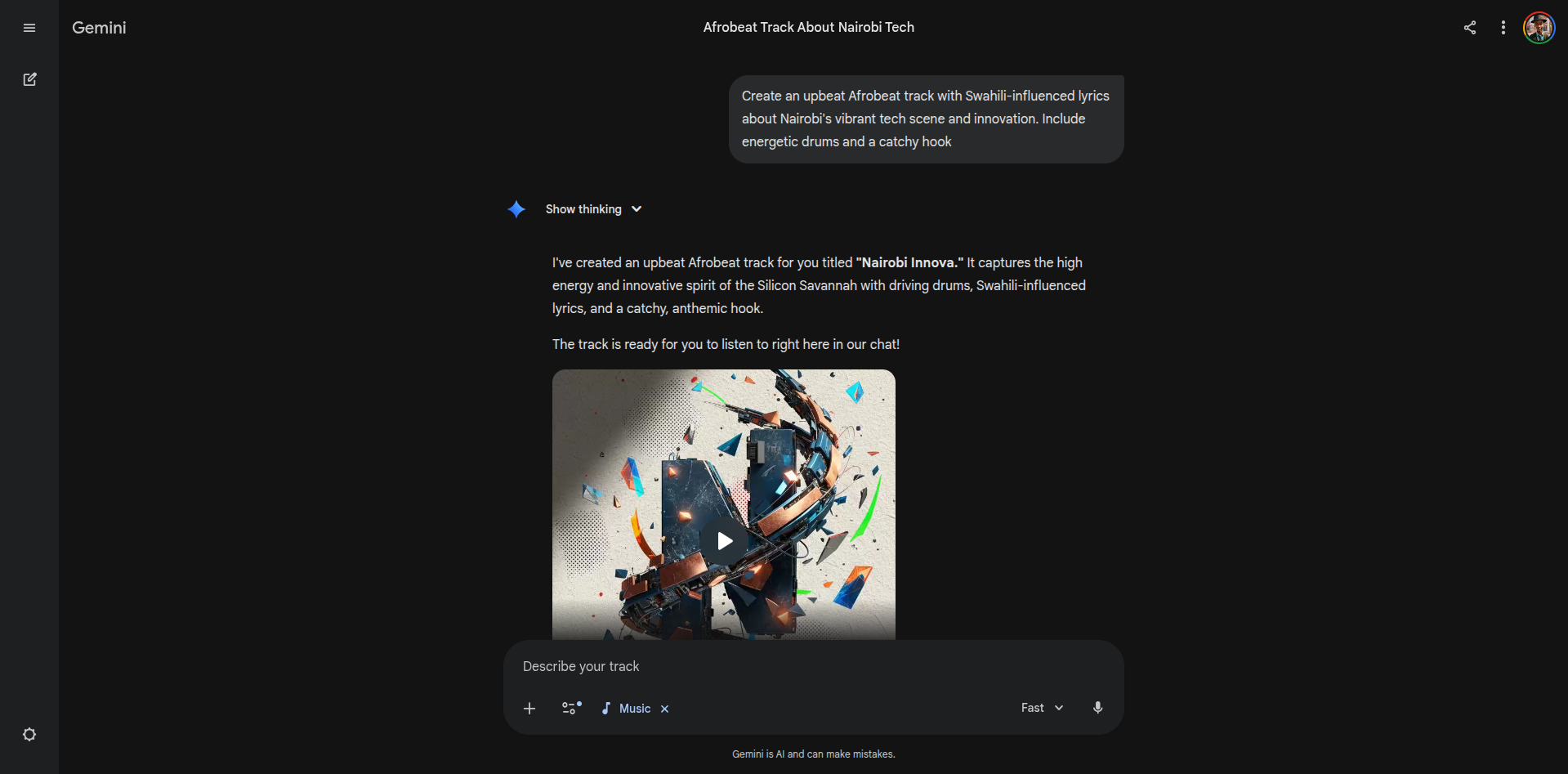
Result: Lyria 3 generated "Nairobi Innova," a track that not only captured the Afrobeat vibe but delivered lyrics in Sheng (a complex mixture of English and Swahili common in Nairobi).
Here's what blew my mind: the word pacing was perfect. Sheng is notoriously difficult to work with because it blends languages mid-sentence, yet the AI matched every word to the beat without stumbling. The energetic drums were there, the hook was catchy, and it genuinely sounded like something you'd hear on Kenyan radio.
Verdict: Surprisingly authentic. The cultural and linguistic complexity didn't trip it up.
Test 2: Image-to-Music
Prompt: "Generate music that she is likely to sing" (with an uploaded image of an animated girl with a soft, modern aesthetic)
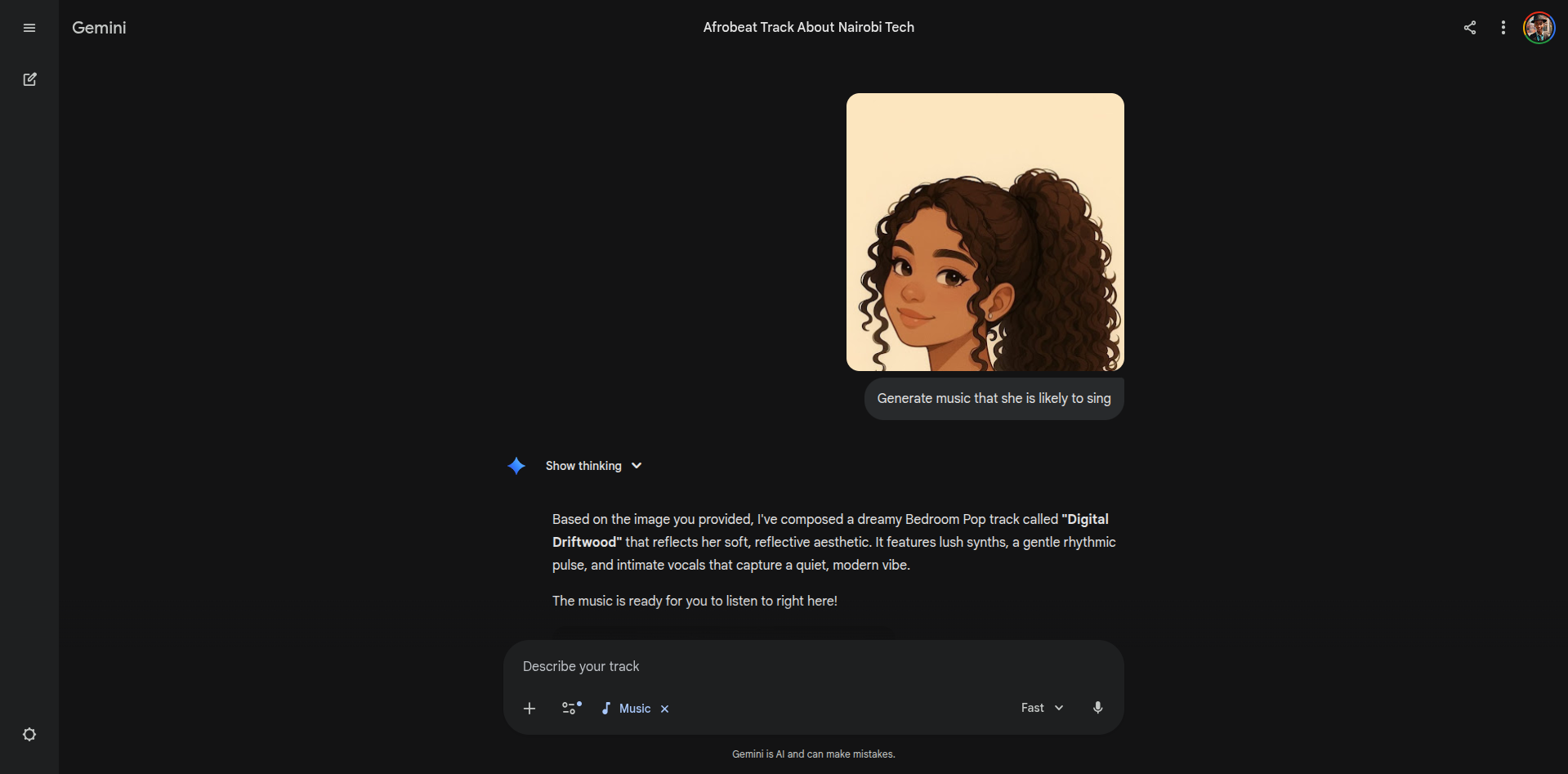
Result: Lyria 3 created "Digital Driftwood," a dreamy Bedroom Pop track with lush synths, gentle rhythms, and intimate vocals. The AI correctly interpreted the visual aesthetic and translated it into a matching musical mood.
Verdict: Impressive contextual understanding. The genre choice and production style aligned perfectly with the image's vibe.
Test 3: The Brick Wall
Prompt: A third creative test
Result: "Something went wrong with the music generation. Please try again."
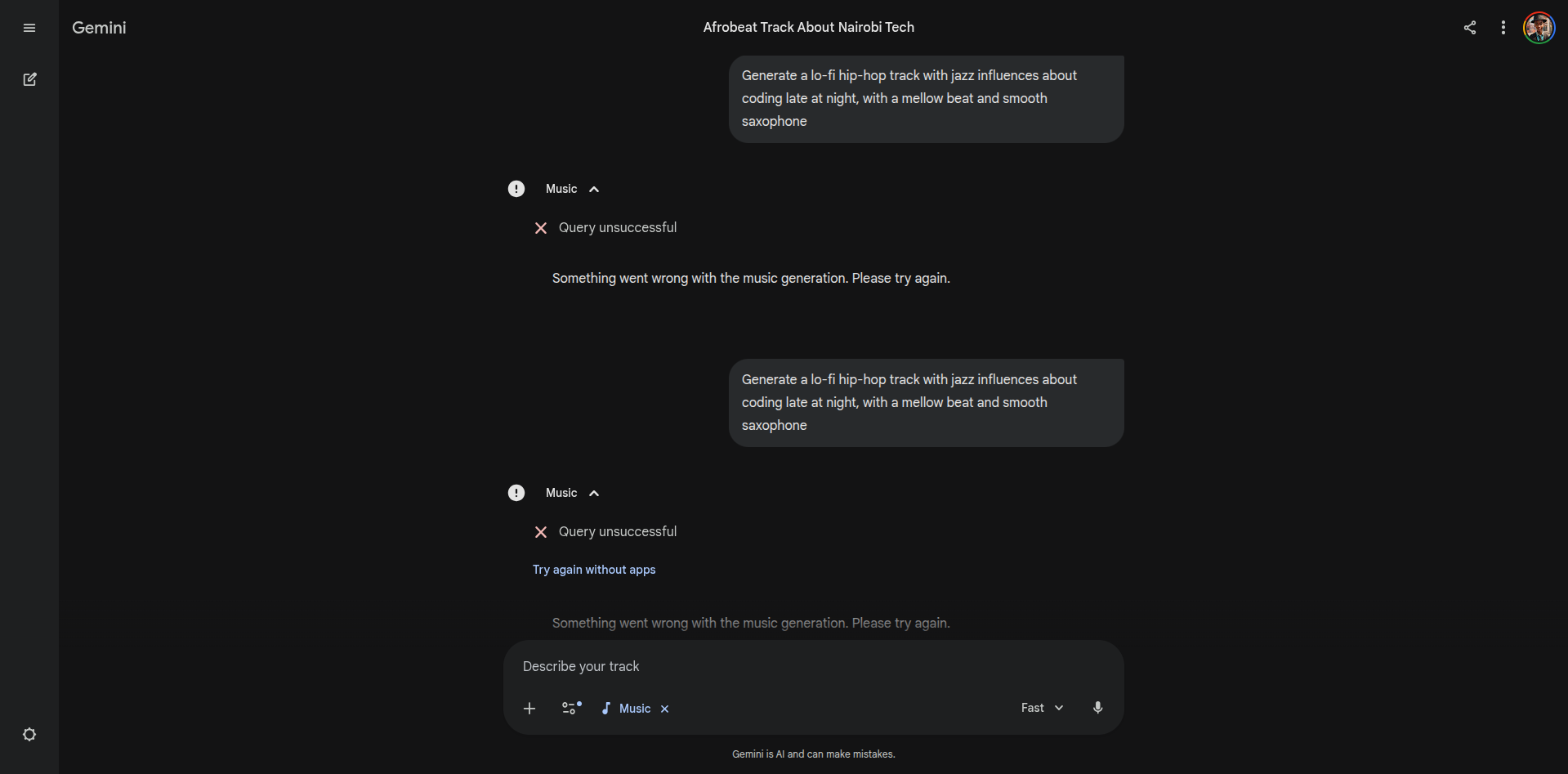
After two successful generations, I hit a limit. It appears Google has implemented generation caps, likely to manage server load during this beta phase. The exact number of tracks you can generate per day remains unclear, but expect restrictions.
What We Learned
The Good
Audio quality is genuinely impressive: Clear vocals, professional-sounding production
Cultural and linguistic versatility: Handled Sheng without issues
Fast generation: Tracks appear in seconds
SynthID watermarking: All tracks are embedded with Google's imperceptible AI content identifier
Easy sharing: Download as MP4 or share via link
The Limitations
30-second cap: You can't create full-length songs
Generation limits: Unclear daily caps, but they exist
Occasional errors: Not every generation succeeds
No direct artist mimicry: Google has filters to prevent copying existing artists (though you can request "similar style")
Language support: Currently available in English, German, Spanish, French, Hindi, Japanese, Korean, and Portuguese
Technical Details
Available on Gemini web and mobile (rolling out over several days)
Requires 18+ age verification
AI Pro and Ultra subscribers get higher limits
Files download as MP4 (static cover + audio)
Built-in audio verification feature (can check if a track is AI-generated)
How Does It Compare?
Lyria 3 enters a competitive market already dominated by two major players:
Suno: Currently valued at $2.45 billion, known for fast generation and vocal-focused tracks. Offers longer song lengths and more customization options.
Udio: Founded by ex-Spotify AI researchers, emphasizes high-fidelity audio and granular control over musical elements.
Lyria 3's Edge: Deep integration with the Gemini ecosystem, SynthID watermarking, and built-in verification tools. The image-to-music feature is also relatively unique in the mainstream AI music space.
What This Means for Kenyan Artists and Producers
The implications are both exciting and concerning:
Opportunities
Rapid prototyping: Musicians can quickly generate demo ideas or experiment with genres
Content creation: YouTubers, TikTokers, and content creators can generate royalty-free background music
Accessibility: Aspiring artists without expensive equipment can create professional-sounding tracks
Cultural preservation: The ability to generate music in Sheng and Swahili could help preserve and promote local linguistic culture
Threats
Job displacement: Session musicians, background vocalists, and producers who create generic content are most at risk
Market saturation: Easy music generation could flood platforms with AI-created content
Devaluation: If anyone can generate professional-quality music instantly, what happens to the value of human musicianship?
Copyright gray areas: What happens when AI-generated music sounds similar to existing works?
The Reality Check
Let's be honest: AI isn't replacing Sauti Sol, Nyashinski, or any artist with a unique voice and authentic connection to their audience. But if you're making generic beats for ads, stock music libraries, or background tracks? You should be concerned.
The real question is: Will audiences care whether music is AI-generated if it sounds good and serves its purpose?
The Copyright and Ethics Conversation
Google claims Lyria 3 is "designed for original expression, not for mimicking existing artists." If you name a specific artist in your prompt, the system interprets it as "broad creative inspiration" and creates something in a similar style or mood.
The company has implemented:
Content filters: Checking outputs against existing works
SynthID watermarking: Making AI-generated content identifiable
Verification tools: Allowing users to check if audio is AI-generated
Reporting mechanisms: Users can report content that violates rights
But here's the uncomfortable truth: Google's competitors Suno and Udio are both facing (or have faced) copyright lawsuits from major music labels. Suno reached a settlement with Warner Music, while Udio settled with Universal Music Group. The music industry is watching AI music generation closely, and the legal landscape remains unsettled.
Questions remain:
Was Lyria 3 trained on copyrighted music? (Google hasn't provided full transparency)
Can the "similar style" generation violate an artist's distinctive sound?
Who owns the copyright to AI-generated music?
What happens when AI perfectly recreates a genre pioneered by specific artists?
What's Next?
Google is also rolling out Lyria 3 to YouTube creators globally through the Dream Track feature, allowing Shorts creators to generate custom soundtracks. This move could significantly impact the royalty-free music industry and platforms like Epidemic Sound and Artlist.
For now, Lyria 3 remains in beta with limitations. But if Google's pattern with other AI features is any indication, expect rapid improvements, longer track lengths, and more creative control in coming months.
Final Thoughts: Should Artists Be Worried?
After testing Lyria 3, I understand why the music industry is nervous. This isn't a toy. It's a legitimate tool that produces professional-quality results in seconds. The fact that it handled Sheng perfectly on the first try shows how sophisticated these models have become.
But here's the nuanced take:
AI won't replace artists with authentic voices and emotional depth. What it will do is:
Democratize music creation (good for accessibility)
Disrupt the generic/stock music industry (bad for certain professionals)
Raise serious questions about copyright and fair compensation (complicated for everyone)
Force artists to differentiate themselves through authenticity and human connection (good for art, challenging for artists)
The music industry isn't ending. It's evolving. And like every technological shift before it, some will adapt and thrive, while others will struggle.
For Kenyan artists and producers: the time to figure out where you stand in this new landscape is now. Are you creating something only humans can make? Or are you in a space AI can replicate?
Try It Yourself
If you're a Google AI Pro or Ultra subscriber, you can test Lyria 3 at gemini.google.com/music. Just remember: generation limits apply, and not every attempt will succeed.
And if you do try it, drop your thoughts in the comments. Are we witnessing the democratization of music creation, or the beginning of something we'll regret?
Comments