 By
By 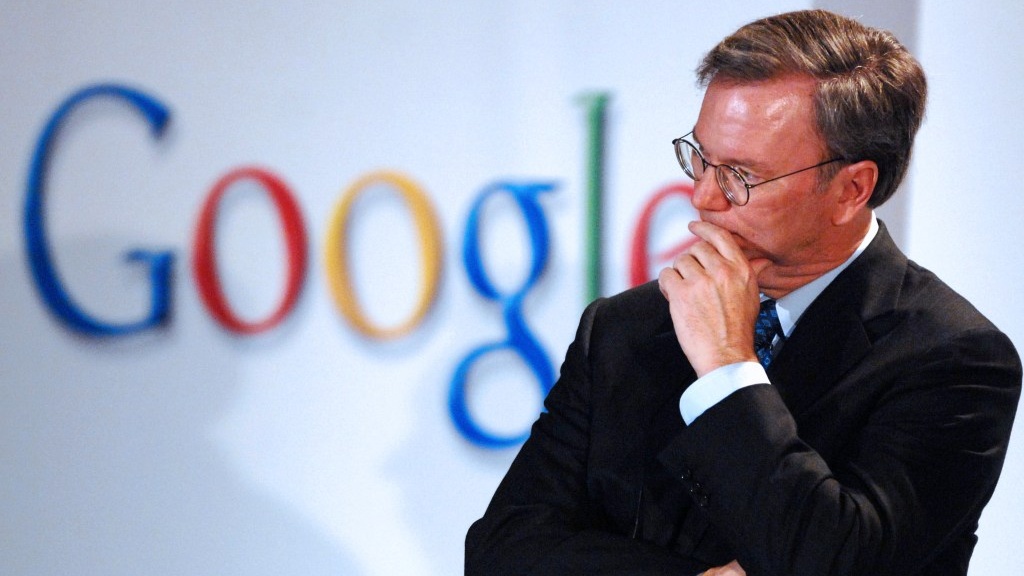
When former Google CEO Eric Schmidt stepped up to deliver a commencement address at the University of Arizona, he probably expected the usual polite applause, maybe a few distracted graduates checking their phones. What he got instead was boos. Loud, unapologetic boos from a graduating class that was not interested in hearing a tech billionaire tell them everything was going to be fine.
His message was familiar. AI is like the computer, he told them. Computers didn't replace humans, they enhanced them. Adapt. Learn. Embrace the change. The crowd was not convinced. And honestly? Neither should you be.
Because here is the thing Schmidt did not say: the people who built careers around the web that Google created are right now watching that web collapse in real time. Not because AI showed up from nowhere, but because Google, the very company that trained an entire generation of developers, publishers, writers, and SEO professionals to depend on it, is now using everything it learned from them to build a product that makes them irrelevant. That is not innovation. That is a slow-motion betrayal dressed up as progress.
From Search Engine to Answer Engine: What Actually Changed
To understand how we got here, you need to go back a few years. Google's entire business model was built on a simple promise: we will help people find your content. Publishers created articles, optimised for keywords, earned backlinks, and Google sent them traffic. That traffic converted into ad revenue. The whole ecosystem ran on this loop.
Then Google introduced AI Overviews in May 2024, rolling them out to all U.S. users before expanding to over 200 countries and 40 languages by May 2025. The idea was simple: instead of just showing you links, Google would now summarise the answer for you right there on the search page. Google's pitch to publishers was equally simple: we still cite your site. We link back to you. Think of it as free advertising.
The data tells a very different story. Research tracking 68,000 real Google searches found that users clicked on results only 8% of the time when an AI summary appeared, compared to 15% without one. That is a 47% reduction in clicks, almost halved, for the privilege of being cited. Zero-click searches, where users get their answer and leave without clicking anything, jumped from 56% in 2024 to 69% by May 2025. For publishers whose business model depends on people actually visiting their websites, this is not a minor inconvenience. It is an existential shift.
The numbers at the publisher level are staggering. Small publishers with between 1,000 and 10,000 daily page views saw their Google referral traffic drop by 60% over two years. Medium-sized publishers lost 47%. Even large publishers with over 100,000 daily visitors lost 22% of their search referrals. Forbes and HuffPost both recorded 50% traffic losses. Business Insider's organic search traffic fell by 55% between April 2022 and April 2025. DMG Media, which owns MailOnline and Metro, reported click-through rate drops of up to 89% for certain searches.
Read those numbers again. Nearly 90% of clicks gone. For some publishers, that is not a business problem. That is the end of the business.
The Crawler Trap Nobody Talks About Enough
Here is where things get particularly uncomfortable. When Google integrated Gemini into its search crawler, publishers were faced with an impossible choice.
There are technically two separate opt-out mechanisms. You can use a robots.txt token called Google-Extended to block your content from being used to train Gemini and Google's Vertex AI models. That one you can do without losing your search rankings. Fine.
But here is the trap: there is currently no way to block your content from appearing in AI Overviews without also blocking Google's ability to rank your site in search results altogether. You cannot say "please do not summarise my articles for free but still send me search traffic." It is all or nothing. Feed the machine that is eating you, or disappear from the world's largest search engine.
For a small Kenyan blog, a niche tech publication, or an independent news outlet in Nairobi, that is not a choice. That is coercion with extra steps.
Google I/O Just Made It Worse
If AI Overviews were the warning shot, what Google announced at Google I/O 2026 is the full artillery. Meet AI Mode.
AI Mode is not just a smarter version of AI Overviews. It is a fundamental reimagining of what Google Search is. The default experience is no longer a list of blue links. It is a fully generated, interactive response built in real time specifically for your query. According to Google's own presentation, Search can now build custom experiences just for your individual questions, from dynamic layouts and interactive visuals to persistent, stateful project spaces you can return to again and again.
Think about what that means practically. You search for "best laptops under 80,000 shillings." Instead of being shown a list of tech blogs that have reviewed those laptops, you get a fully generated interactive comparison table, custom-built in seconds by Gemini. You search for Kenya's economic outlook. You get a set of animated graphs and visual data breakdowns, generated on the fly. No need to visit any website. No clicks. No ad revenue for anyone except Google.
The visuals in AI Mode are powered by Nano Banana, Google's image generation model. Nano Banana 2, the latest version, is now the default for image generation in Google Search across 141 countries, which includes every market in East Africa. It can generate images at resolutions up to 4K, maintain consistency across multiple characters and objects, and render precise, legible text inside images. In other words, AI Mode can now generate something that looks and functions like a professionally designed web page, in seconds, in response to your search query.
The platform powering all of this is called Antigravity, Google's agentic development framework. Combined with Gemini's reasoning capabilities, it allows Search to assemble interactive components including graphs, simulations, tables, and visuals in real time. This is not a search engine anymore. This is Google becoming the website.
What This Means for Kenyan Publishers Specifically
Here is why this conversation matters especially in Kenya, and why it should be setting off alarm bells right now.
Kenya's internet advertising market is growing at a compound annual growth rate of 16%, the fastest rate globally according to PwC's 2025-2029 Africa Entertainment and Media Outlook. Internet ad revenue is projected to hit $470 million by 2029, up from $163 million just a few years ago. The entire trajectory of Kenya's digital media economy has been built on the assumption that more internet users means more traffic, and more traffic means more ad revenue.
That assumption just broke.
The business model that Kenyan publishers have been racing toward, the one where you write SEO-optimised content, rank on Google, attract traffic, and monetise through display advertising, is the exact model that Google's AI Mode is designed to make obsolete. Kenya is sprinting toward a destination that is being demolished as it runs.
Think about the kinds of content Kenyan publishers produce that perform best on Google. Explainer articles, "how to" guides, product comparisons, tech news roundups, financial literacy content. These are precisely the content categories that AI Overviews and AI Mode hit hardest. They are informational queries, and informational queries are exactly what Gemini is built to answer without sending you anywhere.
For Kenyan tech sites, digital lifestyle publications, and independent news outlets that have spent years building SEO as their primary traffic strategy, the ground has shifted. And unlike publishers in Europe or the United States, Kenyan publishers do not have the regulatory leverage, the institutional backing, or the direct Google partnership agreements that larger outlets have used as partial buffers.
South Africa has already moved. The South African Competition Commission recommended that Google contribute to a journalism sustainability fund and implement algorithmic fairness measures to ensure local media outlets receive equitable representation. That is a precedent. East African regulators and media associations need to be paying close attention.
The Revenue Question Nobody Wants to Answer
So how do you make money in a world where Google is the website?
The honest answer is that the old playbook is broken, and anyone telling you otherwise is selling something. Display advertising tied to pageviews was always a fragile model. It worked because Google needed to send people somewhere. Now Google does not need to send people anywhere. The platform is the destination.
Some publishers have tried optimising for AI chatbots, hoping that if Google takes traffic in one direction, referrals from tools like ChatGPT or Perplexity will replace it. The data is brutal on this front. Referrals from AI chatbots currently account for less than 1% of all publisher page views. And the users who do arrive from chatbots are mostly there to fact-check AI-generated summaries, not to read, not to engage, and certainly not to click ads.
What does seem to hold up, and what the data increasingly supports, is a shift toward models that do not depend on Google's goodwill. Here is what that looks like in practice:
Direct audience relationships matter more than ever. Email newsletters, WhatsApp channels, and push notifications build a connection that Google cannot intercept. When someone subscribes to your newsletter, they are coming to you directly. Google's algorithm has no role in that transaction. For Kenyan publishers, where WhatsApp penetration is among the highest in the world, this is actually a structural advantage if used deliberately.
Subscriptions and memberships. The era of giving everything away for free in exchange for ad revenue is over. Publishers that are surviving the AI Overviews fallout globally are those that have built communities willing to pay for exclusive access, deeper analysis, or community benefits. This requires trust, consistency, and genuine editorial voice, things AI cannot replicate.
Original, on-the-ground reporting. AI can summarise what already exists on the internet. It cannot replace a reporter who was physically present at the Nairobi garage that is building Kenya's first locally manufactured EV, or who interviewed the Kenyan fintech founder before anyone else had the story. Exclusivity and originality are the only true moats left.
Licensing content to AI platforms. This one is controversial but increasingly unavoidable. About 69% of global publishers now expect AI licensing deals to provide at least some revenue over the next three years. Companies like OpenAI and Anthropic have signed content licensing agreements with major publishers. These deals are not going to make anyone rich, but they represent an acknowledgment that content has value, and they are worth pursuing.
Video and audio. YouTube traffic has actually increased for many publishers even as traditional search referrals decline. Platforms like X, Facebook, and TikTok have seen social referrals hold steady or grow. The pivot to video is no longer optional advice. For publishers willing to build a presence on YouTube or even podcast platforms, the audience relationship is fundamentally different and significantly harder for a search algorithm to disrupt.
The Students Were Right to Boo
Back to that graduation ceremony. Eric Schmidt compared AI to the invention of the computer, and the students booed him. The easy read is that they were being unreasonable, resistant to change, or just rude. The more honest read is that they were being accurate.
When computers arrived, they created entire new industries and categories of work. Programmers, systems administrators, database managers, UX designers, web developers. The transition was painful for some, but the net result was a massive expansion of economic opportunity, including in countries like Kenya, where the tech sector became a genuine engine of job creation and upward mobility.
What AI is doing is different in a critical way. It is not primarily creating new categories of work at the base level. It is compressing and automating the middle. The SEO writer, the junior developer, the content researcher, the copywriter, the data entry professional. These are not executive roles. These are the entry points that allowed millions of people, including a significant number of young Kenyans, to build careers in the digital economy. Tech layoffs have already cut more than 33,000 jobs in April 2025 alone, as employers continued shifting spending toward automation.
When Schmidt tells students to adapt the way their parents adapted to computers, he is glossing over a crucial difference: their parents adapted to tools that created jobs. These students are being asked to adapt to tools that are replacing the jobs they were studying to fill, with no clear map of what comes next and no honest conversation about what roles actually remain.
The student asking "what is my role in this economy?" is not being dramatic. They are being precise. And the answer from the tech industry so far has been, essentially: "figure it out." That is not adaptation. That is abandonment.
So Where Does This Leave Us?
Google is not going away. AI Mode is not going away. The question is whether publishers, developers, and digital creators in Kenya and across East Africa wait for Google to finish rewriting the rules, or whether they start rewriting their own.
The publishers who will survive this are not the ones who find the perfect new SEO trick. SEO as a primary strategy is structurally compromised. The ones who will survive are those who build something Google cannot replicate: genuine trust, exclusive information, direct community relationships, and content that exists nowhere else on the internet.
For Kenyan digital media specifically, this is also a moment for the kind of regulatory and industry-level conversation that South Africa has already started. If Kenya's internet advertising market is the fastest growing globally, and that growth is happening on a foundation that Google is actively undermining, that is a policy conversation worth having loudly and urgently.
And to the students who booed Schmidt: you are not wrong to be worried. But the answer is not to pretend the disruption is not happening. It is to build things that the disruption cannot touch. Original voices. Real communities. Stories that only you can tell.
That has always been the only moat that ever really mattered. It just happens to matter more now than ever before.
This article was researched and written for TechInKenya. Statistics and data referenced are sourced from PwC Africa Entertainment & Media Outlook 2025-2029, Chartbeat/Axios publisher research, Pew Research Center, Search Engine Journal, Press Gazette, and Google's official I/O 2025 announcements.
Comments