 By

Glovo says orders on its platform in Kenya rose 40 percent in 2025, a figure the company disclosed at its inaugural Future of Commerce Summit in Nairobi last week. The event, held at the Radisson Blu Hotel, also gave retailers a stage to explain how they are building digital sales channels around the tools Kenyans already use. Jaza Supermarket described taking orders on WhatsApp with M-Pesa payment prompts, Kuku Foods, which operates KFC in Kenya, outlined its investment in connected back-end systems, and Glovo reported that orders that begin with an AI assistant convert at a higher rate than orders placed through ordinary app browsing.
The disclosures matter because they show where quick commerce in Kenya is putting its effort: less on getting customers to download an app, and more on making orders, payments and stock records work together once a customer asks for something.
Where Glovo stands in Kenya
Glovo entered the Kenyan market in 2019. The company says it now operates in 12 towns and cities, works with more than 6,000 merchants and has over 2,200 riders active daily, according to figures it presented at the summit and in earlier announcements.
In May, it opened a new Nairobi headquarters that it described as an African operations hub, and committed an additional KSh 10 billion in investment in Kenya by 2030. Part of that money is earmarked for expansion into towns beyond Nairobi.
The company has also said it employs more than 600 people at the Nairobi office and plans to double that to 1,200 within two years. At the May launch, Glovo co-founder Sacha Michaud argued that quick commerce would be the fastest-growing segment of e-commerce over the next decade, pointing to deliveries in about 30 minutes as the contrast with multi-day shipping from larger online retailers.
According to reporting by Africa Business Communities, businesses on the platform have generated more than KSh 20 billion in sales since 2019, with roughly 80 percent of that value going to small and medium-sized enterprises. Glovo faces competition from Uber Eats and Bolt Food, as well as from retailers that run their own delivery operations.
The Nairobi summit follows the Lagos edition held in April, the second in a series that Glovo started in 2025 to bring retailers, payment companies and other ecosystem players together.
Category growth beyond food
Caroline Mutuku, Glovo Kenya's Country Managing Director, said customer behaviour is moving toward convenience and choice without a trip to a physical store. She presented search data for January to September 2026 showing growth outside restaurant food: searches for baby products rose 48 percent, beauty and personal care 45 percent, small electronics and accessories 42 percent, and large electronics and appliances 40 percent.
Consumer electronics brand oraimo was among the non-food names present. Its regional manager, Saixu Fan, said the shift to on-demand digital retail extends past traditional retail formats. The search figures describe interest, not completed sales, and Glovo did not release order volumes by category at the summit.
Jaza: WhatsApp for orders, M-Pesa for payment, an API for delivery
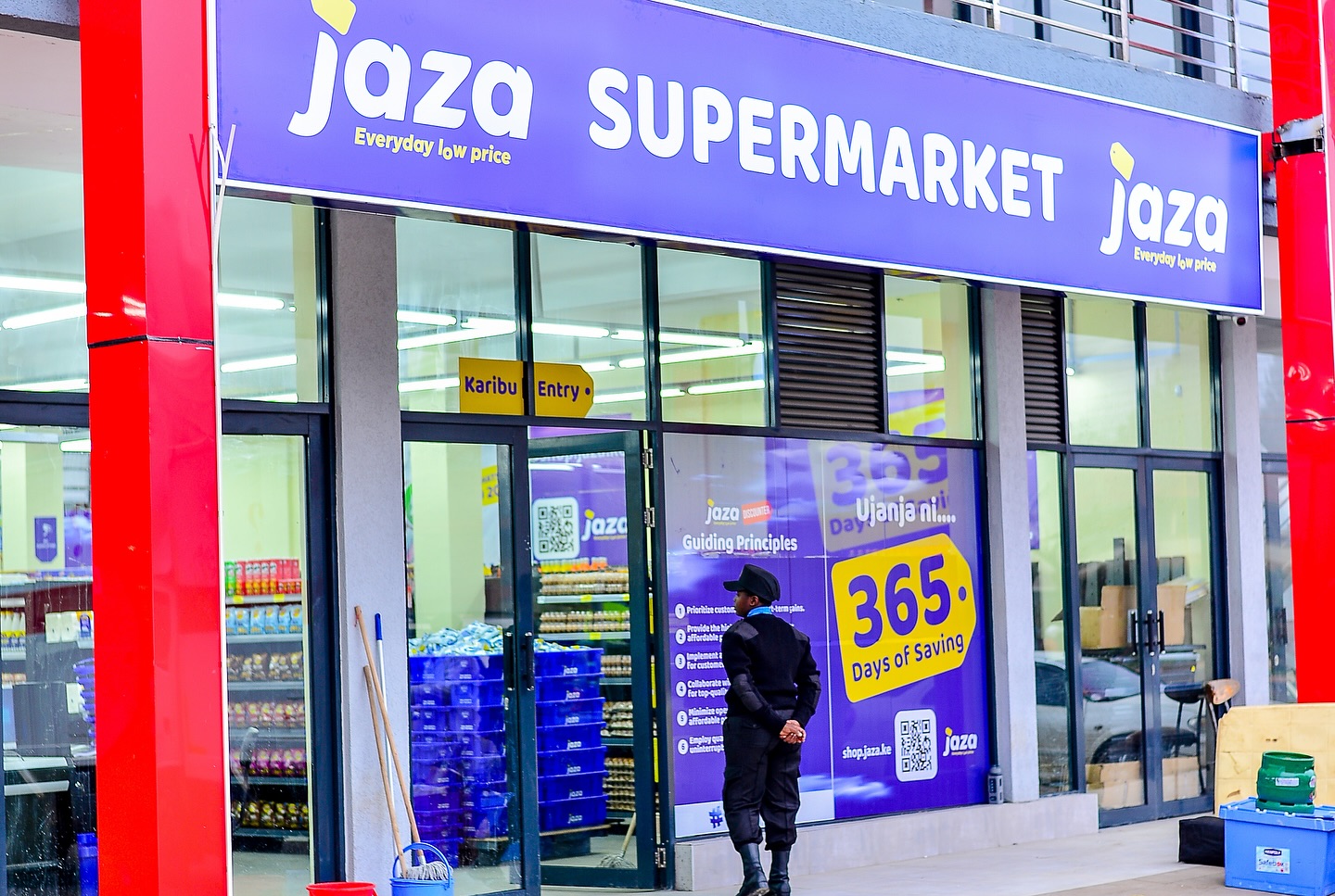
Willy Kimani, founder and CEO of Jaza Supermarket, explained that the retailer takes orders through WhatsApp and uses M-Pesa prompts to collect payment. The reasoning is practical: customers already use both services daily, and asking them to install and learn a separate shopping app adds a step before the first order. Reports of the session noted that phones with limited storage compete with banking, messaging and other apps that customers consider more essential.
Jaza has not turned its back on delivery platforms. Kimani said the supermarket also has a direct API integration with Glovo, built to cut down missed orders and cancellations by passing order details between systems automatically instead of having staff relay them by hand. An API is a defined way for two software systems to exchange information.
The WhatsApp model carries its own workload. Staff must read requests, confirm availability, agree substitutions and make sure no order is lost in a long chat thread. As volumes grow, copying messages into the supermarket's order process by hand becomes harder to sustain.
Kimani also gave a view of how uneven demand is across Nairobi neighbourhoods. In Utawala, limited parking has made store visits less convenient, which supports delivery. Demand from Nyayo Estate led Jaza to buy two electric bikes. At Greatwall Gardens, online demand was lower, a pattern he linked to nearby shopping options.
Online sales remain in the single digits as a share of Jaza's business, Kimani said, though he described them as incremental. He also said Jaza focuses on essential goods priced at or below those of other supermarkets, since a delivery convenience is harder to sell if customers feel they pay a premium for routine items.
Kuku Foods: ERP and live data
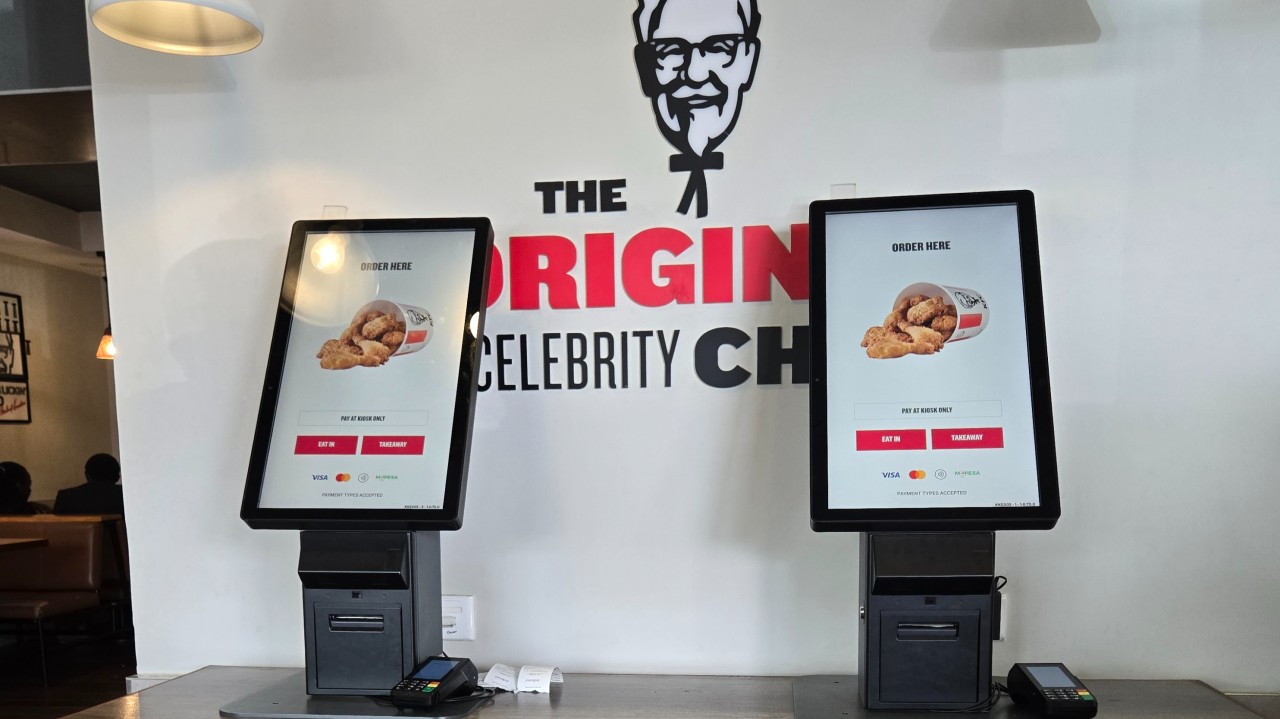
Jacques Theunissen of Kuku Foods described a different kind of investment. The company has put money into forecasting, inventory management, operating routines and enterprise resource planning (ERP) software, which pulls stock, purchasing and sales information into one connected system. He said the return comes from systems working together and giving managers access to live data, not from buying separate tools.
Theunissen also described using Microsoft Copilot to query data held in the company's ERP environment, and discussed self-service kiosks, which he said can lift average basket values by between 10 and 30 percent and pay back quickly. Coverage of the session did not report that Kuku Foods takes orders through WhatsApp or has moved away from apps; its contribution centred on operations and in-restaurant ordering.
Glovo's AI assistant: 41% conversion against a 33% app average
Glovo said orders that originate in its AI shopping assistant convert at 41 percent, compared with a 33 percent average across the Glovo app, according to Mutuku. The assistant lets users describe what they want in plain language instead of moving through menus and categories. Glovo has connected the service with ChatGPT and Claude, and in that setup the assistant helps with discovery while the customer finishes the purchase on Glovo's own checkout.
The figures come with limits. Glovo did not disclose the measurement period, the number of AI-originated orders in the sample, or how it defines a conversion. They also do not show whether those customers spend more, reorder more often or cancel less. The difference could reflect customers who arrive with a clearer purchase intent, or a discovery process that helps them decide, and the summit data does not separate the two.
Product data quality also decides whether conversational discovery works. An assistant can only recommend what a merchant's catalogue describes accurately, and an item that turns out to be out of stock erodes the convenience the assistant is meant to provide.
Visa: willingness to use AI agents versus willingness to let them pay
Anne Kinuthia-Otieno, Vice President and Head of East Africa at Visa, cited research showing that 89 percent of respondents would use an AI agent to help them shop, while 29 percent would trust one to complete checkout. The gap separates asking software to find and compare products from giving it authority over a customer's money.
She described transaction-specific payment tokens as one route to narrowing that gap. A token stands in for a customer's card credentials and can be tied to a defined payment context, so an agent does not hold unlimited access to the underlying card details.
Tokenization does not stop an agent from misreading a request or buying the wrong item, and it does not settle who is responsible if a customer disputes a purchase. Spending limits, approval steps and transaction records have to operate alongside it.
Visa also presented two products aimed at businesses: Visa Accept, which lets small businesses accept payments through an app, and Visa Pay, which covers virtual cards, digital onboarding and cross-border payments. Kinuthia-Otieno said digitised payment records can give lenders evidence of a business's trading activity when it applies for credit, though such records do not guarantee that financing will be approved.
What the disclosures establish
The 40 percent growth figure is an annual comparison for 2025 supplied by Glovo, and it refers to order counts, not revenue or profit. Glovo did not publish absolute order numbers for Kenya at the summit. The Jaza and Kuku Foods sessions were company accounts of internal practice, not independent measurements, and Jaza's own online share, in single digits, shows how much of its trade still happens in stores.
What the summit did make clear is the shape of the operating problem. A WhatsApp message, an app order, a kiosk transaction and an AI-assisted purchase can each start in a different place, but every one of them has to end in the same stock count, payment record and delivery run. Retailers speaking in Nairobi described their spending as going into those connections.
Comments