 By
By 
If you are a Fitbit user, here is news you cannot afford to miss. Starting May 19, 2026, the Fitbit app you have been using to track your steps, sleep, and workouts is officially becoming the Google Health app. No extra downloads, no manual data migration, no complicated setup. Your app updates automatically, and you pick up right where you left off. For many of us in the Google ecosystem, this is not just a name change; it is a signal that Google is finally going all in on health, and it could not have come at a better time.
This transition has been building for years. Google acquired Fitbit back in 2021, and since then, the tech giant has been quietly working to merge Fitbit's deep health expertise with Google's AI muscle. The result is what we are seeing now: a unified, AI-powered health platform that goes far beyond counting steps.
What Exactly Is Changing on May 19?
At its most basic level, the Fitbit app is being renamed and redesigned as the Google Health app. But calling this a simple rebrand would seriously undersell what is happening here.
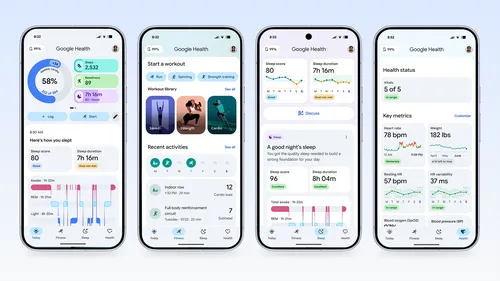
The entire Google Health app is being elevated with the Google Health Coach built with Gemini. The Fitness tab becomes the home for your weekly plan, where you can get workout suggestions and create and save workouts with natural language. On the Sleep tab, you can better understand your weekly consistency and progress towards getting better rest. And on Health, in addition to getting a snapshot of your key health metrics, you can get summaries of your medical records from the Coach.
The transition is frictionless for current users. Starting May 19, 2026, the Fitbit app will become the Google Health app, which will provide a fully redesigned and improved experience built on what you love. For most people, the app will update automatically when it is available for your account between May 19th and May 26th. All your existing data, history, and device connections carry over automatically.
The New Interface: Four Tabs, Infinite Possibilities
One of the most immediately noticeable changes is the redesigned layout. The app now offers a more intuitive layout with a redesigned 4-icon bottom bar. Today, Fitness, Sleep, and Health will now be available to access via any screen via the bottom bar, allowing you to dive deep into your area of interest with fewer taps. Within the Today tab, you will have the option to customize the top-placed dashboard to highlight steps, readiness, sleep, weekly cardio target, and more. The same goes for the Health tab, giving you quick access to some of your favourite metrics, including heart rate, weight, resting heart rate, heart rate variability, SpO2, BP, and more.
This kind of customization is a big deal. For years, one of the common frustrations with Fitbit was that the app showed you a lot of data, but not always the data you cared most about. The new layout lets you put the metrics you actually use front and center, reducing the time you spend swiping around and increasing the time you spend acting on the insights.
The app also brings significantly richer data tracking. You can enter your meals, log hydration, and track plenty more data points across four main tabs: Today, Fitness, Sleep, and Health. A new multimodal logging system is worth highlighting here. New with this launch is multimodal logging that lets you log via text, voice, or photo. For example, you can take a picture of lunch and have Google perform automatic recognition. Logging a meal by simply photographing it is the kind of quality-of-life improvement that makes healthy habits much easier to build and maintain.
Fitbit Premium Is Now Google Health Premium (And What That Means for Google AI Pro Subscribers)
Here is where things get genuinely exciting, especially for users in Kenya and across Africa who are already subscribed to Google AI Pro.
As of May 19, 2026, Fitbit Premium will be renamed Google Health Premium. The subscription gives you access to the full Google Health Coach experience, adaptive fitness plans, detailed sleep analysis, guided workouts, and mindfulness content. Google Health Premium upgrades the free experience with exactly the sort of personalized coaching that has been in the Fitbit Public Preview these past few months. Rather than one-size-fits-all health advice, the Google Health Coach is intended to deliver streamlined, actionable recommendations. You can even fill it in with any special restrictions you have and use it to create fitness goals.
The standalone price has changed slightly: the annual plan is now $20 more expensive at $99 per year, up from the $79.99 Fitbit Premium had been charging. Monthly, the plan costs $9.99.
But here is the part that will make existing Google AI Pro subscribers very happy. Google AI Pro and Google AI Ultra subscribers in over 30 countries will receive Google Health Premium at no additional cost, effectively bundling the AI health coach into higher-tier AI plans. If you are already on Google AI Pro, you are getting Google Health Premium thrown in at no extra charge. That is a substantial addition to an already compelling subscription.
Google AI Pro, which costs around KES 3,700 per month in Kenya, already comes loaded with access to Gemini's latest models at high usage limits, 5 TB of Google Drive storage, NotebookLM with premium features, and Gemini in Google apps like Gmail, Docs, and Sheets. Adding Google Health Premium to that list pushes the value proposition even further, arguably making it one of the best all-round tech subscriptions available to Kenyan users today.
If you are someone who uses AI heavily, you will appreciate the limits Google offers. While other AI providers have strong individual models, Google consistently offers some of the most generous usage limits across the board, something that matters enormously when you are using AI tools daily for work, research, or personal projects. Getting a fully featured health coaching subscription bundled in at no extra cost is a genuinely compelling addition.
The Google Health Coach: Your AI-Powered Wellness Companion
The centerpiece of the entire Google Health update is the Google Health Coach, which exits its public preview phase on May 19 and becomes available globally.
Leveraging Google's Gemini AI, the new Google Health Coach will offer personalized insights to users, acting as a combination fitness coach, sleep expert, and health and wellness advisor. The service has been in public preview since last year and has been undergoing improvements based on user feedback.
What makes this coach genuinely different from generic health apps is the depth of integration. The company notes any insights the coach provides will not just be a summary, but would combine information from multiple sources, like fitness and sleep metrics, environment, nutrition, cycle tracking, and US medical records, if access is provided.
The coach has been built responsibly. To build the Google Health Coach responsibly and securely, Google collaborated with a Consumer Health Advisory Panel of leading medical experts and clinicians across multiple disciplines, and Google in-house clinical and research or sports scientists to ensure the guidance is rooted in credible, evidence-based insights. Google has also partnered with NBA champion Stephen Curry, who worked alongside Google Health experts to shape aspects of goal setting, recovery, and performance coaching within the app.
One particularly practical improvement is in how the coach handles fitness planning. The app now uses a personalized weekly cardio target instead of a daily goal. This flexible approach helps you focus on consistent progress over time; if you have a busy day or feel sick, you can make up the load later in the week. For anyone juggling a demanding work schedule or an unpredictable lifestyle, that weekly flexibility is far more realistic than rigid daily targets.
Smarter Sleep Tracking
Sleep tracking was already one of Fitbit's strongest features, and Google has made meaningful improvements here. New machine learning models have increased sleep stage accuracy by 15%, enabling better nap detection and more detailed sleep score breakdowns.
The upgraded sleep intelligence can now detect naps as short as 20 minutes and provides a more transparent sleep score, explaining the specific reasons behind your rest quality. The sleep score has been revamped to convey information in a way that is easier to digest. Rather than just giving you a number, the coach can now explain connections like how a low step count during the day might have made it harder to achieve deep sleep that night. This kind of contextual insight is where AI genuinely earns its place in a health app.
Device Expansion: Finally Opening Up Beyond Pixel Watches
This is the second major story within this transition, and arguably the one with the biggest long-term significance.
For a long time, the tight Google health ecosystem was a bit of a walled garden. If you wanted the best experience, you really needed a Fitbit device or a Pixel Watch. That is changing significantly with the Google Health app.
The new Google Health app is able to aggregate data from a variety of wearables. Of course, those included in Health Connect like the Pixel Watch, Galaxy Watch, OnePlus Watch, and others. But Google is going a step further and also making it compatible with Apple Health, making it work cross-platform, with the new Fitbit Air.
Google has also signaled that it is actively working to bring full AI coaching support to a much wider range of devices. We are looking to add support beyond our current Fitbit and Pixel Watch devices, although we think it will be best with one of those. Anyone across Android and iOS can use it. You will be able to download Google Health and import all of your data. You will be able to pull in all of your health records, and a user who does this will see an alert that they can get information and be alerted when their device is supported.
Google's general manager of Google Health was direct about the ambition here: "That's my goal," said Chandra. "So you can decide whatever hardware you want."
This is an important strategic shift. Google lags behind Apple, Samsung, and Chinese tech giants Xiaomi and Huawei in the global wearable tech market, according to market research firm International Data Corporation. By making Google Health work with hardware beyond its own devices, including eventually Apple Watch, Google is positioning the app itself as the platform rather than the hardware, a smart move that could rapidly grow its health user base.
Connecting All Your Health Data in One Place
One of the most practical improvements in Google Health is the ability to bring data from across your entire digital health ecosystem into one unified view. With the new app, Google is bringing together all health data from wearable devices, Health Connect, Apple Health and medical records into a single place.
This matters a lot for users who might use a Peloton for indoor cycling, track their meals on MyFitnessPal, and wear a Fitbit for daily activity. Previously, this data lived in separate silos. Now it can all funnel into the Google Health app for a genuinely holistic picture of your wellness.
For users in the United States, there is an additional layer of integration. In the US, you can sync your medical records to the app to quickly view key information like lab results, vitals and medications and see how your data has changed over time. Your records are securely stored within the Google Health app, and you have control of your data and how it is used, shared or deleted. While this medical records feature is currently US-focused, the direction of travel is clear. As Google Health expands, deeper health data integration in other markets, including Kenya, seems like a logical next step.
Privacy: A Non-Negotiable Commitment
Understandably, putting this much personal health data into a Google platform raises legitimate questions about privacy. Google has been explicit on this point throughout the transition.
On the privacy front, Google remains "committed to not using Fitbit user health and wellness data for Google Ads." This is a commitment Google has maintained since the Fitbit acquisition, and it carries over to the new Google Health platform. You have full control over what data is stored, how it is used, and you can delete it at any time.
What Is Going Away
It is worth being transparent that this transition is not without trade-offs. Some features that existed in the Fitbit app are being removed in the new Google Health app. Connections to Lifescan devices will no longer be supported. Badges will no longer be supported. New badges will not be generated, and your historical badges will be deleted. Your Social profile will not include your sex, height, weight, location, or friends list, and privacy settings related to sharing this information will no longer be supported.
Fitbit Sense and Versa 3 users only: Snore Detection will no longer be available. If you are on those specific devices and relied on snore detection, this is a meaningful loss. Estimated Oxygen Variation (EOV) will also no longer be available.
Social profiles are also being standardized. Rather than a custom Fitbit username and profile photo, your social presence in the app will now be tied to your Google Account name and profile picture. The leaderboard functionality is returning and has actually been expanded to include both steps and Cardio Load, but the profile customization is more limited than before.
The Bigger Picture: Google's AI Health Ambition
Zoom out and this entire transition is about something much larger than a Fitbit rebrand. Google is making a serious play to become your primary health intelligence platform.
One in four US adults said they use AI for healthcare research or advice, often before or after a doctor's visit, according to an April survey from the West Health-Gallup Center on Healthcare in America. OpenAI said earlier this year that 230 million people turn to ChatGPT for health-related questions each week. The demand for AI-powered health guidance is enormous and growing fast.
Google's response is to build a platform that is not just answering one-off health questions, but continuously learning your patterns, connecting your data across sleep, fitness, nutrition, and medical records, and surfacing insights proactively. As Google's general manager of health put it: "An athlete today has a whole team doing this. They have a nutritionist, they have a sleep coach, they have a fitness trainer. Why can't all of us have that equivalent? And that's really what the health coach is all about."
That vision is compelling. And for users in Kenya who are already in the Google ecosystem, May 19 is not just a software update. It is the beginning of a significantly more capable and integrated health experience.
Comments