 By
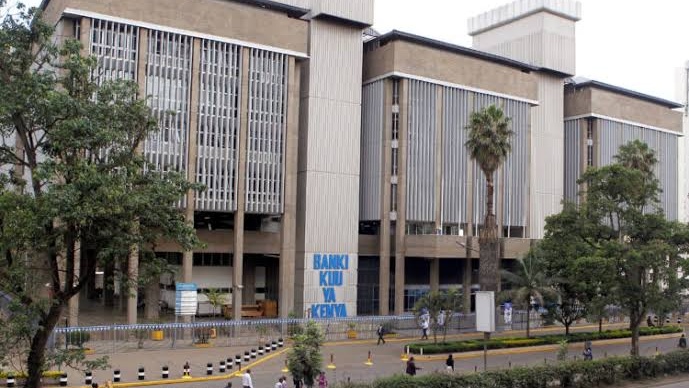
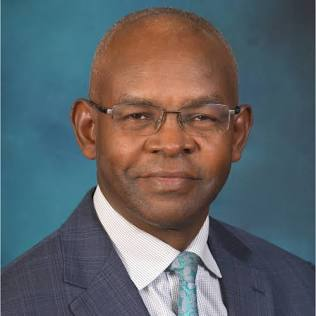
Central Bank of Kenya (CBK) Governor Kamau Thugge has told senators that the bank supports proposed amendments to the Public Finance Management (PFM) Act that would move county government funds out of commercial banks and into a Treasury Single Account (TSA) held at the CBK. CBK officials also told the Senate that 99 percent of transactions involving county governments are already conducted digitally, a figure the bank offered to address concerns that counties without CBK branches would struggle to bank directly with the central bank.
Thugge appeared on Tuesday, November 17, 2026, before the Senate Standing Committee on Finance and Budget, chaired by Senator Ali Roba. The committee is reviewing the amendments as part of its work on the PFM (Amendment) Bill, 2025, which was sponsored by the National Assembly.
What the proposed amendments would change
According to reports of the hearing, the amendments would require county governments to obtain prior written approval from the National Treasury before opening or closing a bank account. They also seek to consolidate county funds into a TSA at the CBK.
Thugge told the committee the CBK "fully supports" the proposal. He argued that holding county deposits centrally would give the National Treasury a clearer view of the public money available at any given time, and that it would remove unnecessary interest costs where government resources are already on hand. The governor further proposed that each county be limited to a single imprest account at a commercial bank, with its main operational and project accounts kept at the CBK.
One outlet reporting on the hearing put the number of county commercial bank accounts targeted by the reforms at more than 1,400. That figure was not attributed to an official document in the coverage reviewed, and it has not been independently confirmed.
The digital access argument
A central question for senators was practical: the CBK has no physical branches in every county, and Wajir was among the regions cited in that context. Thugge responded that digital channels already allow all 47 counties to open accounts, initiate payments and manage deposits remotely. CBK officials said about 99 percent of county transactions already run electronically.
The governor also addressed concerns that the approval requirement would add a layer of bureaucracy to routine county finance. He said authorisation to open an account would generally be a one-off step rather than a recurring hurdle, and that counties could fold their existing commercial bank accounts into a single approved imprest account without seeking fresh authorisation.
The reports reviewed did not detail which payment systems or channels account for the 99 percent figure, nor how it is measured (by value or by number of transactions). Those details were not part of the public summaries of the session.
Roba urged the CBK to prioritise technological solutions to improve accountability and efficiency in county financial management, rather than relying mainly on additional legal restrictions.
Background: a gap between the law and its regulations
The CBK has argued for some time that the legal framework governing county bank accounts contradicts itself. Appearing before the Senate Standing Committee on Devolution and Intergovernmental Relations in July 2025, Thugge said the bank has no statutory mandate to compel counties to close unauthorised accounts. He pointed to the 2015 County Governments PFM Regulations, which require county exchequer and government accounts to be kept at the CBK, with exceptions such as petty cash (imprest) accounts.
The PFM Act itself is less specific. Section 192 allows county treasurers to open accounts at the CBK or at authorised commercial banks, while also calling for a Treasury Single Account to be established at the central bank. Thugge told senators in 2025 that counties had relied on that ambiguity to bank where they wished. He added that although counties are required to copy the Controller of Budget when opening accounts, compliance is inconsistent.
At that session, the CBK said it was pushing for amendments to align the Act with the 2015 regulations, backed by a coordinated oversight framework involving the National Treasury, the Auditor General and the Controller of Budget. It also said it planned to roll out a county-level TSA by the 2026/27 financial year. Thugge noted that Kenya has attempted to introduce a TSA for roughly two decades without completing it.
National Treasury Cabinet Secretary John Mbadi had also told the same Devolution committee that counties must align with the TSA policy, which Treasury describes as part of a wider action plan to improve control over public funds. Senators responded by asking Treasury to build a county-specific TSA framework in consultation with the Council of Governors.
The systems behind the push
Alongside the legal changes, the CBK has described technology upgrades aimed at the same problem. In 2025, Thugge and Deputy Governor Susan Koech told senators the bank was upgrading its Temenos T24 core banking platform and rolling out a Granular Data Integration (GDI) system.
According to those briefings, GDI is designed to let the CBK identify which commercial bank accounts belong to which county, retrieve balances on a given date and flag unusual activity, including sudden account closures and suspicious transfers. The upgraded payment flow is meant to tie requisitions approved by the Controller of Budget directly to payments, so that county officers cannot redirect money to a different payee after approval.
Thugge described the problem this way in 2025: the Controller of Budget approves requisitions, but some county accounting officers then pay for something else. At the time, Koech said all banks and payment service providers had been onboarded to the GDI platform. The coverage reviewed for this report did not confirm the current operational status of either system, and the CBK did not report on it at the November 17 hearing.
Opposition from counties and the Commission on Revenue Allocation
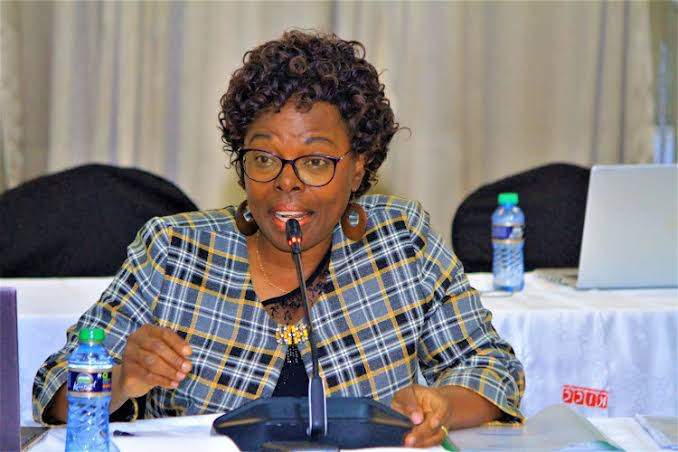
The CBK's position is not shared across the sector. Earlier this month, Controller of Budget Margaret Nyakang'o told the same Senate committee that existing county accounts in commercial banks should be moved to the CBK within six months as part of the TSA. She cited limited access, for her office and for the National Treasury, to information on county money held in commercial banks, and said the change would help establish how much public money each county holds.
The Commission on Revenue Allocation (CRA) and the Council of Governors (CoG) took a different view. All three institutions jointly opposed the requirement for counties to obtain Treasury clearance before opening accounts, while the CRA and governors also rejected the idea that centralising every account at the CBK was the right fix.
CoG Finance Committee chairman Fernandes Barasa argued that the proposal ignores the constitutional purpose of devolution. He cited Article 174(h), which concerns the decentralisation of state organs and their functions from the capital, and said requiring all banking to go through an institution without a branch in every county conflicts with that principle. CRA chairperson Mary Chebukati and CoG legal committee chairman Ochillo Ayacko also made submissions.
The CBK's 99 percent figure speaks directly to Barasa's branch-access argument, although it does not address the separate question of whether Treasury approval over account opening and closing is consistent with county financial autonomy. Senators at the November 17 hearing questioned whether the changes could interfere with devolution by giving the National Treasury authority over county banking arrangements.
What remains before the Bill moves

The Senate committee has not published a report on the amendments, and the reports reviewed did not indicate when it would table one. Because the Bill concerns county governments, it must be considered by both Houses of Parliament, and the Senate's position on the approval requirement, the six-month deadline and the single imprest account limit will shape what reaches a final vote.
The disagreement now sits between institutions that agree on the problem, namely weak oversight of county bank accounts, but differ on the remedy. The CBK, the National Treasury and the Controller of Budget favour consolidation at the central bank. The CRA and the Council of Governors favour a framework that keeps counties' ability to choose where they bank.
Comments